

빠른 제작과 다양한 마감 옵션을 제공하는 박물관 수준의 지클레이 및 캔버스 프린트. ( 수작업 채색 복제본 주문하기 디지털 이미지로 전환)





























작품의 원본 비율을 그대로 유지하는 프리셋 사이즈 중에서 선택해 보세요.

액자나 벽면 크기에 맞춰 필요한 가로와 세로 길이를 입력해 주세요. 프린트는 원본 이미지보다 크게 제작할 수 없으며 오직 자르는 것만 가능하므로, 비율이 다른 사이즈를 선택할 경우 이미지의 일부가 잘려 나갈 수 있습니다. 인쇄 작업에 들어가기 전, 최종 확인을 위해 디지털 목업을 보내드립니다. 이 페이지에 표시된 이미지는 실제 잘리는 영역을 나타내지 않으며, 오직 목업을 통해서만 정확한 확인이 가능합니다.
untitled (7736)
복제본 크기
Paul Cézanne's "Untitled (7736)," a captivating post-impressionist landscape, isn’t merely a depiction of a rural scene; it’s an invitation to contemplate the very essence of perception and representation. Painted around 1895-1900, during a period of intense artistic experimentation for the artist, this work embodies Cézanne's revolutionary approach to capturing reality – not through fleeting impressions like his Impressionist predecessors, but through a deliberate restructuring of form and color. The scene unfolds with a quiet dignity: a cluster of modest houses nestled amongst rolling hills, punctuated by the suggestion of trees and a winding dirt road. Yet, it’s far from a straightforward representation; Cézanne employs a masterful orchestration of planes and angles, subtly distorting familiar forms to convey an underlying sense of spatial depth and volume.
Cézanne’s technique is arguably the most defining element of this painting. He moved decisively away from the optical realism favored by earlier generations, instead focusing on the underlying geometric structure of objects. Notice how he breaks down each house into a series of interlocking rectangular forms – a deliberate simplification that allows him to capture not just *what* something looks like, but *how* it exists in space. This is evident in the way the houses are stacked upon one another, creating an illusion of receding planes and atmospheric perspective. The trees, too, are rendered with a similar geometric precision, their branches and trunks reduced to essential lines and shapes. He wasn’t interested in mimicking nature exactly; he was striving to reveal its fundamental structure, a concept that would profoundly influence the development of Cubism decades later.
While Cézanne's approach is undeniably formalistic, "Untitled (7736)" isn’t devoid of symbolic resonance. The scene evokes a sense of rustic tranquility, suggesting a connection to the land and a celebration of rural life. The presence of figures – individuals engaged in everyday activities near the houses – adds a layer of human interaction to the landscape, grounding it in a tangible reality. The dirt road itself acts as a visual pathway, inviting the viewer into the scene and prompting reflection on journeys, both literal and metaphorical. It’s a quiet tableau that speaks volumes about the simple pleasures and enduring values of rural existence.
Despite its formal rigor, “Untitled (7736)” possesses a remarkable emotional depth. The cloudy sky lends an air of melancholy and introspection to the scene, while the muted palette – dominated by earthy browns, greens, and blues – contributes to a sense of quiet contemplation. Cézanne wasn’t simply recording a visual reality; he was attempting to capture the *feeling* of being in that place at that time. The painting invites us to slow down, to observe with care, and to appreciate the subtle beauty of the natural world. It's a testament to his ability to imbue even the most commonplace subject matter with profound artistic significance. A high-quality reproduction allows one to truly immerse themselves in this evocative atmosphere, bringing a touch of Cézanne’s contemplative vision into any interior space.
"untitled (7736)"의 저작권 상태(퍼블릭 도메인 - 저작권 보호 기간이 만료되었습니다)는 작가의 1906년 사망 시점을 기준으로 결정됩니다.
"untitled (7736)"은(는) 세잔의 Post-Impressionism 시기 작품으로, 작가의 주요 주제로는 impressionism’s fleeting light, provencal rural life”, “geometric form exploration”, “bridge to cubism”, “breaking artistic conventions” 등이 있습니다.
세잔의 "untitled (7736)"의 방문 통계 페이지에서는 해당 작품의 월간 방문 수, 작가의 최고 조회 작품과의 비교, 그리고 방문자 유입 경로 등 공개된 방문 통계를 제공합니다.

1839 - 1906 , 프랑스
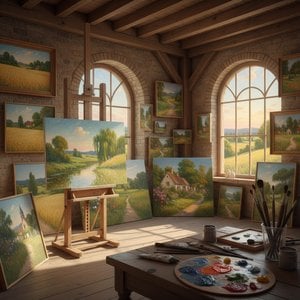
Discover the profound tranquility of rural art through an expert exploration of Impressionist landscapes. From pastoral scenes to textured oil masterpieces, learn how timeless nature-inspired artworks bring enduring elegance and serenity to sophisticated collectors.
 미리보기
미리보기
 공유하기
공유하기 공유하기
공유하기
 상세 정보
상세 정보 가이드 보기

 다운로드
다운로드
 유사 작품 더 보기
 X-레이
X-레이 슬라이드 쇼 보기
 질의응답
질의응답
 통계 정보
통계 정보
 더 보기
더 보기









 유리 옵션은 110cm 미만 크기에서만 선택 가능합니다.


