A Glimpse into Intimacy: Paul Cézanne’s *The Feast* (1867)
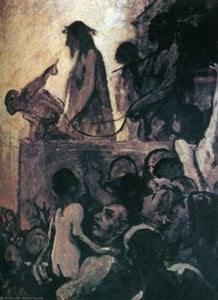
Paul Cézanne's *The Feast*, created in 1867, is a captivating watercolour that offers a rare and intimate look into a social gathering of the period. Far from the grand historical paintings prevalent at the time, this work focuses on the quietude and connection found within everyday life – a hallmark of the artist’s developing style. The scene depicts a lively group engaged in conversation around a dining table, their presence filling the space with warmth and implied narrative.
Style & Historical Context: Bridging Realism and Impressionism
While often categorized as an early work within Cézanne's oeuvre, *The Feast* exists at a fascinating crossroads of artistic movements. Initially influenced by Romanticism – as the original description suggests – the painting transcends simple emotional expression. It’s more accurately positioned as a precursor to his later Post-Impressionist explorations and a departure from strict academic Realism. Cézanne was beginning to move away from detailed representation towards an investigation of form and structure, though this is still nascent in *The Feast*. The work reflects the shifting artistic landscape of mid-19th century France, where artists were increasingly interested in capturing modern life and subjective experience.
Technique & Materiality: The Delicate Power of Watercolour
Cézanne’s masterful use of watercolour is central to the painting's appeal. Unlike the bolder oil paintings he would become famous for, *The Feast* showcases a delicate touch and translucent layering of colour. This technique lends an ethereal quality to the scene, enhancing its sense of intimacy and transience. The warm tones – ochres, browns, and muted reds – create a cozy atmosphere, while the soft lighting subtly models the figures and objects within the composition. The fluidity of watercolour allows for expressive brushstrokes that capture movement and energy without sacrificing detail.
Composition & Symbolism: A Study in Social Dynamics
The composition is deliberately crowded, mirroring the bustling energy of a social gathering. Figures overlap and interact, creating a dynamic sense of space. While there isn’t overt symbolism, the very act of sharing a meal – *the feast* itself – represents communion, connection, and shared experience. The arrangement of figures suggests varying degrees of engagement and relationship; some are deeply engrossed in conversation, while others appear more contemplative or observe from the periphery. The inclusion of objects like the vase (mentioned in the photo description) adds to the sense of domesticity and everyday life.
Emotional Impact & Legacy: A Precursor to Modern Art
*The Feast* evokes a feeling of warmth, conviviality, and quiet observation. It’s not a painting that shouts for attention; rather, it invites viewers to step into the scene and become part of the gathering. This work is significant not only for its aesthetic qualities but also for what it foreshadows in Cézanne's artistic development. It demonstrates his early interest in exploring the underlying structure of objects and figures – a pursuit that would ultimately revolutionize painting and pave the way for Cubism. *The Feast* stands as a testament to Cézanne’s evolving vision and his enduring contribution to the world of art, offering a glimpse into both a specific moment in time and the genesis of a modern master's style.
It is a piece that resonates with collectors seeking early works by significant artists and interior designers looking for artwork that evokes warmth and sophistication.
질의응답
"The Feast"의 화풍은 작가가 활동했던 시대와 어떤 연관이 있나요?
세잔의 "The Feast"에서는 Post-Impressionism 사조와 19세기 미술 시대가 만납니다.
세잔의 "The Feast"의 저작권 상태는 어떻게 설명되나요?
세잔의 "The Feast"은(는) 퍼블릭 도메인 - 저작권 보호 기간이 만료되었습니다 상태입니다. 저작권 보호 기간은 작가가 사망한 1906년부터 기산됩니다.
"The Feast"의 작가와 제작 연도는 무엇인가요?
"The Feast"의 작가는 세잔이며, 제작 연도는 1867년입니다.