Self-Portrait
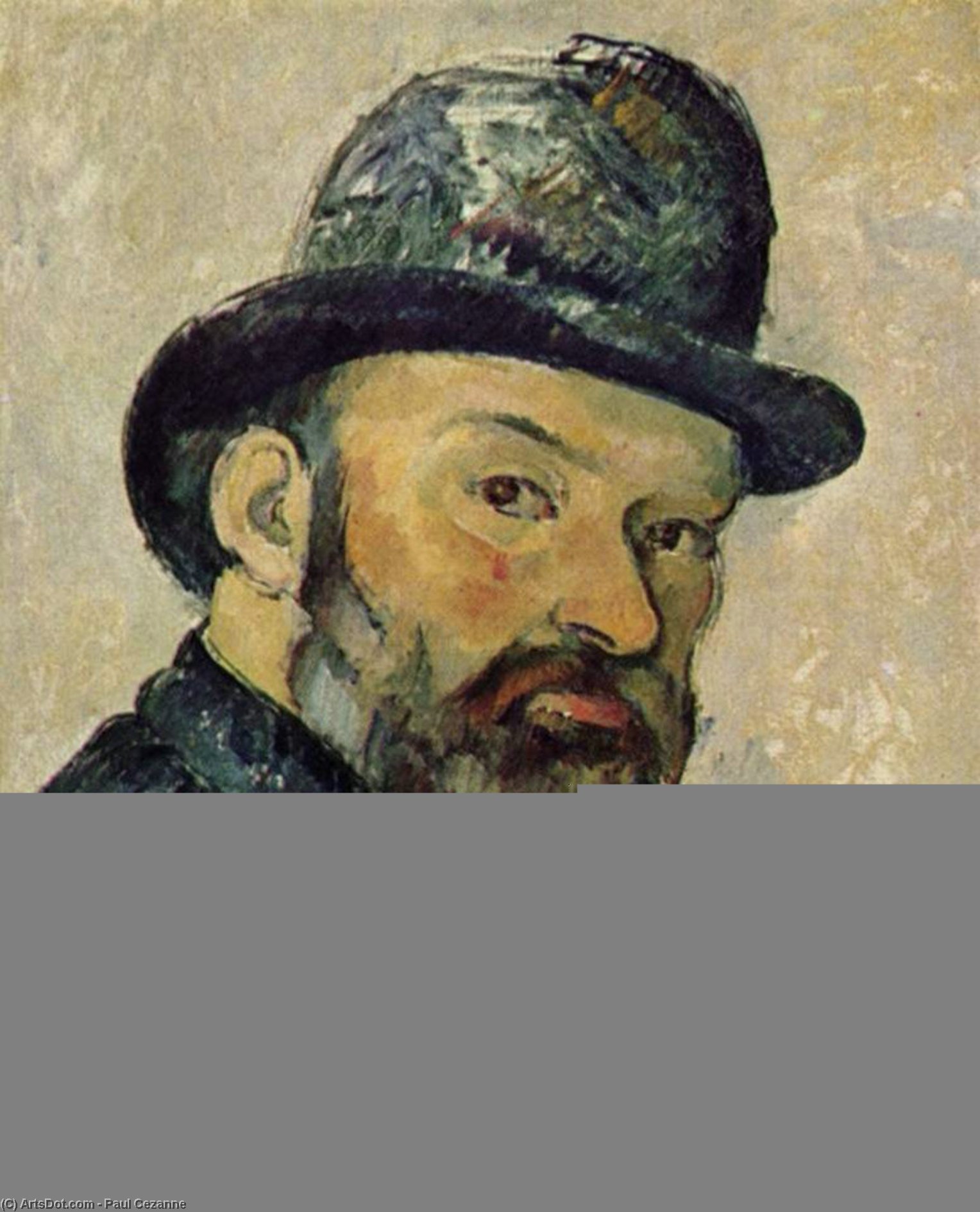
Paul Cézanne’s Self-Portrait, painted in 1887, stands as a cornerstone of Post-Impressionism and an enduring testament to the artist's revolutionary vision. Located at the Kunstmuseum Bern in Switzerland, this oil on canvas transcends mere representation; it embodies Cézanne’s profound engagement with form, color, and the very essence of artistic expression—a journey that irrevocably altered the trajectory of modern art history.
Artistic Evolution: From Romanticism to Impressionist Influence
Cézanne began his artistic explorations within the framework of Romanticism and Realism, mirroring the stylistic tendencies prevalent at Jas de Bouffan, where he created monumental murals reflecting the grandeur of nature. However, Cézanne swiftly distanced himself from these conventions, recognizing the limitations inherent in capturing fleeting impressions. He embarked on a transformative process of intellectual inquiry, meticulously studying Impressionist techniques—particularly their emphasis on light and color—to forge his distinctive path forward. This evolution is palpably evident in Self-Portrait, where Cézanne deliberately abandons Impressionistic superficiality, prioritizing instead the underlying structural framework of objects and elevating formal qualities to paramount importance.
Characteristics of the Painting: Composition and Technique
Measuring 44 x 36 cm, Self-Portrait presents a man adorned with a hat featuring a feather—a deliberate gesture signaling Cézanne’s preoccupation with visual detail and symbolic significance. His gaze is direct yet contemplative, conveying an inner seriousness that invites introspection. Two figures inhabit the background, rendered in muted tones and less defined than the central subject, serving as anchors to Cézanne's carefully constructed composition. The artist employed a technique characterized by repetitive brushstrokes—a hallmark of his oeuvre—applying planes of color with meticulous precision. These small, overlapping strokes build up to form complex fields of pigment, capturing not merely what is seen but also how it feels—a characteristic that distinguishes Cézanne’s approach from the more fleeting aesthetic concerns of Impressionism. The use of color is particularly noteworthy: Cézanne juxtaposes warm hues with cooler shades, creating a harmonious interplay that models the contours of his face and attire.
Symbolism and Influence: A Pivotal Moment in Artistic History
Cézanne’s Self-Portrait wasn't merely a depiction of himself; it was a declaration of artistic intent—a bold assertion against academic conventions and an embrace of geometric abstraction. Initially met with skepticism and ridicule by critics of his time, Cézanne’s work gradually gained recognition among fellow artists like Camille Pissarro and Ambroise Vollard, who championed his vision and secured its place within the burgeoning avant-garde movement. Henri Matisse and Pablo Picasso famously acknowledged Cézanne as “the father of us all,” recognizing his profound influence on subsequent artistic developments—from Expressionism to Cubism—solidifying his legacy as a pioneer of modern art.
Relevance Today: An Enduring Masterpiece
Paul Cézanne’s Self-Portrait continues to resonate powerfully with audiences today, serving as an exemplar of Post-Impressionist innovation and artistic conviction. Its meticulous attention to form and color remains remarkably relevant in contemporary visual culture—a testament to Cézanne's enduring genius. For those seeking a deeper understanding of his artistic achievements,
Paul Cézanne: Self-Portrait offers invaluable insight into the genesis and significance of this iconic masterpiece—available on WahooArt.com.
Experience the art of Paul Cézanne with WahooArt.com.