































작품의 원본 비율을 유지하는 미리 설정된 크기 중에서 선택하세요.

특정 프레임이나 공간에 맞도록 직접 크기를 입력할 수 있습니다. 선택하신 크기가 원본 이미지의 비율과 일치하지 않는 경우, 작품을 자르거나 추가적인 손으로 그린 요소를 사용하여 그림을 확장합니다. 제작 시작 전 승인을 위해 디지털 목업을 보내드립니다.
화면 미리 보기는 실제 자르기 또는 확장을 반영하지 않습니다. 최종 구성은 목업을 통해서만 정확하게 확인하실 수 있습니다.
맞춤 크기 제작도 가능하지만, 원본 비율을 유지하기 위해 사전 정의된 목록에서 크기를 선택하시는 것을 권장합니다.

Flower pot at a table
복제본 크기
In the quietude of Paul Cézanne's 1869 masterpiece, "Flower pot at a table," one finds much more than a mere arrangement of domestic objects; one encounters the very dawn of a modern era. This painting serves as a profound threshold, standing at the delicate intersection where the fleeting, luminous whispers of Impressionism begin to solidify into the structural permanence of Post-Impressionism. At first glance, the composition appears deceptively simple—a humble tableau of a vase, a bottle, and various fruits resting upon a table. Yet, beneath this tranquil surface lies a restless, searching intellect. To gaze upon this work is to witness an artist beginning to dismantle the traditional boundaries of sight, moving away from the ephemeral effects of light toward an enduring exploration of form, weight, and the very architecture of reality.
The composition itself is a masterclass in balanced tension. A central vase, rendered in muted, earthy greens, anchors the scene, acting as a botanical pillar around which other elements—a white cup, a bowl, and scattered fruits—orbit in silent harmony. There is an inviting, almost cozy atmosphere to the arrangement, suggesting a moment of pause in a lived-in space, perhaps near a chair that waits for a viewer to sit and linger. However, Cézanne’s hand is far from casual. He treats each object not as a seamless part of a single atmospheric whole, but as independent planes of color and volume. Through his meticulous use of thick impasto brushstrokes, he builds texture and physical presence, allowing the paint to exist as a sculptural element on the canvas. This technique invites the eye to feel the weight of the ceramic and the roundness of the fruit, transforming a simple meal into a monumental study of existence.
To understand the emotional and historical gravity of this piece, one must consider Cézanne's radical departure from his contemporaries. While artists like Monet were chasing the vanishing moment of a sunset or the shimmer of water, Cézanne sought the permanent. He looked at the world through a lens of geometry, famously attempting to reduce nature to the fundamental shapes of the cube, the sphere, and the cone. In "Flower pot at a table," we see the early stages of this intellectualized vision. The objects are not merely depicted; they are constructed. This approach would later provide the essential DNA for Cubism, making Cézanne the "father" of much of the 20th century's most radical movements.
For the discerning collector or interior designer, this painting offers a unique opportunity to introduce a sense of profound stability and intellectual depth into a space. It is a work that does not shout for attention with garish colors, but rather commands respect through its quiet intensity and structural integrity. A high-quality reproduction of this piece brings with it the spirit of Provence and the rigorous beauty of a mind at work. Whether placed in a sun-drenched morning room or a sophisticated, minimalist study, "Flower pot at a table" acts as an anchor of sophistication, offering a timeless dialogue between the simplicity of nature and the complexity of human perception.

1839 - 1906 , 프랑스

Embark on a visual journey through Paul Cézanne’s 25 most iconic Post-Impressionist masterpieces. Uncover the stories, textures, and revolutionary techniques that shaped modern art. Find museum-quality reproductions for inspired decor at WahooArt.com. Discover all masterpieces on WahooArt.com.
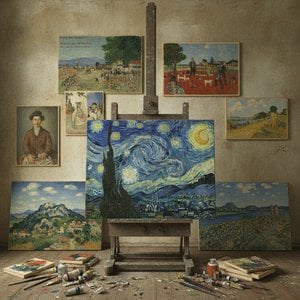
Step into the vibrant world of Post-Impressionism. Discover the stories behind 10 iconic masterpieces by legends like Van Gogh and Cézanne. From expressive brushwork to bold colors, find museum-quality art reproductions and decor inspiration at WahooArt.com. Explore the full collection online.


 미리보기
미리보기
 프린트 구매
 공유하기
공유하기 공유하기
공유하기
 상세 정보
상세 정보

 다운로드
다운로드
 유사 작품
유사 작품 X-레이
X-레이 슬라이드 쇼

 더 보기
더 보기









 유리 옵션은 110cm 미만 크기에서만 선택 가능합니다.


