

빠른 제작과 다양한 마감 옵션을 제공하는 박물관 품질의 지클레이 또는 캔버스 프린트. ( 손으로 그린 그림 구매 Switch to Digital Image)





























작품의 원본 비율을 유지하는 미리 설정된 크기 중에서 선택하세요.

특정 프레임이나 공간에 맞춰 직접 치수를 입력하실 수 있습니다. 선택하신 사이즈가 원본 이미지의 비율과 일치하지 않을 경우, 작품을 크롭(자르기)하거나 이미지를 대칭 또는 단색 채우기로 확장하여 제작합니다. 제작 시작 전, 최종 확인을 위해 디지털 목업이 전송됩니다.
화면상의 미리보기는 실제 크롭이나 확장 상태를 반영하지 않으므로, 최종 구도는 오직 목업을 통해서만 정확하게 확인하실 수 있습니다.
맞춤 사이즈 제작도 가능하지만, 원본 비율을 유지하기 위해서는 사전 정의된 목록에서 치수를 선택하시는 것을 권장합니다.

Boy in a Red Vest
복제본 크기
Paul Cézanne's "Boy in a Red Vest," painted in 1889, isn’t merely a portrait; it’s a carefully constructed meditation on space, form, and the very act of seeing. This work, housed within the Foundation E.G. Bührle in Zurich, stands as a pivotal bridge between the Impressionist past and the nascent Cubism that would soon redefine modern art. Cézanne, already a seasoned artist by this point, wasn’t interested in simply replicating reality; he sought to capture its essence—the way light interacts with objects, how they exist within their environment, and ultimately, how we perceive them.
The subject himself – an Italian boy named Michelangelo di Rosa – is presented with a remarkable degree of stillness. He’s seated, his head resting thoughtfully on his hand, an expression that hints at both melancholy and quiet contemplation. Yet, this apparent passivity belies the dynamic energy woven into the painting's structure. Cézanne employs a technique he would later refine—the use of flattened planes of color and small, exploratory brushstrokes. These aren’t blended or dissolved; instead, they are deliberately placed to build up complex fields of tone and texture. Notice how the red of his waistcoat isn’t a single hue but rather a mosaic of crimson, pink, and even hints of violet—a testament to Cézanne's fascination with color as an independent element.
What truly distinguishes “Boy in a Red Vest” is its masterful manipulation of perspective. Cézanne abandons the traditional single-point perspective favored by academic art, instead layering multiple viewpoints within a single image. The background, dominated by a deep green curtain, isn’t rendered as a receding space but rather as a series of intersecting planes—a deliberate fracturing of depth that challenges our conventional understanding of spatial relationships. This geometric approach wasn't simply an aesthetic choice; it reflected Cézanne’s belief that art should capture the underlying structure of objects, independent of their appearance to the eye. The boy himself seems to occupy this fragmented space, his form subtly distorted and reconfigured by the surrounding geometry.
The inclusion of two partially visible figures in the background—a woman on the left and a man on the right—adds another layer of complexity. They’re not fully integrated into the scene; rather, they appear as ghostly presences, hinting at a domestic setting but ultimately serving to further emphasize the boy's isolation and introspection. This layering of viewpoints, combined with the muted color palette, creates an atmosphere of quiet mystery, inviting the viewer to actively participate in constructing meaning.
“Boy in a Red Vest” was painted during a period of intense experimentation for Cézanne—a time when he was refining his post-Impressionist style and pushing the boundaries of artistic representation. Initially, his work faced criticism and ridicule from contemporary art critics who struggled to comprehend his unconventional approach. However, figures like Camille Pissarro and Ambroise Vollard recognized his genius early on, championing his work and paving the way for its eventual recognition by a wider audience. It’s no accident that Cézanne is often referred to as “the father of us all,” a title bestowed upon him by artists such as Henri Matisse and Pablo Picasso, who acknowledged his profound influence on their own artistic development.
Cézanne's radical approach to perspective and composition laid the groundwork for movements like Cubism, which sought to deconstruct objects into geometric forms. “Boy in a Red Vest” isn’t just a beautiful painting; it’s a foundational work that embodies the spirit of artistic innovation—a testament to Cézanne’s unwavering commitment to exploring new ways of seeing and representing the world around us. Today, through high-quality reproductions offered by WahooArt.com, this captivating masterpiece can be brought into your home, allowing you to experience its timeless beauty and profound insights.
To explore more works by Paul Cézanne and discover a stunning reproduction of “Boy in a Red Vest,” visit WahooArt.com.

1839 - 1906 , 프랑스

Explore the structural genius of Paul Cézanne. Discover how his mastery of geometric form and color bridged Impressionism and Cubism in this definitive guide for art enthusiasts and collectors.

Explore the transformative era of Post-Impressionism. Discover how masters like Cézanne and Matisse revolutionized color and form, moving beyond Impressionism to shape modern art history through structural innovation and expressive emotion.
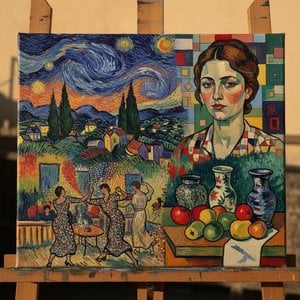
Unveil the profound revolution of Post-Impressionism. Explore how masters like Van Gogh and Cézanne utilized bold colors and emotional depth to transcend mere representation, laying the foundation for modern art. A sophisticated journey through history's most emotive brushstrokes.

Master the nuances of Impressionism vs. Post-Impressionism with our expert guide. Explore the revolutionary shift from Monet’s fleeting light to Van Gogh’s emotional depth. Discover how these iconic movements continue to inspire fine art collectors and modern interiors today.

Explore the profound legacy of Paul Cézanne. Discover how his mastery of geometric forms and vibrant color bridged Impressionism and Cubism, offering timeless inspiration for fine art collectors and enthusiasts seeking to understand the foundations of modern art.

 미리보기
미리보기
 공유하기
공유하기 공유하기
공유하기
 상세 정보
상세 정보

 다운로드
다운로드
 유사 작품
유사 작품 X-레이
X-레이 슬라이드 쇼
 Stats
Stats

 더 보기
더 보기









 유리 옵션은 110cm 미만 크기에서만 선택 가능합니다.


