
x


 Oil On CanvasWallArtBaroque
 219.0 x 170.0 cm
 프릭 컬렉션
빠른 제작과 다양한 마감 옵션을 제공하는 박물관 품질의 지클레이 또는 캔버스 프린트. ( 손으로 그린 그림 구매 이미지 구매)





























작품의 원본 비율을 유지하는 미리 설정된 크기 중에서 선택하세요.

특정 프레임이나 공간에 맞춰 직접 치수를 입력하실 수 있습니다. 선택하신 사이즈가 원본 이미지의 비율과 일치하지 않을 경우, 작품을 크롭(자르기)하거나 이미지를 대칭 또는 단색 채우기로 확장하여 제작합니다. 제작 시작 전, 최종 확인을 위해 디지털 목업이 전송됩니다.
화면상의 미리보기는 실제 크롭이나 확장 상태를 반영하지 않으므로, 최종 구도는 오직 목업을 통해서만 정확하게 확인하실 수 있습니다.
맞춤 사이즈 제작도 가능하지만, 원본 비율을 유지하기 위해서는 사전 정의된 목록에서 치수를 선택하시는 것을 권장합니다.

Honor et Virtus post mortem floret
복제본 크기
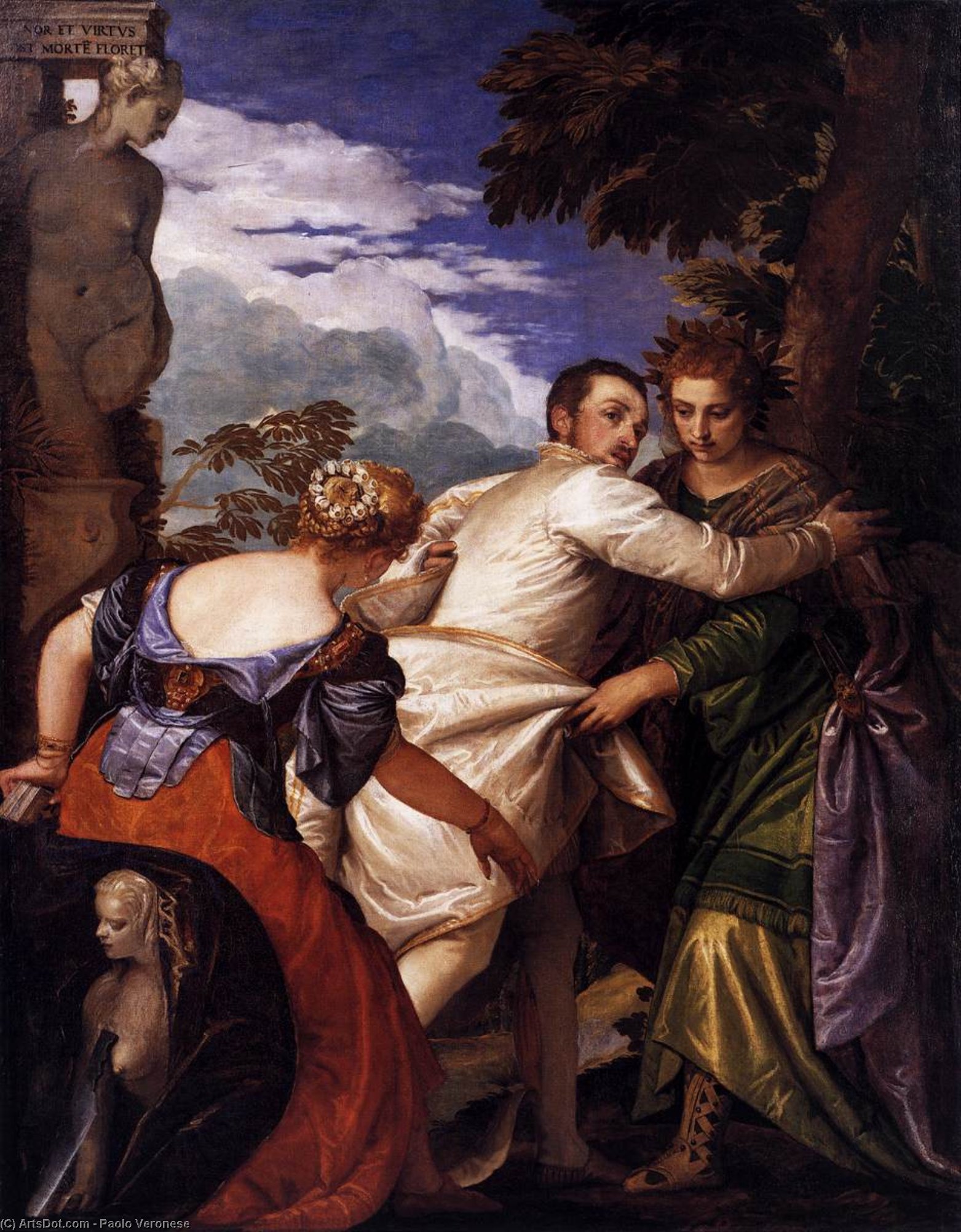
Paolo Veronese’s “Honor et Virtus post mortem floret,” painted in 1567, is more than just a visually stunning depiction of an embrace; it's a profound allegory exploring the eternal struggle between virtue and vice. Originating from the vibrant heart of Venice during the High Renaissance, this oil on canvas masterpiece transcends its historical context to resonate with viewers today through its timeless themes of moral choice and the pursuit of honor. Veronese, a master of color, composition, and opulent spectacle, elevates the scene beyond a simple portrait, transforming it into a dynamic visual narrative that speaks volumes about human nature.
The painting immediately captivates with its scale – measuring 219 x 170 cm – and its lavish detail. Veronese, known for his dramatic use of light and shadow, employs a masterful chiaroscuro technique to sculpt the figures and create a sense of depth within the richly textured garden setting. The background is a meticulously rendered Venetian landscape, complete with architectural elements and lush foliage, providing a vibrant counterpoint to the central drama unfolding before us. Notice the subtle variations in color – the deep greens of the plants, the warm hues of the stone, and the rich reds and golds adorning the figures’ clothing – all contributing to the painting's overall sense of opulence and grandeur.
At the heart of “Honor et Virtus post mortem floret” lies a complex allegory rooted in classical philosophy. The central figure, identified as Hercules by some scholars, is presented in a moment of profound indecision. He stands poised between two women – one embodying Virtue and the other representing Vice. This isn’t a simple depiction of good versus evil; rather, it's a nuanced exploration of temptation and moral fortitude. The inscription at the top of the painting, “Honor et Virtus post mortem floret” (Honor and Virtue flourish after death), serves as a potent reminder of the lasting consequences of our choices.
Virtue, crowned with a laurel wreath – a symbol of victory and achievement – extends her hand towards Hercules, offering him guidance and righteousness. Conversely, Vice, cloaked in shadows and adorned with symbols of pleasure and indulgence (a dagger and a sphinx statue), attempts to lure him into a world of fleeting gratification. The visual tension between these two figures is palpable, creating a dramatic interplay that draws the viewer’s eye and invites contemplation about the choices we face in our own lives.
To fully appreciate “Honor et Virtus post mortem floret,” it’s crucial to understand its historical context. Venice, during the 16th century, was a thriving center of art and commerce, boasting a unique blend of classical influences and Renaissance innovation. Veronese, born in Verona but firmly established in Venice, expertly absorbed these diverse artistic traditions, creating a style that is both deeply rooted in Venetian heritage and distinctly his own. His works are characterized by their scale, lavish detail, and masterful use of color – qualities that earned him the admiration of patrons like Emperor Rudolph II and Queen Christina of Sweden.
This particular painting reflects Veronese’s shift towards allegorical subjects, a departure from his earlier historical and biblical scenes. It showcases his growing interest in philosophical themes and his willingness to experiment with new compositional techniques. The influence of Titian, particularly his mastery of color and atmospheric perspective, is evident throughout the work, yet Veronese maintains a unique artistic voice that distinguishes him as one of Venice’s greatest masters.
“Honor et Virtus post mortem floret” continues to resonate with viewers centuries after its creation. Its depiction of moral struggle and the allure of temptation speaks to universal human experiences, prompting us to reflect on our own values and choices. The painting’s dramatic composition, vibrant colors, and intricate details create a powerful emotional impact, drawing us into the scene and inviting us to contemplate the eternal conflict between virtue and vice. It's a testament to Veronese’s artistic genius – a masterpiece that transcends its historical context to offer timeless insights into the complexities of human nature.


1528 - 1588 , 이탈리아

Embark on a journey through the Venetian Renaissance. Discover how masters like Giorgione and Titian revolutionized art through luminous color and light. Explore the profound legacy of the Venetian School and its enduring influence on the world of fine art.

Explore the profound secrets of classical oil painting. From the delicate mastery of glazing to the dramatic depth of chiaroscuro, discover the timeless techniques used by Old Masters to create enduring, museum-quality masterpieces that capture light and emotion.

Discover the enduring legacy of oil on board painting. Explore how historical techniques, rich impasto textures, and structural durability create timeless masterpieces that bridge Renaissance grandeur with modern art collecting excellence.


최신 미술 뉴스, 특별 혜택 및 인테리어 아이디어를 가장 먼저 만나보세요.
프로젝트에 대해 알려주시면 저희 미술 전문가들이 맞춤형 아트 제안 3가지를 전달해 드립니다.
당신만을 위한 맞춤형 옵션 3가지를 무료로 추천해 드립니다!

 미리보기
미리보기
 공유하기
공유하기 공유하기
공유하기
 상세 정보
상세 정보

 다운로드
다운로드
 유사 작품
유사 작품 X-레이
X-레이 슬라이드 쇼
 더 보기
더 보기









 유리 옵션은 110cm 미만 크기에서만 선택 가능합니다.


