

빠른 제작과 다양한 마감 옵션을 선택할 수 있는 박물관 수준의 지클레이 및 캔버스 프린트. ( 수작업 채색 복제본 주문하기 디지털 이미지 판매 채널로 전환)





























작품의 원본 비율을 그대로 유지하는 프리셋 사이즈 중에서 선택해 보세요.

특정 프레임이나 공간에 맞춰 직접 치수를 입력하실 수 있습니다. 선택하신 사이즈가 원본 이미지의 비율과 일치하지 않을 경우, 작품을 크롭(자르기)하거나 이미지를 대칭 또는 단색 채우기로 확장하여 제작합니다. 제작 시작 전, 최종 확인을 위해 디지털 목업이 전송됩니다.
화면상의 미리보기는 실제 크롭이나 확장 상태를 반영하지 않으므로, 최종 구도는 오직 목업을 통해서만 정확하게 확인하실 수 있습니다.
맞춤 사이즈 제작도 가능하지만, 원본 비율을 유지하기 위해서는 사전 정의된 목록에서 치수를 선택하시는 것을 권장합니다.

Head of Prophet
복제본 규격
Paolo Uccello's “Head of Prophet,” painted in 1443, is not merely a portrait; it’s a meticulously crafted window into the spiritual and intellectual landscape of early Renaissance Florence. This intimate depiction, rendered with a startlingly modern sensibility for its time, transcends simple representation to become a profound meditation on wisdom, faith, and the very nature of visual space. The painting immediately commands attention through its stark simplicity – a close-up of an elderly man, his face framed by a halo that subtly suggests both divinity and the passage of time. Uccello’s genius lies not in flamboyant detail but in the masterful manipulation of line and form to create a sense of intense presence and quiet reverence.
The composition itself is strikingly deliberate. The circular frame, reminiscent of illuminated manuscripts or devotional panels, isolates the subject, drawing our focus entirely onto his face. This framing technique, coupled with the shallow perspective – a characteristic Uccello would later refine in works like ‘Clock with Heads of Prophets’ – creates an immediate sense of intimacy and draws us into a private encounter. The use of linear perspective is particularly noteworthy; it's not merely applied to create depth but seems to actively shape the viewer’s gaze, guiding our attention across the contours of his face and emphasizing the solemnity of his expression.
Uccello’s technique is a testament to his dedication to understanding the principles of visual space. Executed in oil on panel, the painting exhibits a remarkable smoothness in areas like the skin and halo, achieved through meticulous layering and blending – a hallmark of Renaissance oil painting. However, closer inspection reveals a deliberate roughness in the beard and surrounding background, suggesting the artist’s hand actively shaping the texture and adding depth to the image. These subtle variations speak volumes about his process: a careful balance between idealized representation and tangible materiality.
The palette is restrained, dominated by earthy tones – ochres, siennas, and umbers – that evoke a sense of age and solemnity. The use of light is equally deliberate, casting soft shadows that sculpt the face and halo, lending it three-dimensionality without resorting to dramatic chiaroscuro. This controlled lighting further enhances the figure’s presence, making him appear almost luminous against the dark backdrop.
The “Head of Prophet” is unequivocally a religious depiction, likely representing Saint Simeon, a revered figure known for his prophetic visions and devotion. The halo, a universal symbol of holiness and divine grace, immediately establishes this context. However, Uccello’s portrayal goes beyond simple iconography. The subject's aged appearance – the deep wrinkles etched into his face, the long white beard – are not merely indicators of age but potent symbols of wisdom, experience, and the accumulated knowledge of a life dedicated to faith. He embodies a quiet authority, suggesting that true understanding comes not from youthful exuberance but from years spent contemplating the mysteries of the divine.
Furthermore, the painting’s focus on the face – a deliberate choice in an era dominated by portraiture of the whole body – elevates the individual to a level of profound significance. It's as if Uccello is inviting us to contemplate not just the figure’s outward appearance but also the inner life and spiritual journey represented within his gaze.
Paolo Uccello stands as a pivotal, yet often misunderstood, figure in Renaissance art. While he is best known for his ambitious and occasionally eccentric works like ‘Clock with Heads of Prophets,’ this “Head of Prophet” offers a more intimate glimpse into his artistic vision. His pioneering work on perspective – a concept still debated among scholars – fundamentally altered the way artists represented space and depth. Uccello’s legacy lies not just in his technical innovations but also in his willingness to experiment, to push the boundaries of convention, and to imbue his art with a profound sense of intellectual curiosity. Reproductions of this captivating portrait offer a unique opportunity to connect with one of the most inventive minds of the Early Renaissance.

1397 - 1475 , 이탈리아

Embark on a profound journey through art history with our exploration of Saint Francis's most iconic works. Discover Giotto’s revolutionary frescoes and the spiritual depth of Proto-Renaissance masterpieces through an expert lens for the true classic art enthusiast.
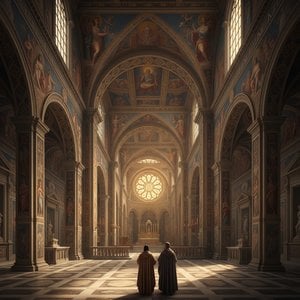
Explore the profound impact of linear perspective on Renaissance art. Discover how masters like Brunelleschi and Uccello used mathematical precision to create breathtaking depth and spatial illusion in iconic historical masterpieces.

Explore the profound iconography of Saint Jerome through art history's most iconic masterpieces. From Renaissance serenity to Baroque drama, discover how legendary painters captured divine devotion in breathtaking oil paintings and fine art reproductions.

Discover the profound beauty of Saint Artworks. Explore the history, symbolism, and luminous mastery of Renaissance religious masterpieces through an expert art-historical lens.

Embark on a sophisticated journey through art history with our exploration of Saint Peter's most powerful masterpieces. Discover the profound emotional depth and technical brilliance of Renaissance and Baroque icons, curated for the discerning classic art enthusiast.

 실제 크기로 보기
 보내기
보내기 공유하기
공유하기
 상세 보기
상세 보기 가이드 보기

 이미지 다운로드
 유사 작품 더 보기
 X-레이
X-레이 슬라이드 쇼 보기
 통계 정보
통계 정보


 상세 보기
상세 보기









 유리 옵션은 110cm 미만 크기에서만 선택 가능합니다.


![Stanze Vaticane - The School Of Athens (detail) [06] — 라파엘로, High Renaissance](/media/artworks/images-thumb/a5/aa/a5aa2b9acdb9dbd4f6ab64748f4cc597.jpg)


