
 Acrylic On CanvasWallArtNaive Art/Primitivism
 1920Modern
 55.0 x 41.0 cm
빠른 제작과 다양한 마감 옵션을 제공하는 박물관 품질의 지클레이 또는 캔버스 프린트. ( 손으로 그린 그림 구매 Switch to Digital Image)





























작품의 원본 비율을 유지하는 미리 설정된 크기 중에서 선택하세요.

특정 프레임이나 공간에 맞춰 직접 치수를 입력하실 수 있습니다. 선택하신 사이즈가 원본 이미지의 비율과 일치하지 않을 경우, 작품을 크롭(자르기)하거나 이미지를 대칭 또는 단색 채우기로 확장하여 제작합니다. 제작 시작 전, 최종 확인을 위해 디지털 목업이 전송됩니다.
화면상의 미리보기는 실제 크롭이나 확장 상태를 반영하지 않으므로, 최종 구도는 오직 목업을 통해서만 정확하게 확인하실 수 있습니다.
맞춤 사이즈 제작도 가능하지만, 원본 비율을 유지하기 위해서는 사전 정의된 목록에서 치수를 선택하시는 것을 권장합니다.

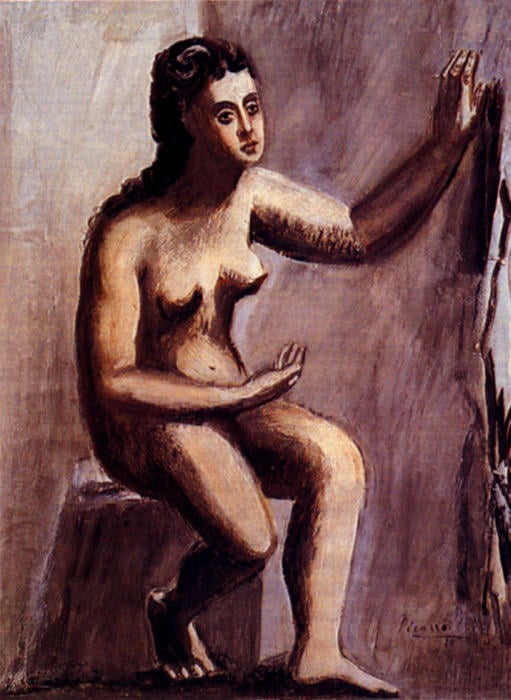
Seated woman
복제본 크기
Pablo Picasso's Seated Woman, painted in 1920, isn’t merely a portrait; it’s a carefully constructed tableau brimming with layers of meaning. Measuring just 55 x 41 centimeters, this gouache painting immediately draws the viewer into a world where simplicity and profound symbolism intertwine. The subject, a woman seated on a chair with her hands resting against the wall, appears to gaze out from an unseen doorway or window – a gesture simultaneously vulnerable and contemplative. The choice of a nude figure within a domestic setting was radical for its time, reflecting Picasso’s deliberate exploration of Naive Art principles and his desire to strip away conventional artistic conventions.
Picasso's decision to employ gouache, a paint known for its opacity and ability to create rich, flat colors, contributes significantly to the painting’s immediate impact. The palette is restrained – primarily blues, browns, and ochres – lending the scene an almost timeless quality. The figures in the background, subtly rendered, hint at a narrative beyond the immediate image, suggesting a story unfolding just out of frame, inviting speculation about the woman's thoughts and experiences. This deliberate ambiguity is characteristic of Picasso’s approach to storytelling, prioritizing emotional resonance over literal representation.
The painting firmly places itself within the realm of Naive Art, also known as Primitivism. This artistic movement, which gained prominence in the early 20th century, sought to emulate the style and spirit of non-Western art – particularly African masks and Oceanic sculpture. Picasso’s foray into this style wasn't a simple imitation; rather, he adopted its core tenets—directness, lack of illusionism, and an emphasis on essential forms—to create a powerfully emotive work. Notice how the woman’s features are simplified, her body rendered with bold, unmodulated strokes, mirroring the stylistic choices found in Primitivist art.
Beyond the immediate visual impact, Seated Woman is rich with symbolic potential. The presence of two figures in the background—one on the left and another to the right—suggests a story or relationship that extends beyond the central figure. These shadowy presences could represent lovers, family members, or perhaps even strangers, adding depth and complexity to the scene. The woman’s posture – seated with her hands resting against the wall – is particularly evocative, conveying a sense of isolation and contemplation. It's as if she's caught in a moment of quiet reflection, grappling with unspoken thoughts and emotions.
Furthermore, the painting aligns itself with Symbolist principles, which emphasized the expression of ideas and emotions through visual elements rather than strict adherence to realism. Picasso’s use of color, composition, and symbolic figures all contribute to this expressive intent, inviting viewers to interpret the scene on a deeper, more intuitive level.
Seated Woman stands as a pivotal work in Picasso's artistic development and within the broader context of 20th-century art. It represents a conscious departure from traditional academic painting, embracing a new approach to form, color, and narrative. Picasso’s experimentation with Naive Art techniques paved the way for subsequent movements like Surrealism and Expressionism, demonstrating his profound influence on the course of modern art.
WahooArt offers meticulously crafted, hand-painted reproductions of this iconic masterpiece, ensuring that the essence of Picasso's vision is preserved in stunning detail. Each reproduction captures the painting’s raw emotion and symbolic depth, allowing you to bring this captivating work into your home or office – a testament to Picasso’s enduring legacy.


1881 - 1973 , 스페인

Explore the profound evolution of Cubism through an expert analysis of Pablo Picasso's revolutionary works. From Analytical to Synthetic Cubism, discover the techniques that redefined modern art and learn how to curate these iconic masterpieces for your private collection.

Explore the profound impact of Primitivism on modern art. Delve into how masters like Gauguin and Picasso utilized raw emotion and non-Western aesthetics to redefine artistic form, breaking from academic tradition to shape the course of 20th-century expressionism.

Discover the enchanting world of Naive Art. Explore the profound beauty of self-taught masters like Henri Rousseau through an art-history lens, uncovering how simple forms and vibrant colors create timeless, soulful masterpieces for the discerning collector.

 미리보기
미리보기
 공유하기
공유하기 공유하기
공유하기
 상세 정보
상세 정보

 다운로드
다운로드
 유사 작품
유사 작품 X-레이
X-레이 슬라이드 쇼
 Stats
Stats 더 보기
더 보기









 유리 옵션은 110cm 미만 크기에서만 선택 가능합니다.


