Pablo Picasso: A Revolutionary Artist
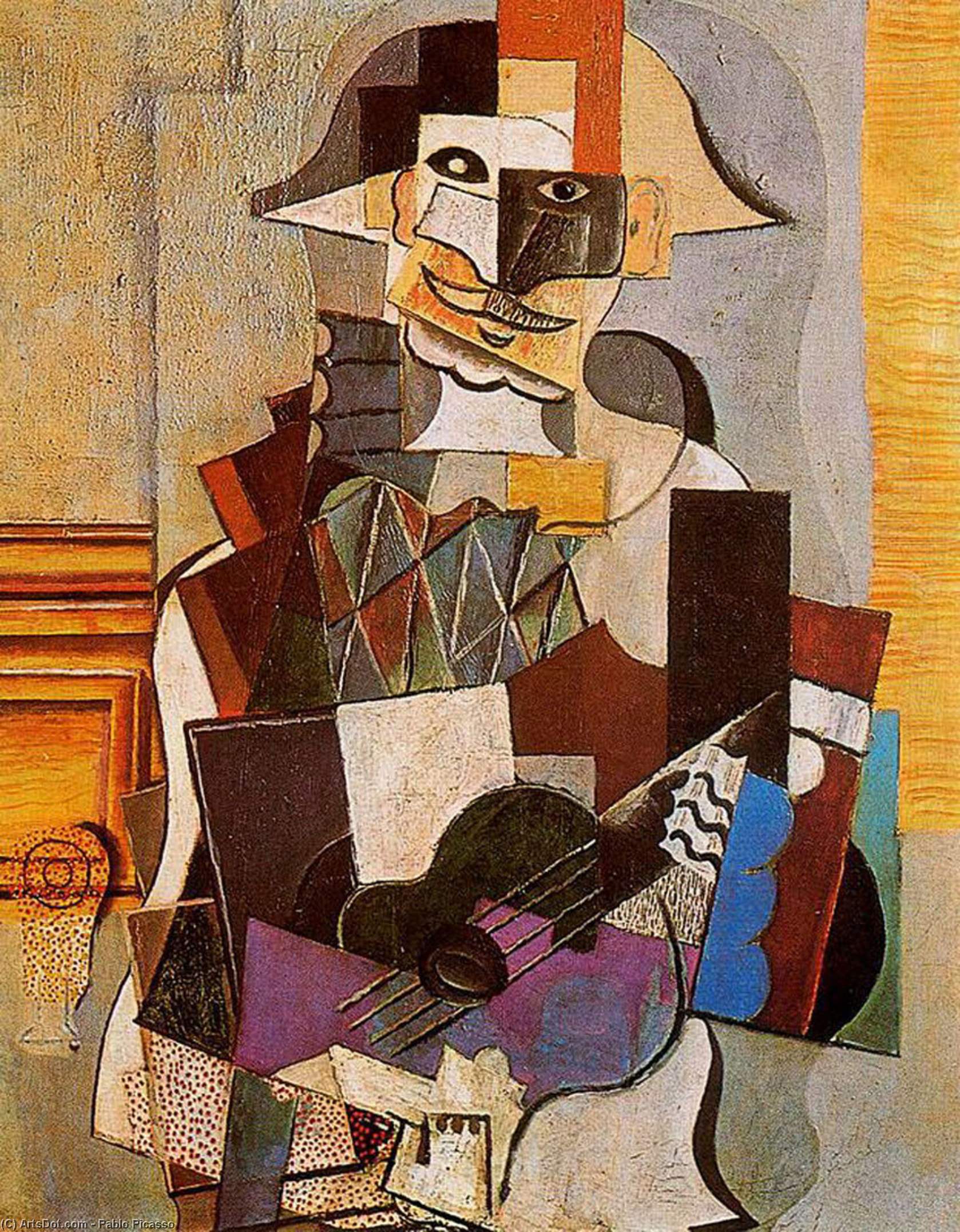
Pablo Ruiz y Picasso (1881–1973) stands as one of the most influential figures in 20th-century art, a titan whose innovative approach to painting irrevocably altered the course of artistic expression. His relentless experimentation with diverse styles—from Impressionism to Surrealism—established him as a true visionary and cemented his legacy as arguably the greatest artist of his era. Among his vast oeuvre, “Harlequin,” painted in 1918 during Picasso’s pivotal Synthetic Cubist phase, exemplifies this groundbreaking style and continues to fascinate audiences worldwide.
The Artistic Context
Synthetic Cubism emerged from Picasso's collaboration with Georges Braque between 1912 and 1919, marking a decisive break from Analytical Cubism’s fragmented perspectives. Unlike its predecessor, which dissected objects into geometric planes, Synthetic Cubism embraced collage techniques—incorporating newspaper fragments, fabric scraps, and other materials—to create textured surfaces and introduce illusionistic elements. This stylistic shift reflected the broader cultural currents of the time, mirroring a fascination with mass media and challenging traditional notions of representation. The Musée Thyssen-Bornemisza houses an impressive collection showcasing Picasso’s evolution throughout this period, offering visitors a comprehensive glimpse into his artistic journey.
The Painting: A Closer Look
“Harlequin,” depicting a man holding a guitar, embodies the essence of Synthetic Cubism's aesthetic principles. The figure is enveloped in a mask—a recurring motif in Picasso’s work—suggesting anonymity and perhaps hinting at the performer’s role as an archetype of disguise and illusion. The background features another person and a chair, establishing a theatrical setting that underscores the painting’s symbolic significance. Picasso skillfully blends reality with abstraction, fracturing forms into interlocking planes while simultaneously maintaining recognizable contours. This masterful manipulation of perspective contributes to the artwork's enigmatic atmosphere and invites contemplation about identity and performance.
Artistic Influences
Picasso’s Synthetic Cubist explorations were profoundly impacted by Proto-Cubism—a precursor movement spearheaded by Braque and Picasso themselves—which prioritized geometric simplification and muted color palettes. Inspired by artists like Jacques Lipchitz, Picasso pushed the boundaries of artistic convention, rejecting academic realism in favor of a radically new visual language. The Museo Picasso in Barcelona showcases an extensive collection of Picasso’s early works, demonstrating his formative influences and establishing him as a cornerstone of modern art history.
Relevance to Modern Art
Picasso's contribution to modern art transcends mere stylistic innovation; he fundamentally questioned the role of art in reflecting and shaping society. His willingness to embrace experimentation—particularly during periods of social upheaval—established him as a champion of artistic freedom and paved the way for subsequent movements like Surrealism and Abstract Expressionism. The Museum of Modern Art (New York City) proudly displays “The Three Musicians,” another iconic masterpiece from Picasso’s Synthetic Cubist period, highlighting his enduring influence on 20th-century art aesthetics.
In conclusion, “Harlequin” by Pablo Picasso stands as a testament to artistic genius—a captivating piece that encapsulates the transformative spirit of Synthetic Cubism and secures its place among the most significant artworks of the century.



 미리보기
미리보기
 손으로 그린 그림 구매
 공유하기
공유하기 공유하기
공유하기
 상세 정보
상세 정보

 다운로드
다운로드
 유사 작품
유사 작품 X-레이
X-레이 슬라이드 쇼

 더 보기
더 보기






































 유리 옵션은 110cm 미만 크기에서만 선택 가능합니다.