
원하는 크기와 액자로 주문 제작되는, 작가들이 직접 캔버스에 손으로 그린 유화 작품입니다. ( 프린트 판매로 전환 디지털 이미지로 전환)





























작품의 원본 비율을 유지하는 미리 설정된 크기 중에서 선택하세요.

특정 프레임이나 공간에 맞도록 직접 크기를 입력할 수 있습니다. 선택하신 크기가 원본 이미지의 비율과 일치하지 않는 경우, 작품을 자르거나 추가적인 손으로 그린 요소를 사용하여 그림을 확장합니다. 제작 시작 전 승인을 위해 디지털 목업을 보내드립니다.
화면 미리 보기는 실제 자르기 또는 확장을 반영하지 않습니다. 최종 구성은 목업을 통해서만 정확하게 확인하실 수 있습니다.
맞춤 크기 제작도 가능하지만, 원본 비율을 유지하기 위해 사전 정의된 목록에서 크기를 선택하시는 것을 권장합니다.

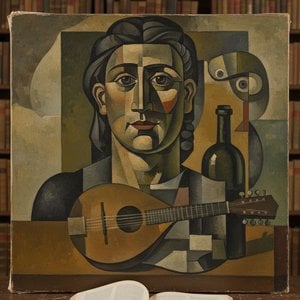
Harlequin leaning
복제본 크기
Pablo Picasso’s “Harlequin Leaning,” painted in 1909, is not merely a portrait; it's a fractured embodiment of the artist’s revolutionary Analytical Cubism. This seemingly simple depiction of a man – often identified as a representation of Picasso himself – immediately draws the viewer into a world of fragmented perspectives and unsettling ambiguity. The painting captures a figure seated, his face obscured by a wide-brimmed hat, a mustache adding to an air of detached contemplation. The muted palette—primarily ochres, browns, and grays—contributes to the work’s somber mood, reflecting the anxieties and intellectual ferment of the period.
Crucially, “Harlequin Leaning” exists within Picasso's pivotal Analytical Cubist phase. Unlike the more disjointed and vibrant Synthetic Cubism that followed, Analytical Cubism sought to dissect objects into their fundamental geometric components, presenting multiple viewpoints simultaneously on a single canvas. Here, we see this principle in full effect: the figure is broken down into interlocking planes, each rendered with meticulous detail yet presented from various angles. The background dissolves into a series of overlapping rectangles and lines, mirroring the fragmentation within the subject’s form. This deliberate distortion challenges our traditional perception of space and representation, forcing us to actively engage with the artwork.
The obscured face is perhaps the most compelling element of “Harlequin Leaning.” It's a deliberate choice by Picasso, stripping away any readily identifiable identity. This anonymity invites speculation and allows viewers to project their own interpretations onto the figure. The hat, tilted at an angle, adds to this sense of mystery, suggesting a hidden persona or perhaps a theatrical role – a nod to Harlequin, the iconic character from Commedia dell’Arte, whose exaggerated features and playful antics were central to Picasso's artistic explorations during this period.
The seated posture itself is significant. It conveys a sense of introspection and weariness, hinting at the intellectual burdens carried by the artist. Some scholars interpret the leaning pose as a representation of the artist’s own struggle with his craft, the constant process of deconstruction and reconstruction inherent in Cubist practice. The overall impression isn't one of joyful exuberance, but rather a quiet contemplation tinged with melancholy – a hallmark of Picasso’s work during this introspective phase.
“Harlequin Leaning” was created at the height of Picasso's exploration of Analytical Cubism, a method he developed alongside Georges Braque. This style represented a radical departure from traditional artistic conventions. Instead of depicting objects as they appear to the eye, artists like Picasso sought to represent them as they are perceived by the mind – a collection of intersecting geometric forms. The painting’s monochromatic palette and meticulous detailing were hallmarks of this approach, emphasizing structure over color and form over illusion.
The work reflects the broader intellectual climate of early 20th-century Europe, marked by advancements in science, particularly Einstein's theory of relativity, which challenged established notions of space and time. Picasso’s Cubism mirrored this shift, dismantling traditional perspectives and offering a new way of seeing the world. “Harlequin Leaning” stands as a testament to this revolutionary approach, demonstrating how art could actively engage with the complexities of modern thought.
WahooArt offers meticulously crafted hand-painted reproductions of “Harlequin Leaning,” ensuring that the nuances of Picasso’s original work are faithfully preserved. Our artists utilize traditional techniques and archival-quality materials to create a stunningly accurate representation, capturing not only the visual details but also the emotional depth of this iconic painting. Whether you're an art enthusiast, collector, or seeking a unique piece for your interior design, our reproduction provides a beautiful and authentic way to experience the power and enduring legacy of Pablo Picasso’s “Harlequin Leaning.”

1881 - 1973 , 스페인

Explore the profound evolution of Cubism through an expert analysis of Pablo Picasso's revolutionary works. From Analytical to Synthetic Cubism, discover the techniques that redefined modern art and learn how to curate these iconic masterpieces for your private collection.

Embark on a journey through the revolutionary world of Cubism. Discover how masters like Picasso redefined perspective through Analytical and Synthetic techniques in this expert-led guide for art enthusiasts and collectors.
Master the complexities of Analytical Cubism with our expert guide. Explore how Picasso and Braque revolutionized art through fragmented perspective, geometric abstraction, and muted palettes—essential knowledge for every discerning art collector.


 미리보기
미리보기
 공유하기
공유하기 공유하기
공유하기
 상세 정보
상세 정보

 다운로드
다운로드
 유사 작품
유사 작품 X-레이
X-레이 슬라이드 쇼
 통계 정보
통계 정보

 더 보기
더 보기









 유리 옵션은 110cm 미만 크기에서만 선택 가능합니다.


