

빠른 제작과 다양한 마감 옵션을 선택할 수 있는 박물관 수준의 지클레이 및 캔버스 프린트. ( 수작업 채색 복제본 주문하기 디지털 이미지 판매 채널로 전환)





























작품의 원본 비율을 그대로 유지하는 프리셋 사이즈 중에서 선택해 보세요.

특정 프레임이나 공간에 맞춰 직접 치수를 입력하실 수 있습니다. 선택하신 사이즈가 원본 이미지의 비율과 일치하지 않을 경우, 작품을 크롭(자르기)하거나 이미지를 대칭 또는 단색 채우기로 확장하여 제작합니다. 제작 시작 전, 최종 확인을 위해 디지털 목업이 전송됩니다.
화면상의 미리보기는 실제 크롭이나 확장 상태를 반영하지 않으므로, 최종 구도는 오직 목업을 통해서만 정확하게 확인하실 수 있습니다.
맞춤 사이즈 제작도 가능하지만, 원본 비율을 유지하기 위해서는 사전 정의된 목록에서 치수를 선택하시는 것을 권장합니다.

Frutero y guitarra
복제본 규격
Pablo Picasso’s Frutero y Guitarra, painted in 1912, isn't merely a still life; it’s a deliberate dismantling and reimagining of reality. This pivotal work, residing within the Peggy Guggenheim Collection in Venice, marks a crucial transition for the artist – a bold leap into the heart of synthetic cubism. Forget traditional perspective and realistic representation; Picasso here offers us a world fractured, reassembled, and imbued with an almost unsettling beauty. The painting depicts a simple arrangement: a guitar resting on a table alongside a bowl overflowing with fruit. Yet, within this seemingly straightforward composition lies a complex exploration of form, color, and the very nature of perception.
The genius of Frutero y Guitarra resides in its meticulous construction. Picasso masterfully employs paper cutouts – a technique he’d been experimenting with – layered beneath the paint to create an astonishingly textured surface. These fragments, seemingly haphazard at first glance, are carefully positioned to suggest volume and depth, defying the limitations of a flat picture plane. The muted palette—primarily blues, browns, and ochres—contributes to the painting's dreamlike quality, lending it an atmosphere of quiet contemplation. It’s as if Picasso is inviting us to step into a fragmented memory, where objects exist simultaneously in multiple viewpoints.
Following the analytical cubism phase, characterized by the deconstruction of objects into their component geometric forms, Frutero y Guitarra represents a significant shift. Synthetic cubism embraced collage and incorporated real materials – in this case, paper – directly into the artwork. This move signaled a departure from simply analyzing form to actively constructing new visual realities. Picasso wasn’t just breaking down objects; he was building them anew, inviting the viewer to participate in the process of reconstruction.
The guitar itself is particularly fascinating. Picasso doesn't depict it as a recognizable instrument but rather as a collection of overlapping planes and angles. The fruit, similarly abstracted, seems to float within the composition, their shapes echoing the fragmented forms of the guitar. This deliberate distortion challenges our conventional understanding of objects, forcing us to see them in a completely new light. It’s a testament to Picasso's revolutionary approach to representation – he wasn’t interested in mirroring reality but in expressing its essence through a carefully orchestrated arrangement of geometric elements.
The inclusion of Frutero y Guitarra within the Peggy Guggenheim Collection is no accident. The collection, renowned for its commitment to showcasing groundbreaking modern art, perfectly complements Picasso’s innovative spirit. Guggenheim herself was a champion of cubism and other avant-garde movements, recognizing their radical potential. This painting stands as a cornerstone of that legacy, demonstrating Picasso's pivotal role in shaping the course of 20th-century art.
Beyond its artistic merit, Frutero y Guitarra offers a glimpse into Picasso’s creative process – his willingness to experiment, to challenge conventions, and to push the boundaries of what was considered possible. It's a work that continues to inspire artists and captivate viewers with its intricate beauty and profound insights into the nature of perception. To experience this masterpiece in full detail, we invite you to explore our meticulously crafted oil painting reproduction – a faithful recreation of Picasso’s vision, ready to transform your space with its captivating charm.

1881 - 1973 , 스페인

Unveil the radical revolution of Cubism. Explore how masters like Picasso and Braque redefined modern art through fragmented forms and geometric abstraction, offering profound insights for discerning collectors of fine art history and masterpieces.

Explore the profound evolution of Cubism through an expert analysis of Pablo Picasso's revolutionary works. From Analytical to Synthetic Cubism, discover the techniques that redefined modern art and learn how to curate these iconic masterpieces for your private collection.

Master the complexities of Cubism with our expert guide for collectors. Explore the revolutionary forms of Picasso, distinguish between Analytical and Synthetic styles, and learn to integrate these profound geometric aesthetics into your private art collection.

Embark on a journey through the revolutionary world of Cubism. Discover how masters like Picasso redefined perspective through Analytical and Synthetic techniques in this expert-led guide for art enthusiasts and collectors.
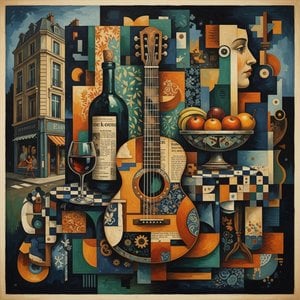
Master the vibrant world of Synthetic Cubism with our expert guide. Explore the revolutionary techniques of Picasso and Braque, from collage to color, and discover how this movement redefined modern art for collectors and connoisseurs alike.

 실제 크기로 보기
 보내기
보내기 공유하기
공유하기
 상세 보기
상세 보기 가이드 보기

 이미지 다운로드
 유사 작품 더 보기
 X-레이
X-레이 슬라이드 쇼 보기
 통계 정보
통계 정보

 상세 보기
상세 보기









 유리 옵션은 110cm 미만 크기에서만 선택 가능합니다.


