

 Contemporary
 2011
2011 79.0 x 78.0 cm
이 페이지에 표시된 작품은 저작권법의 보호를 받으며, 이에 따라 동일한 복제품을 제작하거나 판매하는 것은 법으로 금지되어 있습니다. 이러한 권리 보호는 다음과 같은 국제 협약에 따라 시행됩니다. 베른 협약 또한 다음에서 명시하는 법률을 포함한 국내법에 의해 보호됩니다. 미국 저작권법 제17조.
저희는 존중을 담은 합법적인 대안으로서, 원작에서 영감을 받은 맞춤형 수제 유화 작품을 제공합니다. 저희의 숙련된 전문 화가들은 원작의 스타일, 분위기, 예술적 정수를 면밀히 연구하여, 그 자체로 독창적인 창작물이면서도 원작과 동일한 감동을 불러일으키는 새로운 작품을 만들어냅니다.
이 방식은 저작권 보호를 받는 예술 작품을 복제하거나 그대로 재현하는 것이 아니기에 저작권 규정을 완벽히 준수합니다. 대신, 이는 창의적인 재해석의 과정을 거칩니다. 즉, 원작에서 영감을 받되 원작과 동일하지 않은 새로운 회화 작품을 의미합니다.
작가가 직접 캔버스에 손으로 그린 유화 작품으로, 원하는 크기와 액자로 맞춤 제작해 드립니다. ( 프린트 판매로 전환 디지털 이미지 판매 채널로 전환)
작품의 원본 비율을 그대로 유지하는 프리셋 사이즈 중에서 선택해 보세요.

액자나 벽면 크기에 맞춰 필요한 가로와 세로 길이를 입력해 주세요. 본 작품은 수작업으로 제작되므로, 요청하신 비율에 따라 작가가 그림의 가장자리를 조금 더 넓게 그리거나 일부를 조정하여 작업할 수 있습니다. 작업 시작 전, 최종 확인을 위해 디지털 목업 이미지를 보내드립니다. 이 페이지에 표시된 이미지는 실제 결과물과 다를 수 있으며, 오직 목업 이미지만이 정확한 결과물을 보여줍니다.
Open Phone Booth
복제본 규격
"Open Phone Booth"의 원작 크기는 79 x 78 cm입니다. 원작의 규격은 복제본(reproduction) 사이즈를 선택할 때 유용한 참고 자료가 됩니다.
Nilbar Güreş의 "Open Phone Booth"의 색채 분석은 Statement한 대비와 Balanced Harmony한 조화를 보여줍니다.
"Open Phone Booth"의 형식은 Panoramic입니다. 이는 작품 복제본을 배치할 공간을 계획할 때 유용합니다.

Born in the vibrant, layered city of Istanbul in 1977, Nilbar Güreş’s artistic journey is inextricably linked to her Turkish and Kurdish heritage. Her work, now celebrated internationally from Vienna to Sydney, isn't merely about depicting scenes; it’s a deeply considered exploration of female identity within the complex interplay of cultural traditions, public spaces, and private realms. Güreş’s practice defies easy categorization, seamlessly blending photography, video, performance, textile art, and mixed media collage – each element contributing to a rich tapestry of meaning.
Güreş's early life in Istanbul profoundly shaped her artistic vision. Studying at Mimar Sinan University of Fine Arts and later the Academy of Fine Arts in Vienna provided her with a rigorous grounding in traditional painting techniques while simultaneously exposing her to European avant-garde approaches. This dual influence is evident throughout her work, creating a unique dialogue between Eastern and Western aesthetics. Her decision to settle in Vienna has been crucial, offering a space for reflection and experimentation within a multicultural environment that continues to inform her creative process.
A defining characteristic of Güreş’s art is her masterful use of textiles. She doesn't simply employ fabric as a medium; she imbues it with layers of symbolism, referencing traditional Turkish and Kurdish crafts while simultaneously challenging their conventional roles. Quilts, carpets, and embroidered pieces become vehicles for exploring themes of domesticity, memory, and the often-overlooked experiences of women within these cultural contexts. Her work frequently subverts expectations, presenting familiar motifs in unexpected ways – a seemingly simple tablecloth might conceal a powerful commentary on social injustice or gender dynamics.
Güreş’s photographic works are equally compelling. She often employs staged portraits that blur the lines between documentary and fiction, inviting viewers to question their assumptions about identity and representation. Her use of color is deliberate and evocative, ranging from muted earth tones to bold, saturated hues, each carefully chosen to enhance the emotional impact of her images. The recurring motif of the female figure – frequently depicted in moments of quiet contemplation or engaged in everyday activities – speaks to a desire to elevate the experiences of women within both personal and societal narratives.
Güreş’s work has garnered significant international recognition, culminating in participation in prestigious events such as the 20th Biennale of Sydney (2016), the SeMa Biennale Mediacity Seoul (2014), and the Berlin Biennial (2010). These platforms have provided crucial visibility for her unique artistic vision. Her work has been exhibited at venues including the Van Abbemuseum in Eindhoven, the ARTER gallery in Istanbul, and numerous museums and galleries across Europe and North America.
Notable solo exhibitions include “Open Phone Booth” (2023), a striking textile diptych exploring identity and social injustice through intricate embroidery; "Wilde Belästigung" (2021), a surreal oil painting blending natural and abstract elements, and “Unknown Sports” (2009), which powerfully depicted women engaged in unconventional activities within domestic settings. These exhibitions consistently demonstrate her ability to create works that are both visually arresting and intellectually stimulating.
At the heart of Güreş’s artistic practice lies a persistent interrogation of identity – particularly as it intersects with gender, culture, and location. Her work frequently addresses the experiences of Muslim women in Europe, navigating issues of representation, belonging, and social expectations. She doesn't offer simplistic narratives; instead, she presents nuanced portraits that reveal the complexities of lived experience. Her exploration extends to the relationship between women and their homes, public spaces, and the broader cultural landscape, prompting viewers to consider how these environments shape individual identities.
Güreş’s work is not merely a reflection of her own experiences but also a critical engagement with broader social and political issues. Through her art, she challenges conventional notions of femininity, questions established power structures, and advocates for greater visibility and understanding of marginalized voices. Her ongoing commitment to exploring these themes ensures that her work remains relevant and impactful in the contemporary art world.

1977 - , Turkey

Explore the profound impact of Tenebrism in Baroque art. Discover how masters like Caravaggio used dramatic shadows to evoke emotion, and learn the technical secrets behind this captivating style of light and darkness.

Elevate your space with bespoke Gothic masterpieces. Using advanced AI and master oil painters, WahooArt transforms your photos into dark, Renaissance-style fine art. Experience museum-quality craftsmanship, personalized commissions, and a timeless legacy for your home.

Embark on a sophisticated journey through the tactile realm of textile art. Unveil the historical evolution from utilitarian craft to museum-grade masterpieces, exploring the intricate textures and legendary artists that redefine the boundaries of fine art.
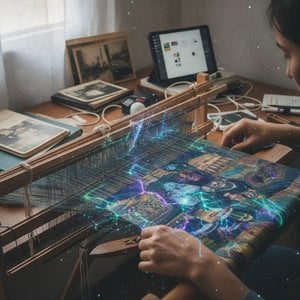
Elevate your home with WahooArt's bespoke AI-textured art. Transform cherished photos into hand-painted textile masterpieces through a seamless fusion of cutting-edge technology and classical craftsmanship. Discover timeless, luxury heirlooms designed to preserve your personal legacy.

 실제 크기로 보기
 보내기
보내기 공유하기
공유하기
 상세 보기
상세 보기 가이드 보기

 이미지 다운로드
 유사 작품 더 보기
 X-레이
X-레이 슬라이드 쇼 보기
 Q&A
Q&A 통계 정보
통계 정보 상세 보기
상세 보기






































 유리 옵션은 110cm 미만 크기에서만 선택 가능합니다.


