x

작품의 원본 비율을 유지하는 미리 설정된 크기 중에서 선택하세요.

특정 프레임이나 공간에 맞도록 직접 크기를 입력할 수 있습니다. 선택하신 크기가 원본 이미지의 비율과 일치하지 않는 경우, 작품을 자르거나 추가적인 손으로 그린 요소를 사용하여 그림을 확장합니다. 제작 시작 전 승인을 위해 디지털 목업을 보내드립니다.
화면 미리 보기는 실제 자르기 또는 확장을 반영하지 않습니다. 최종 구성은 목업을 통해서만 정확하게 확인하실 수 있습니다.
맞춤 크기 제작도 가능하지만, 원본 비율을 유지하기 위해 사전 정의된 목록에서 크기를 선택하시는 것을 권장합니다.

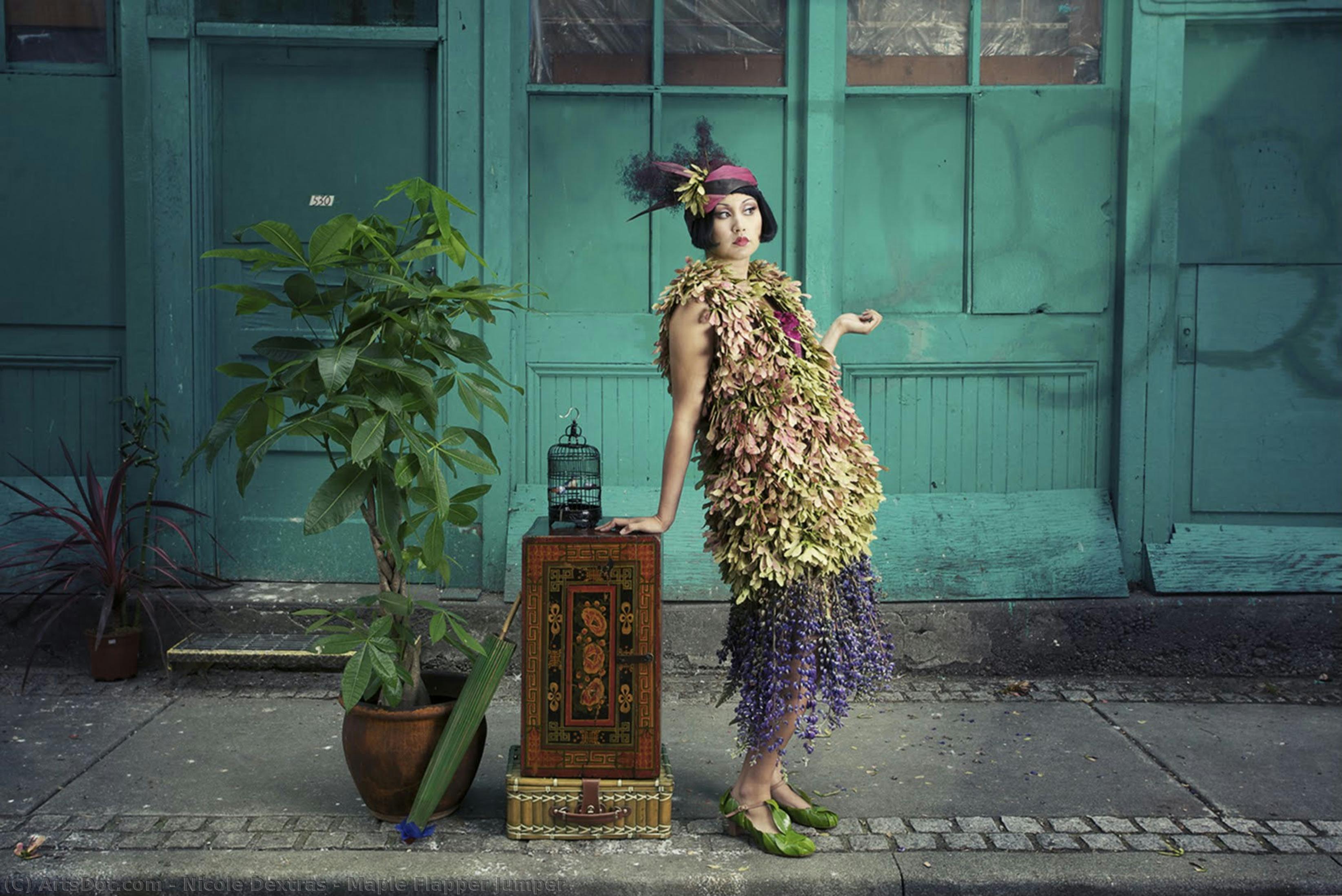
Maple Flapper Jumper
복제본 크기

Nicole Dextras, a Canadian artist born in Vancouver in 1966, doesn’t simply create art; she initiates conversations—urgent dialogues between humanity and the natural world. Her practice is deeply rooted in the environmental art movement, yet transcends easy categorization. While sculpture and photography form core elements of her toolkit, it's the ephemeral nature of her installations that truly defines her work. Dextras isn’t interested in permanence; instead, she embraces decay, transformation, and the poignant beauty inherent in fleeting existence.
Dextras’ artistic journey began with a formal education at Emily Carr University of Art and Design in Vancouver, where she later returned as a sessional teacher from 2003 to 2013. This period undoubtedly shaped her interdisciplinary approach, fostering a willingness to explore diverse media and challenge conventional boundaries. Her early work hinted at the themes that would come to dominate her oeuvre: the fragility of ecosystems, the impact of human intervention, and the symbiotic relationship between ourselves and the environment. However, it was through her increasingly ambitious outdoor installations—projects realized in locations as varied as Spain, Mongolia, Toronto, Montreal, Dawson City-Yukon, and Seattle—that her vision truly crystallized.
What sets Dextras apart is her deliberate choice of materials. She doesn’t sculpt with bronze or carve in stone; she builds with ice, leaves, flowers, fruit peels, and other organic matter—elements inherently destined to change. This isn't merely an aesthetic preference; it’s a conceptual cornerstone. Her “Botanical Wearables” series, for example, features exquisitely detailed garments crafted entirely from plant materials. These aren’t static objects meant for display but rather living sculptures that evolve over time, wilting and decomposing as a powerful metaphor for life’s impermanence. Similarly, her ice sculptures—often encasing vintage textiles or forming large-scale text messages—are profoundly transient. They exist only briefly before succumbing to the elements, their melting forms serving as a stark reminder of environmental vulnerability.
Dextras' technique is often labor-intensive and requires a deep understanding of natural processes. She doesn’t simply arrange materials; she orchestrates transformations, anticipating how they will decay, shift, and interact with their surroundings. This process isn’t about control but rather collaboration—a willingness to surrender to the unpredictable forces of nature. Her work is often interactive, inviting viewers not just to observe but to participate in the cycle of change.
While Dextras' style is distinctly her own, it’s possible to trace echoes of earlier environmental artists in her work. The land art movement of the 1960s and 70s—artists like Robert Smithson and Andy Goldsworthy—explored similar themes of site-specificity and the relationship between art and landscape. However, Dextras distinguishes herself through her focus on ephemerality and her incorporation of performance and narrative elements. Her use of couture garments also introduces a unique dimension, blending fashion with environmental activism.
Beyond land art, Dextras draws inspiration from theatre design—a legacy of her extensive background in the field—and photography. This is evident in the highly detailed fictional characters and settings that populate her films, such as “A Dressing the Future,” a trilogy exploring survivors in a dystopian world where science fiction meets ecology. Filmmakers like Federico Fellini, Akira Kurosawa, and Tim Burton have influenced her visual style.
Dextras’ work has garnered significant recognition, with awards and features in numerous publications and exhibitions worldwide. Her installations aren't confined to galleries; they inhabit public spaces, engaging diverse audiences and prompting critical reflection on environmental issues. The impact of her art extends beyond the aesthetic realm—it serves as a catalyst for dialogue, inspiring viewers to reconsider their relationship with nature and embrace sustainable practices.
Her series “Consume,” featuring large-scale words constructed from ice, exemplifies this power. These ephemeral messages—literally melting before our eyes—force us to confront difficult choices about consumption and environmental responsibility. Similarly, her "Persephone's Reflection" project uses garments made from pomegranate peels to explore themes of rebirth and the cyclical nature of life.
Nicole Dextras is not merely documenting environmental change; she’s actively engaging with it, using art as a tool for awareness, empathy, and ultimately, action. Her work reminds us that beauty can be found even in decay, and that embracing impermanence is essential to fostering a more sustainable future. As climate change continues to reshape our world, Dextras' art—with its poignant message of fragility and resilience—becomes increasingly relevant and vital.

1966 - , Canada
맥스 어른스트 최고 걸작 25선을 만나보세요. 초현실주의 화가 어른스트의 꿈, 무의식, 혁신적인 기법이 담긴 명화들을 감상하고, 공간에 예술적 영감을 불어넣으세요. WahooArt.com에서 고품질 미술 작품을 컬렉션하세요.

Explore the captivating world of Mariano Fortuny – artist, designer & innovator. Discover his revolutionary textiles, iconic Delphos gown, and lasting influence on art, fashion & interiors. A collector's guide to a Venetian master.

Explore the captivating world of vintage art prints! Discover their history, collecting tips & enduring appeal. Expert insights on chromolithography and building a legacy collection with WahooArt.

Explore the exquisite botanical illustrations of Jacques Barraband (1767-1809). Discover his stunningly accurate bird paintings, commissioned by Napoleon, and learn about his lasting legacy in art & science. Shop museum-quality reproductions at WahooArt.
Explore the evolution of observation in art history – from Renaissance realism to conceptual challenges. Discover how artists perceive & represent the world, and deepen your understanding for informed collecting.


최신 미술 뉴스, 특별 혜택 및 인테리어 아이디어를 가장 먼저 만나보세요.
프로젝트에 대해 알려주시면 저희 미술 전문가들이 맞춤형 아트 제안 3가지를 전달해 드립니다.
당신만을 위한 맞춤형 옵션 3가지를 무료로 추천해 드립니다!
 프린트 구매하기
 공유하기
공유하기 공유하기
공유하기
 상세 정보
상세 정보

 다운로드
다운로드
 유사 작품
유사 작품 X-레이
X-레이 슬라이드 쇼


 더 보기
더 보기






































 유리 옵션은 110cm 미만 크기에서만 선택 가능합니다.