
원하는 크기와 액자로 주문 제작되는, 작가들이 직접 캔버스에 손으로 그린 유화 작품입니다. ( 프린트 판매로 전환 디지털 이미지로 전환)





























작품의 원본 비율을 유지하는 미리 설정된 크기 중에서 선택하세요.

특정 프레임이나 공간에 맞도록 직접 크기를 입력할 수 있습니다. 선택하신 크기가 원본 이미지의 비율과 일치하지 않는 경우, 작품을 자르거나 추가적인 손으로 그린 요소를 사용하여 그림을 확장합니다. 제작 시작 전 승인을 위해 디지털 목업을 보내드립니다.
화면 미리 보기는 실제 자르기 또는 확장을 반영하지 않습니다. 최종 구성은 목업을 통해서만 정확하게 확인하실 수 있습니다.
맞춤 크기 제작도 가능하지만, 원본 비율을 유지하기 위해 사전 정의된 목록에서 크기를 선택하시는 것을 권장합니다.

포에트의 영감
복제본 크기
Nicolas Poussin (1594 – 1665) stands as one of the most revered figures in French Baroque painting, yet his artistic soul remained deeply rooted in the intellectual currents of Renaissance Italy. Born in Le Havre, Normandy, his early life remains shrouded in some obscurity, but it undeniably laid the foundation for a career that would transform him into an emblem of classical refinement and artistic innovation.
His formative years were marked by a fascination with humanist ideals—a passion ignited by encounters with humanist thinkers and artists who championed reason and observation. He initially pursued studies in Paris during the early 1610s, absorbing influences from lesser-known painters of the time, yet it was his pilgrimage to Rome in 1624 that irrevocably altered the trajectory of his artistic journey.
Rome became more than just a geographical destination; it was an immersion into the epicenter of antiquity—a crucible where he encountered the legacy of Michelangelo and Raphael, artists who profoundly shaped his aesthetic sensibilities. Recognizing the transformative power of classical art, Poussin embarked on a deliberate quest to emulate their mastery of composition, color harmony, and expressive storytelling.
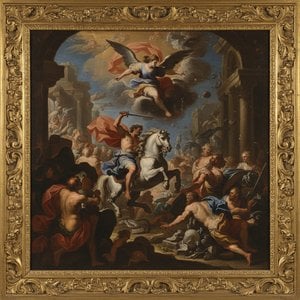
Poussin's *The Poet’s Inspiration* (1630) depicts an allegorical gathering centered around Apollo, the Greek god of poetry, music, and light—a figure seated serenely playing a lyre. Surrounding him are figures representing Muses or other divine beings, each contributing to the atmosphere of creative awakening.
A woman gracefully presents Apollo with a laurel wreath—a potent symbol of poetic victory and honor—while another gesture conveys passionate intensity. Above them all floats a cherubic form, signifying divine approval and embodying the ethereal source of inspiration. This tableau transcends mere illustration; it functions as a visual metaphor for the moment when human artistry is touched by the sublime.
The scene’s meticulous arrangement adheres to classical principles—specifically, triangular composition—drawing the viewer's gaze inexorably towards Apollo and his lyre. This deliberate structural choice imparts stability and intellectual rigor, reflecting Poussin’s unwavering commitment to rational order.
Despite its undeniable embrace of Baroque aesthetics—characterized by dramatic chiaroscuro lighting and expressive gestures—Poussin distinguishes himself from his contemporaries like Rubens. He consciously prioritized classical ideals: clarity, balance, and logical coherence. Observe how the figures are positioned with meticulous precision, creating a harmonious visual equilibrium.
The color palette is rich yet restrained, dominated by warm hues—deep reds, golden ochres, soft whites, and muted browns—a deliberate choice that evokes the serene beauty of landscapes reminiscent of Raphael’s frescoes. This subtle tonal gradation underscores Poussin's mastery in conveying emotion through nuanced coloration.
Poussin’s influence extended far beyond his own lifetime, inspiring generations of artists who sought to emulate his stylistic elegance and intellectual depth. His paintings continue to captivate audiences today—serving as a testament to the enduring power of classical art and its ability to transcend temporal boundaries.

1594 - 1665 , 프랑스

Embark on a sophisticated journey through the eternal allure of mythological art. Discover how master painters breathe life into ancient legends, from Greek deities to Baroque masterpieces, and learn to curate these timeless narratives within your own exquisite art collection.

Explore the profound elegance of Baroque Classicism. Discover how masters fused dramatic chiaroscuro with structured order to redefine art history through light, shadow, and emotional grandeur.

Explore the breathtaking drama of the Baroque era. From the mastery of chiaroscuro to epic mythological narratives, discover a definitive guide to art's most powerful period of light, shadow, and emotion for the true classical art enthusiast.
Explore the breathtaking power of Baroque art. Delve into the dramatic interplay of light, shadow, and motion through the works of masters like Caravaggio. Discover how the era's intense emotional realism continues to inspire collectors and connoisseurs of classical grandeur.


 미리보기
미리보기
 공유하기
공유하기 공유하기
공유하기
 상세 정보
상세 정보 가이드 보기

 다운로드
다운로드
 유사 작품
유사 작품 X-레이
X-레이 슬라이드 쇼
 통계 정보
통계 정보


 더 보기
더 보기









 유리 옵션은 110cm 미만 크기에서만 선택 가능합니다.


