
Nicholas Roerich’s ‘Putivl’: A Tapestry of Spirit and Place
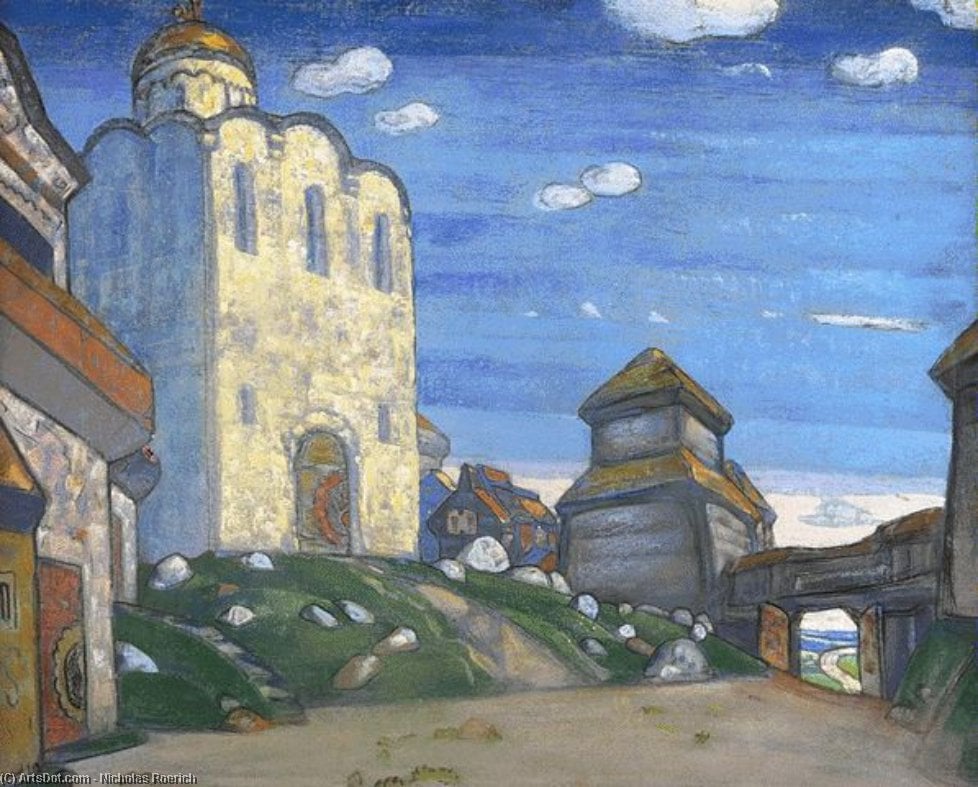
Nicholas Roerich's “Putivl” is more than just a depiction of a Ukrainian cityscape; it’s a profound meditation on the intersection of history, spirituality, and the enduring human spirit. Painted during a period of intense personal and artistic exploration for the artist, this work embodies Roerich’s signature style – a meticulous blend of realism and symbolic layering that invites prolonged contemplation. The scene itself, a vibrant snapshot of Putivl, a historic city in Ukraine, is rendered with remarkable detail, from the weathered stone of the central building to the subtle play of light on the cloudy sky. Yet, it's the underlying currents of meaning – Roerich’s lifelong fascination with ancient cultures and his belief in a universal spiritual consciousness – that elevate “Putivl” beyond a simple landscape painting.
A Masterclass in Technique: Roerich’s Layered Realism
- Oil on Canvas: The artwork is executed in oil paint on canvas, a medium Roerich favored for its ability to capture subtle nuances of light and texture.
- Detailed Rendering: Notice the painstaking attention to detail – the individual bricks of the castle-like structure, the folds of clothing worn by the figures, and the delicate brushstrokes that define the clouds. This meticulous approach was characteristic of Roerich’s process, reflecting his belief in the importance of precise observation.
- Glazing Technique: Roerich employed a glazing technique, applying thin layers of translucent paint over dried underlayers to build up depth and luminosity. This creates a shimmering effect, particularly noticeable in the sky and the reflections on the buildings.
Symbolic Resonance: Echoes of Ancient Cultures and Spiritual Beliefs
Roerich’s work is replete with symbolism, drawing heavily from his research into ancient cultures, particularly those of Tibet, India, and Central Asia. The castle-like building in “Putivl” isn't merely a representation of a fortified structure; it evokes the imagery of ancient citadels – symbols of power, protection, and spiritual knowledge. The presence of numerous people scattered throughout the scene suggests humanity’s collective experience across time and space. The birds soaring through the sky are often interpreted as messengers of the spirit, connecting the earthly realm with a higher plane of existence—a recurring motif in Roerich's oeuvre.
Historical Context: Roerich’s Quest for Universal Harmony
Created during a period of significant personal and artistic development for Roerich, “Putivl” reflects his growing interest in exploring themes of cultural unity and spiritual harmony. His travels throughout Asia, particularly his expeditions to Tibet, profoundly shaped his worldview, leading him to believe in a shared human heritage rooted in ancient wisdom. This belief fueled his lifelong advocacy for peace and understanding, and informed the symbolic language he employed in his art. The painting can be seen as part of a larger project – Roerich’s attempt to create a visual vocabulary that could bridge cultural divides and promote a sense of global interconnectedness.
Emotional Impact: A Sense of Timeless Beauty and Contemplation
"Putivl" possesses an undeniable emotional resonance. The composition, with its balanced use of color and form, evokes a feeling of serenity and contemplation. The painting’s enduring appeal lies in its ability to transport the viewer to another time and place, inviting them to reflect on the beauty of the natural world and the profound mysteries of human existence. It is a testament to Roerich's artistic vision—a work that continues to captivate and inspire viewers today.
질의응답
니콜라이 로에리히의 "Putivl"의 전반적인 분위기는 어떠한가요?
"Putivl"은(는) Ethereal 분위기를 자아냅니다.
니콜라이 로에리히의 "Putivl"에 대한 가이드가 있나요?
니콜라이 로에리히의 "Putivl"의 가이드 페이지에서는 인쇄 가능한 두 장 분량의 학습용 팩트시트를 제공합니다. 여기에는 작품과 작품 정보표, 작가의 생애 속 시기를 보여주는 연대기, 해당 작가의 다른 작품들, 측정된 컬러 팔레트, 그리고 네 가지 스타일로 바로 복사하여 사용할 수 있는 인용 문구가 포함되어 있습니다.
"Putivl"의 색감은 얼마나 강렬한가요?
니콜라이 로에리히의 "Putivl"의 색채는 Balanced Soft의 채도와 Balanced의 강도를 보여줍니다.



































