

 Acrylic On CanvasWallArtSymbolism
 191819th Century
 152.0 x 127.0 cm
작가가 직접 캔버스에 손으로 그린 유화 작품으로, 원하는 크기와 액자로 맞춤 제작해 드립니다. ( 프린트 판매로 전환 디지털 이미지 판매 채널로 전환)





























작품의 원본 비율을 그대로 유지하는 프리셋 사이즈 중에서 선택해 보세요.

액자나 벽면 크기에 맞춰 필요한 가로와 세로 길이를 입력해 주세요. 본 작품은 수작업으로 제작되므로, 요청하신 비율에 따라 작가가 그림의 가장자리를 조금 더 넓게 그리거나 일부를 조정하여 작업할 수 있습니다. 작업 시작 전, 최종 확인을 위해 디지털 목업 이미지를 보내드립니다. 이 페이지에 표시된 이미지는 실제 결과물과 다를 수 있으며, 오직 목업 이미지만이 정확한 결과물을 보여줍니다.
Forthcoming (Stylites)
복제본 규격
Nicholas Roerich's "Forthcoming (Stylites)," painted in 1918, isn’t merely a depiction of a man on a rock; it’s an immersive experience of spiritual yearning and the quiet strength found within solitude. This arresting work, rendered in tempera on canvas, captures a moment suspended between earthly existence and something far grander – a visual embodiment of the ascetic ideal that permeated Roerich's life and art. The painting immediately draws the eye to its central figure, a solitary individual standing atop a rugged, almost primordial landscape. His elongated form, accentuated by flowing robes and a deeply furrowed brow, suggests an intense concentration, a deliberate detachment from the world below. The stark contrast between the man’s dark silhouette and the muted tones of the surrounding rock formations creates a powerful sense of isolation, yet simultaneously conveys a profound inner resilience.
To fully appreciate “Forthcoming (Stylites),” one must understand Roerich’s complex and deeply personal worldview. Born into a family steeped in intellectual tradition – his father was a notary public, his mother an artist – he developed a fascination with both the rational and the mystical. He spent years immersed in archaeology, philosophy, and literature, but it was his encounters with Russian esoteric thought and his travels to Tibet and the Himalayas that profoundly shaped his artistic vision. The stylite depicted here is not simply a hermit; he represents a figure deeply connected to ancient ascetic traditions, embodying a quest for spiritual enlightenment through self-discipline and detachment from worldly desires. Roerich’s work frequently draws upon themes of cosmic unity, the interconnectedness of all things, and the importance of inner transformation – concepts central to Russian cosmism, a philosophical movement that sought to reconcile science with spirituality.
Roerich’s technique in “Forthcoming (Stylites)” is characterized by its deliberate restraint and masterful use of color. He employs a palette dominated by earthy browns, grays, and ochres, creating an atmosphere of timelessness and rugged austerity. The brushstrokes are broad and expressive, lending texture to the rock formations and suggesting the raw power of nature. Notably, Roerich’s layering technique builds up depth and luminosity within the painting, particularly in the depiction of the sky – a vast expanse of muted blues and purples that seems to stretch infinitely upwards. This atmospheric perspective not only anchors the figure but also reinforces the sense of his isolation and connection to something far beyond the earthly realm. The use of tempera, with its slow drying time, allowed Roerich to achieve subtle gradations of color and a remarkable level of detail in rendering the textures of stone and fabric.
Beyond its technical merits, “Forthcoming (Stylites)” resonates with a powerful emotional resonance. The painting evokes a sense of quiet contemplation, inviting the viewer to reflect upon their own place in the universe and the potential for inner strength that lies dormant within us all. The figure’s upward gaze suggests an aspiration towards something greater – a connection to the divine or a recognition of one's own spiritual purpose. It is a reminder that true fulfillment can be found not in external achievements, but in cultivating inner peace and embracing solitude as a pathway to self-discovery. The image speaks to the enduring human desire for transcendence, offering a visual meditation on the beauty and power of resilience.
Painted during a period of immense upheaval – the Russian Revolution was just beginning – “Forthcoming (Stylites)” reflects Roerich’s own personal journey of exile and transformation. He sought refuge in Finland, where he continued to develop his artistic vision while grappling with profound philosophical questions. Roerich's work gained increasing recognition throughout the 20th century, particularly for its evocative depictions of Himalayan landscapes and its exploration of spiritual themes. Today, Nicholas Roerich’s art continues to inspire and captivate audiences worldwide, serving as a testament to his unique artistic vision and his enduring legacy as a pioneer of Russian symbolism.
니콜라이 로에리히의 "Forthcoming (Stylites)"의 Square 형식은 Living Room에 추천합니다. 작품의 형식과 공간의 조화는 복제화 배치에 중요한 가이드가 됩니다.
"Forthcoming (Stylites)"의 명암 대비는 Balanced로 기록되었습니다. 대비는 밝은 부분과 어두운 부분의 차이가 얼마나 강한지를 나타냅니다.
니콜라이 로에리히의 "Forthcoming (Stylites)"의 주된 색조는 Green to Violet Spectrum입니다. 이 색조는 팔레트의 바탕이 되는 톤을 형성합니다.

1874 - 1947 , 러시아
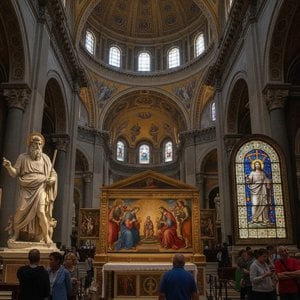
Explore the profound beauty of sacred art through a curated journey of masterpieces. From Renaissance iconography to Baroque drama, discover how history's greatest artists captured the divine presence in timeless works of spiritual transcendence.

Embark on a profound journey through art history with our exploration of spiritual artworks. Discover the deep symbolism, emotional resonance, and transcendent power found in sacred Renaissance, Baroque, and Nabis masterpieces curated for the true classical art enthusiast.
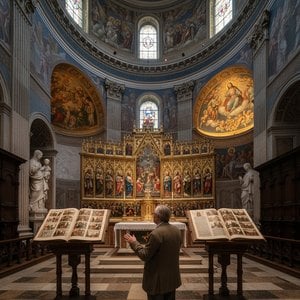
Explore the profound beauty of iconic religious artworks. From Renaissance masterpieces to sacred iconography, our expert guide delves into the spiritual power, symbolism, and enduring legacy of history's most divine paintings for the true art enthusiast.
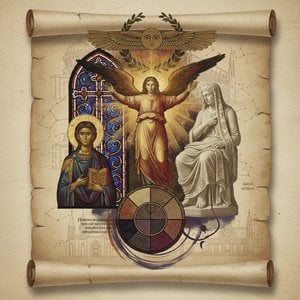
Explore the profound impact of spiritual themes in fine art. From Renaissance iconography to Baroque drama, discover how sacred symbolism and divine visions have shaped art history through a scholarly and reflective lens.

 실제 크기로 보기
 보내기
보내기 공유하기
공유하기
 상세 보기
상세 보기 가이드 보기

 이미지 다운로드
 유사 작품 더 보기
 X-레이
X-레이 슬라이드 쇼 보기
 통계 정보
통계 정보 상세 보기
상세 보기









 유리 옵션은 110cm 미만 크기에서만 선택 가능합니다.


