


x

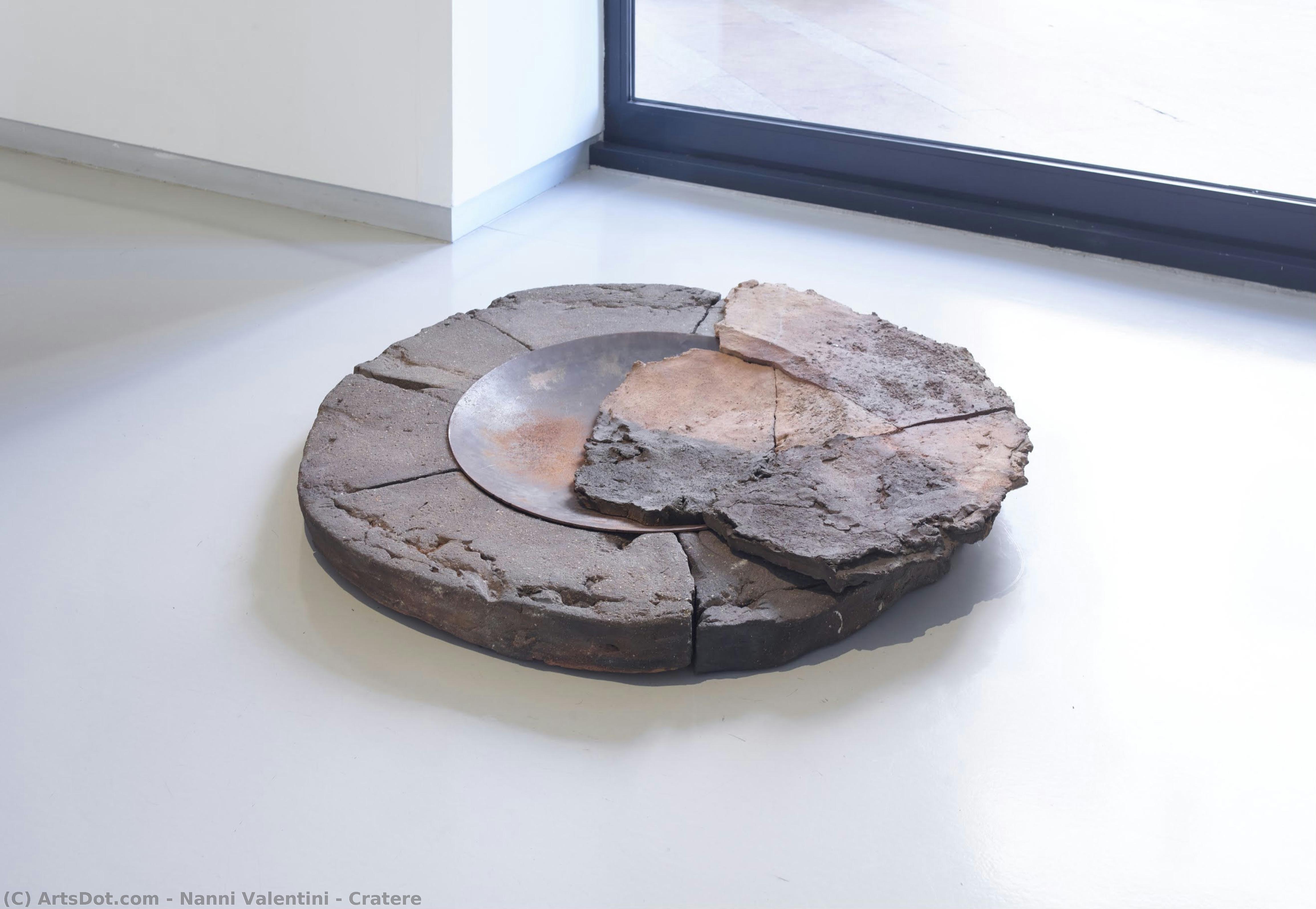
 1981
1981 15.0 x 135.0 cm
 Museo del Novecento
작품의 원본 비율을 유지하는 미리 설정된 크기 중에서 선택하세요.

특정 프레임이나 공간에 맞도록 직접 크기를 입력할 수 있습니다. 선택하신 크기가 원본 이미지의 비율과 일치하지 않는 경우, 작품을 자르거나 추가적인 손으로 그린 요소를 사용하여 그림을 확장합니다. 제작 시작 전 승인을 위해 디지털 목업을 보내드립니다.
화면 미리 보기는 실제 자르기 또는 확장을 반영하지 않습니다. 최종 구성은 목업을 통해서만 정확하게 확인하실 수 있습니다.
맞춤 크기 제작도 가능하지만, 원본 비율을 유지하기 위해 사전 정의된 목록에서 크기를 선택하시는 것을 권장합니다.

Cratere
복제본 크기


Born in Sant’Angelo in Vado, Pesaro and Urbino, Italy, in 1932, Nanni Valentini emerged as a pivotal figure in postwar European sculpture. His journey began with formal training in ceramic decoration at the local art school, followed by studies at the Art Institute of Faenza. However, it was his early collaborations with Bruno Baratti’s workshop that ignited a passion for artistic expression and earned him initial recognition through provincial awards. Valentini wasn't merely shaping clay; he was embarking on a lifelong exploration of material, form, and the very essence of sculptural creation.
The mid-1950s proved transformative as Valentini received a scholarship to Paris, immersing himself in the vibrant artistic milieu and forging connections with members of the CoBrA group. The influence of artists like Wols, Burri, Julius Bissier, and Germane Richier profoundly impacted his developing style. This period marked a shift towards experimentation with diverse materials – paper, tar, sand, bricks – alongside stoneware, laying the groundwork for his unique artistic voice. His marriage to Tina Terenzi in 1956 further solidified his personal life as he navigated the burgeoning art scene.
The move to Milan in 1957 proved decisive. Valentini quickly became integrated into a dynamic circle of artists, designers, and architects including the Pomodoro brothers, Lucio Fontana, Roberto Sanesi, and Ettore Sottsass. Fontana’s encouragement led to his first solo exhibition at Galleria dell’Ariete in 1958, catapulting him onto the Milanese art landscape. This was a period of intense intellectual exchange and collaborative projects, notably his *Serie natura* with Luigi Massoni, which explored serial production while retaining an artistic sensibility. Valentini wasn't content to work in isolation; he actively sought dialogue and synergy with fellow creatives.
Throughout the 1960s, Valentini’s artistic vision underwent a remarkable evolution. While maintaining a prolific exhibition schedule – solo shows at Galleria del Giorno and Salone Annunciata among others – he increasingly focused on fundamental questions surrounding sculptural form and image-making. His work transcended traditional ceramic boundaries, delving into the possibilities of clay as a medium for infinite transitions and realities. This period saw him teaching at the Istituto d’Arte in Monza from 1967 until 1985, sharing his knowledge and passion with a new generation of artists.
The 1970s witnessed the emergence of iconic works like *Paesaggi d’argilla* (Landscapes in Clay) and *Garze* (Herons), which embodied his desire to reinterpret earth as a source of boundless creative potential. Valentini's sculptures weren't simply objects; they were poetic explorations of nature, memory, and the human condition. His groundbreaking solo exhibition at Carla Pellegrini’s Galleria Milano in 1976 cemented his reputation as one of Italy’s foremost ceramic sculptors. Later exhibitions featuring *Trasparenze* (Transparencies), *Endimione e i 28 volti di Selene* (Endymion and the 28 Faces of Selene) further showcased his artistic depth.
Nanni Valentini’s work stands as a testament to the power of material exploration, intellectual curiosity, and collaborative spirit. His sculptures, often characterized by their raw energy and evocative forms, continue to inspire artists and captivate audiences today. He left behind a rich legacy that challenges conventional notions of sculpture and celebrates the inherent beauty and transformative potential of clay.

1959 - , Italy


최신 미술 뉴스, 특별 혜택 및 인테리어 아이디어를 가장 먼저 만나보세요.
프로젝트에 대해 알려주시면 저희 미술 전문가들이 맞춤형 아트 제안 3가지를 전달해 드립니다.
당신만을 위한 맞춤형 옵션 3가지를 무료로 추천해 드립니다!
 프린트 구매하기
 공유하기
공유하기 공유하기
공유하기
 상세 정보
상세 정보

 다운로드
다운로드
 유사 작품
유사 작품 X-레이
X-레이 슬라이드 쇼
 더 보기
더 보기






































 유리 옵션은 110cm 미만 크기에서만 선택 가능합니다.


