

 Acrylic On CanvasWallArtContemporary Symbolism
 2000Modern
 10.0 x 25.0 cm
 싱가포르 국립박물관
이 페이지에 표시된 작품은 저작권법의 보호를 받으며, 이에 따라 동일한 복제품을 제작하거나 판매하는 것은 법으로 금지되어 있습니다. 이러한 권리 보호는 다음과 같은 국제 협약에 따라 시행됩니다. 베른 협약 또한 다음에서 명시하는 법률을 포함한 국내법에 의해 보호됩니다. 미국 저작권법 제17조.
저희는 존중을 담은 합법적인 대안으로서, 원작에서 영감을 받은 맞춤형 수제 유화 작품을 제공합니다. 저희의 숙련된 전문 화가들은 원작의 스타일, 분위기, 예술적 정수를 면밀히 연구하여, 그 자체로 독창적인 창작물이면서도 원작과 동일한 감동을 불러일으키는 새로운 작품을 만들어냅니다.
이 방식은 저작권 보호를 받는 예술 작품을 복제하거나 그대로 재현하는 것이 아니기에 저작권 규정을 완벽히 준수합니다. 대신, 이는 창의적인 재해석의 과정을 거칩니다. 즉, 원작에서 영감을 받되 원작과 동일하지 않은 새로운 회화 작품을 의미합니다.
작가가 직접 캔버스에 손으로 그린 유화 작품으로, 원하는 크기와 액자로 맞춤 제작해 드립니다. ( 프린트 판매로 전환 디지털 이미지 판매 채널로 전환)





























작품의 원본 비율을 그대로 유지하는 프리셋 사이즈 중에서 선택해 보세요.

액자나 벽면 크기에 맞춰 필요한 가로와 세로 길이를 입력해 주세요. 본 작품은 수작업으로 제작되므로, 요청하신 비율에 따라 작가가 그림의 가장자리를 조금 더 넓게 그리거나 일부를 조정하여 작업할 수 있습니다. 작업 시작 전, 최종 확인을 위해 디지털 목업 이미지를 보내드립니다. 이 페이지에 표시된 이미지는 실제 결과물과 다를 수 있으며, 오직 목업 이미지만이 정확한 결과물을 보여줍니다.
Burning Desire Four
복제본 규격
This captivating artwork, titled ‘Burning Desire Four,’ offers a profound glimpse into the artistic vision of Mohammad Din Mohammad (1955-2007), a pivotal figure in Malaysian art who seamlessly blended Western influences with his deeply rooted cultural heritage and spiritual beliefs. Born in Kampung Gangsa, Malaysia, Mohammad’s journey began in Malacca before he relocated to Singapore, shaping his perspective on the world and informing his artistic explorations. The painting, created in 2000, is a testament to his mastery of color and composition, presenting a vibrant tableau that resonates with both natural beauty and profound symbolic meaning.
The immediate impact of ‘Burning Desire Four’ is undeniably its explosive palette. Dominated by rich reds and punctuated by striking yellows, the artwork immediately draws the eye into a dynamic arrangement of flowers. At least four distinct floral forms are discernible – each rendered with meticulous attention to detail and varying shades and sizes – creating a visually arresting composition. This bold use of color isn’t merely decorative; it's deeply connected to Mohammad’s exploration of Sufi mysticism, where vibrant hues often represent spiritual enlightenment and the divine. Flowers themselves have long been potent symbols in art and religion, representing beauty, love, fertility, and ultimately, transcendence.
Adding another layer of complexity to this evocative scene are the two birds depicted within the artwork. One positioned towards the top left corner and another near the center, they appear to be either flying or hovering above the flowers. This detail is particularly significant given Mohammad’s engagement with Islamic symbolism. Birds frequently serve as messengers of the soul in Islamic tradition, representing spiritual aspiration and the desire for union with God. Their presence elevates the floral arrangement beyond a simple still life, transforming it into a meditation on faith and the human yearning for something greater.
‘Burning Desire Four’ exemplifies Mohammad Din Mohammad's unique artistic style – a fusion of Western painting techniques with his Malaysian cultural background. The meticulous rendering of the flowers, combined with the dynamic composition, demonstrates a sophisticated understanding of both formal and expressive elements. Created during a period of significant artistic experimentation in Southeast Asia, this work reflects a broader movement towards embracing local traditions while engaging with global art trends. The artwork’s creation aligns with Mohammad's exploration of themes related to spirituality and cultural identity, reflecting the growing interest in Sufism within Malaysia at the time.
This hand-painted reproduction is presented in a generous 10 x 25 cm format, making it suitable for a wide range of interior design applications. Whether adorning a gallery wall, adding a touch of vibrant color to a study, or serving as a thoughtful gift, ‘Burning Desire Four’ offers an exceptional opportunity to own a piece of significant artistic heritage.
Mohammad Din Mohammad의 "Burning Desire Four"은(는) 여전히 저작권의 보호를 받고 있습니다 상태입니다. 저작권 보호 기간은 작가가 사망한 2007년부터 기산됩니다.
아니요 - 해당 작품은 해외에 보관되어 있습니다. Mohammad Din Mohammad의 출생국은 Malaysia이며, "Burning Desire Four"의 원작을 소장하고 있는 미술관은 싱가포르에 있습니다.
Mohammad Din Mohammad의 "Burning Desire Four"의 주요 색상은 Espresso (#585257)입니다.

The life of Mohammad Din Mohammad was a profound journey through the intersections of the physical and the metaphysical. Born in Kampung Gangsa, Malaysia, his early years were marked by a migration to Singapore at the age of two, a transition that would eventually shape a perspective uniquely poised between different worlds. His artistic soul began to stir in childhood, manifesting in simple experiments with ceramics and the molding of clay cups. This innate curiosity for form and texture laid the foundation for a career that would later transcend mere visual representation, becoming a vessel for deep spiritual exploration.
His formal training at the Nanyang Academy of Fine Arts provided him with a rigorous command of Western techniques. Majoring in Western painting from 1973 to 1976, he initially embraced the disciplined approach of Realist portraiture. This period of his life was characterized by a direct engagement with the human form, even spending years at old Bugis Street capturing the likenesses of travelers and tourists. However, as his practice matured, the literal became secondary to the symbolic, and his work began to evolve into a complex synthesis of Western abstract expressionism and the profound depths of his Malay heritage.
What truly distinguishes the work of Mohammad Din Mohammad is the seamless integration of Sufi mysticism with the rhythmic energy of silat, the traditional Malay martial art. He was not merely a painter but a practitioner of many ancient disciplines; he was a writer, a collector of Southeast Asian objects, and a bomoh, or traditional healer. This multifaceted identity breathed life into his canvases, allowing him to use Islamic calligraphy and symbolic icons to convey complex philosophical truths. His art became a spiritual practice in itself, where the act of painting mirrored the search for inner enlightenment.
In masterpieces such as Kaa, one can witness this extraordinary fusion. Utilizing a wet-on-wet technique and thick impasto, he created textures that felt alive with movement and instability. His compositions often utilized skewed perspectives to evoke emotional responses, drawing the viewer into a fragmented vision of reality. The influence of his devotion to silat is palpable in the gestural, energetic brushwork that suggests the controlled power and fluid motion of martial combat. Through his use of color—often blending earthy tones with vibrant yellows and greens—he captured the very essence of spiritual energy.
The historical significance of Mohammad Din Mohammad lies in his ability to act as a bridge between disparate traditions. He refused to see a conflict between the Western academic training he received and the deeply rooted cultural and spiritual beliefs he practiced. His work stands as a testament to the possibility of a modern art form that remains authentically connected to its ancestral roots. By weaving together elements of assemblage, painting, and calligraphy, he created a visual language that spoke of both the local and the universal.
His life was marked by resilience and an unwavering commitment to his path. Even after facing severe physical hardship following a motorcycle accident, he turned to traditional healing and his silat master to find recovery, further deepening his connection to Malay medicinal traditions. This lived experience of healing and spiritual endurance is etched into the very fabric of his art, leaving behind a legacy that continues to invite contemplation on the nature of identity, faith, and the enduring power of cultural heritage.

1955 - 2007 , Malaysia
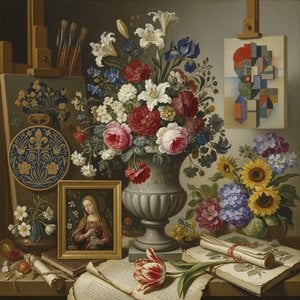
Explore the rich history of flower symbolism in Western painting! Discover how artists from the Renaissance to Modernism used blossoms to convey meaning, emotion & beauty. Learn about iconic artworks and movements.

Explore the rich history of floral painting! Discover symbolism, techniques & masterpieces from Van Huysum to O'Keeffe. Expert insights for art lovers & collectors at WahooArt.

Explore the rich symbolism of the red dress in art history! From ancient power displays to iconic portraits like Cézanne’s 'Madame Cezanne', discover the cultural and artistic significance behind this captivating color. Expert analysis & insights.

Explore the captivating history of flower painting! Discover Dutch masters, symbolic meanings, & botanical art. Expert insights & high-quality reproductions at WahooArt.
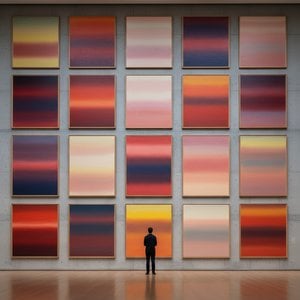
마크 로스코 최고작 25선을 만나보세요. 추상 표현주의 거장의 색채로 표현된 심오한 감정과 예술의 세계를 탐험하고, WahooArt에서 명화 복제본과 특별한 인테리어 아이디어를 찾아보세요. 지금 바로 컬렉션을 확인하세요!

 실제 크기로 보기
 보내기
보내기 공유하기
공유하기
 상세 보기
상세 보기 가이드 보기

 이미지 다운로드
 유사 작품 더 보기
 X-레이
X-레이 슬라이드 쇼 보기
 Q&A
Q&A 통계 정보
통계 정보 상세 보기
상세 보기









 유리 옵션은 110cm 미만 크기에서만 선택 가능합니다.


