

빠른 제작과 다양한 마감 옵션을 선택할 수 있는 박물관 수준의 지클레이 및 캔버스 프린트. ( 수작업 채색 복제본 주문하기 디지털 이미지 판매 채널로 전환)





























작품의 원본 비율을 그대로 유지하는 프리셋 사이즈 중에서 선택해 보세요.

특정 프레임이나 공간에 맞춰 직접 치수를 입력하실 수 있습니다. 선택하신 사이즈가 원본 이미지의 비율과 일치하지 않을 경우, 작품을 크롭(자르기)하거나 이미지를 대칭 또는 단색 채우기로 확장하여 제작합니다. 제작 시작 전, 최종 확인을 위해 디지털 목업이 전송됩니다.
화면상의 미리보기는 실제 크롭이나 확장 상태를 반영하지 않으므로, 최종 구도는 오직 목업을 통해서만 정확하게 확인하실 수 있습니다.
맞춤 사이즈 제작도 가능하지만, 원본 비율을 유지하기 위해서는 사전 정의된 목록에서 치수를 선택하시는 것을 권장합니다.

- Studies
복제본 규격
Michelangelo Buonarroti’s “Studies,” a deceptively simple grouping of three faces rendered in charcoal on paper, offers an unparalleled glimpse into the artist’s profound engagement with human emotion. Far removed from the monumental marble and frescoed narratives that define much of his celebrated output – think the David or the Sistine Chapel ceiling – these sketches represent a crucial, often overlooked, stage in Michelangelo's creative process. They are not finished works intended for public display; instead, they’re intensely personal explorations, raw studies born from observation and a relentless pursuit of capturing the fleeting nuances of feeling.
The composition itself is remarkably understated. Three faces, each distinct in expression – one furrowed with concern, another radiating a gentle smile, and the third mirroring that same joyful countenance – are presented against a deliberately blurred background. This strategic defocus serves to amplify the immediate impact of the figures themselves, drawing the viewer’s eye directly into their emotional states. The technique is remarkably direct; Michelangelo employs loose charcoal strokes, allowing the texture of the paper to peek through, lending an immediacy and vulnerability to the images. There's a sense of urgency in these sketches, as if he were striving to capture a moment before it vanished.
Created during Michelangelo’s prolific career spanning from roughly 1530 to 1564, these “Studies” provide invaluable insight into the evolution of his artistic vision. They were likely produced during a period when he was increasingly focused on drawing and preparatory studies for larger projects – a practice less common among Renaissance artists than we might assume. This reflects a shift in Michelangelo’s approach, moving beyond purely sculptural or architectural concerns to delve deeper into the psychological complexities of human representation. The sketches are executed with a confident yet delicate hand, showcasing his mastery of line and shadow, hallmarks of his distinctive style.
Adding further context is the discovery of these drawings within the Casa Buonarroti, Michelangelo’s family home in Florence. The collection includes numerous other preparatory studies for major works like “David” and “The Pietà,” demonstrating a consistent dedication to meticulous planning and anatomical study. However, these particular ‘Studies’ stand apart due to their intimate scale and intensely personal nature. They reveal a process of experimentation and refinement—a willingness to abandon ideas that didn't resonate and to relentlessly pursue the perfect expression of emotion.
While seemingly straightforward, these sketches invite considerable interpretation. The contrasting expressions – sorrow, joy, and a mirrored happiness – could represent fundamental human experiences: grief, contentment, and perhaps even the cyclical nature of emotions. Some scholars suggest that the faces might be portraits of individuals known to Michelangelo—family members or friends—imbuing them with added layers of meaning. The deliberate ambiguity allows viewers to project their own feelings and associations onto the images, creating a deeply personal connection.
Furthermore, it’s important to consider the Renaissance context in which these sketches were created. The period was marked by a renewed interest in classical antiquity, but also by a burgeoning exploration of human psychology – fueled by humanist thought. Michelangelo's work reflects this intellectual climate, demonstrating an attempt to capture not just the outward appearance of a subject, but also their inner life and emotional state. The sketches are a testament to his belief that art could be a powerful tool for understanding and expressing the complexities of the human condition.
WahooArt offers meticulously crafted, hand-painted reproductions of Michelangelo's “Studies,” allowing you to experience this remarkable work of art in stunning detail. Our artists replicate the subtle nuances of charcoal and paper texture, capturing the immediacy and emotional intensity of the original sketches. These reproductions are not mere copies; they are artistic interpretations that honor Michelangelo’s legacy while providing a beautiful addition to your home or office.
Whether you're an art enthusiast, a collector seeking a unique piece, or simply someone drawn to the power of human emotion, WahooArt’s “Studies” reproduction offers a profound and accessible way to connect with one of history’s greatest artistic minds. Explore our collection today and bring this intimate window into Michelangelo’s soul into your space.


1475 - 1564 , 이탈리아

Explore the profound beauty of the sketch. Discover how masters use charcoal and graphite to capture raw emotion, anatomical precision, and fluid movement, bridging the gap between ephemeral marks and eternal oil masterpieces.

Elevate your artistic practice with this expert guide to mastering the line. Discover advanced techniques in graphite, charcoal, and contour drawing designed for art students seeking technical precision and expressive depth in their fine art studies.

Explore the profound artistry of graphite drawing. Discover professional techniques for mastering depth, texture, and detail through a lens of art history, from classical sketches to modern masterpieces. Elevate your understanding of the pencil medium with our expert guide.
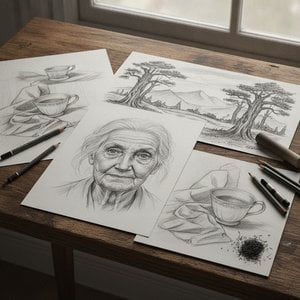
Explore the profound elegance of pencil and charcoal sketching. Discover how masters use line, shadow, and chiaroscuro to capture light and texture, bridging the gap between preparatory studies and timeless fine art masterpieces.

 실제 크기로 보기
 보내기
보내기 공유하기
공유하기
 상세 보기
상세 보기 가이드 보기

 이미지 다운로드
 유사 작품 더 보기
 X-레이
X-레이 슬라이드 쇼 보기
 통계 정보
통계 정보
 상세 보기
상세 보기









 유리 옵션은 110cm 미만 크기에서만 선택 가능합니다.


