원하는 크기와 액자로 주문 제작되는, 작가들이 직접 캔버스에 손으로 그린 유화 작품입니다. ( 프린트 판매로 전환 디지털 이미지로 전환)





























작품의 원본 비율을 유지하는 미리 설정된 크기 중에서 선택하세요.

특정 프레임이나 공간에 맞도록 직접 크기를 입력할 수 있습니다. 선택하신 크기가 원본 이미지의 비율과 일치하지 않는 경우, 작품을 자르거나 추가적인 손으로 그린 요소를 사용하여 그림을 확장합니다. 제작 시작 전 승인을 위해 디지털 목업을 보내드립니다.
화면 미리 보기는 실제 자르기 또는 확장을 반영하지 않습니다. 최종 구성은 목업을 통해서만 정확하게 확인하실 수 있습니다.
맞춤 크기 제작도 가능하지만, 원본 비율을 유지하기 위해 사전 정의된 목록에서 크기를 선택하시는 것을 권장합니다.

Laurentian Library
복제본 크기
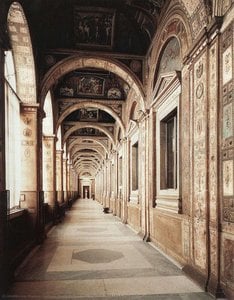
The Laurentian Library, a name that whispers of scholarly pursuit and artistic brilliance, stands as one of the most captivating architectural achievements of the High Renaissance. Designed by none other than Michelangelo Buonarroti, this extraordinary space within the Biblioteca Medicea-Laurenziana in Florence isn’t merely a repository for ancient texts; it's a meticulously crafted dialogue between classical ideals and innovative design, a testament to the genius of its creator and a poignant reflection on the era that birthed it. Commissioned by Pope Clement VII in 1530, the library was intended as a magnificent center for humanist learning, housing a vast collection amassed by the Medici family – a legacy of intellectual curiosity and artistic patronage that shaped the very fabric of Florence.
Michelangelo’s vision transcended the conventional design of libraries. He didn't simply build walls to hold books; he sculpted space itself. The long, narrow reading room, punctuated by a series of graceful arches, creates an atmosphere of profound concentration and quiet contemplation. These arches aren’t merely structural elements; they are carefully orchestrated visual cues, guiding the eye along a rhythmic path, fostering a sense of harmony and order that reflects the Renaissance fascination with proportion and balance. The building's layout is a masterful exercise in spatial composition, designed to inspire both intellectual rigor and aesthetic appreciation.
The Laurentian Library is replete with architectural details that showcase Michelangelo’s unparalleled skill and his deep understanding of classical principles. The most immediately striking element is undoubtedly the Vestibule, a dramatic entrance space designed to impress and orient visitors. Here, a majestic staircase, sculpted by Michelangelo himself, dominates the scene. This isn't just a means of ascending; it’s a work of art in its own right – an intricate dance of marble curves and elegant proportions that embodies the dynamism and expressive power characteristic of Mannerist style. The staircase serves as a powerful visual metaphor: a journey through knowledge, a climb towards enlightenment.
Beyond the Vestibule lies the main reading room, a space bathed in natural light filtering through tall windows. Rows of meticulously crafted wooden desks and benches provide a comfortable setting for scholars to immerse themselves in their studies. The high ceiling and expansive windows create an illusion of boundless space, while the ornate decorations – intricate carvings and sculptures adorning the walls and ceilings – add a layer of visual richness and symbolic depth. These details aren’t mere ornamentation; they are integral to the library's overall atmosphere, reinforcing its status as a sacred space dedicated to learning and scholarship.
The Laurentian Library is more than just a beautiful building; it’s a powerful symbol of the Renaissance spirit – a celebration of human potential, a revival of classical ideals, and an embrace of innovation. Michelangelo's design reflects his profound understanding of both ancient Greek and Roman architecture, as well as his own unique artistic vision. The library’s layout, with its emphasis on proportion, harmony, and spatial dynamism, embodies the Renaissance fascination with order and beauty. It also represents a departure from traditional architectural conventions, foreshadowing the emergence of Mannerism – a style characterized by its expressive intensity, complex forms, and subtle distortions.
The library’s significance extends beyond its aesthetic qualities. It served as a vital center for humanist learning, preserving and disseminating knowledge during a period of profound intellectual and cultural transformation. The collection housed within the Laurentian Library – including ancient manuscripts, early printed books, and rare documents – represents a priceless legacy of human achievement. Today, it continues to inspire awe and admiration from visitors around the world, serving as a tangible reminder of Florence’s enduring contribution to art, architecture, and scholarship. WahooArt offers exquisite hand-painted reproductions that capture the essence of this remarkable space, allowing you to bring its beauty into your own home or office.


1475 - 1564 , 이탈리아

Explore the profound genius of Leonardo, Michelangelo, and Raphael. An authoritative deep dive into the High Renaissance masters, analyzing their unique techniques, humanistic vision, and enduring influence on the world of fine art collecting.

Elevate your home with exquisite, hand-painted Renaissance reproductions by Da Vinci and Michelangelo. WahooArt offers museum-quality oil paintings, bespoke commissions, and expert art consultation for the discerning collector. Experience timeless luxury with our 100% satisfaction guarantee.

Embark on a sophisticated journey through the Sistine Chapel. Discover the profound artistry of Michelangelo’s frescoes, from the iconic ceiling to the altar wall, through an expert exploration of Renaissance mastery and theological depth.


 미리보기
미리보기
 공유하기
공유하기 공유하기
공유하기
 상세 정보
상세 정보

 다운로드
다운로드
 유사 작품
유사 작품 X-레이
X-레이 슬라이드 쇼
 통계 정보
통계 정보


 더 보기
더 보기









 유리 옵션은 110cm 미만 크기에서만 선택 가능합니다.