미리보기미리보기 AR 미리보기AR 미리보기 손으로 그린 그림 구매 손으로 그린 그림 구매디지털 이미지로 전환 디지털 이미지로 전환 공유하기공유하기
상세 정보상세 정보 즐겨찾기에 추가 즐겨찾기에 추가 다운로드다운로드 유사 작품유사 작품 X-레이X-레이 슬라이드 쇼슬라이드 쇼 통계 정보통계 정보

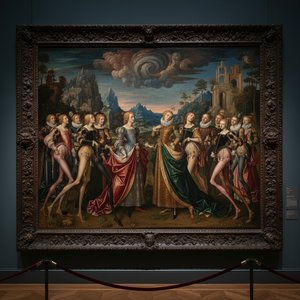
Laurentian Library

르네상스 거장 미켈란젤로! 다비드 상과 시스티나 성당 천장화 등 불멸의 작품으로 서양 미술에 지대한 영향을 끼쳤습니다. 조각, 회화, 건축에 능통한 그는 인간의 아름다움과 잠재력을 표현하며 예술사에 길이 남았습니다.

지클레 / 아트 프린트

빠른 제작과 다양한 마감 옵션을 제공하는 박물관 품질의 지클레이 또는 캔버스 프린트. (손으로 그린 그림 구매 손으로 그린 그림 구매디지털 이미지로 전환 디지털 이미지로 전환)

P118B $10
P118H $10
P118W $10
P438Z $10
P508JH $12
P508YH $12
P805H $10
P805Z $10
P919BZ $10
P919G $10
P919XJ $10
P959ZH $10
P968JZ $12
W106C $8
W218G $10
W218JH $8
W218Y $10
W307PJ $10
W316G $10
W316PJ $8
W316Y $10
W398PJ $8
W4111J $10
W500HY $15
W500JH $15
W692G $12
W849H $8
W940BG $15
W953PJ $8

표준 규격
맞춤형
CM
INCH

작품의 원본 비율을 유지하는 미리 설정된 크기 중에서 선택하세요.

가로 너비
세로 길이

특정 프레임이나 공간에 맞춰 직접 치수를 입력하실 수 있습니다. 선택하신 사이즈가 원본 이미지의 비율과 일치하지 않을 경우, 작품을 크롭(자르기)하거나 이미지를 대칭 또는 단색 채우기로 확장하여 제작합니다. 제작 시작 전, 최종 확인을 위해 디지털 목업이 전송됩니다.
화면상의 미리보기는 실제 크롭이나 확장 상태를 반영하지 않으므로, 최종 구도는 오직 목업을 통해서만 정확하게 확인하실 수 있습니다.
맞춤 사이즈 제작도 가능하지만, 원본 비율을 유지하기 위해서는 사전 정의된 목록에서 치수를 선택하시는 것을 권장합니다.

전 세계 배송()은 일반적인 4~5주의 소요 기간 대신 2주 이내에 완료됩니다. (8 9월)

why_choose_icon
전 세계 무료 특급 배송
why_choose_icon
프리미엄 린넨 캔버스
why_choose_icon
전체 배송 보험 보장
why_choose_icon
관세 환불 보장
why_choose_icon
실제 색상 일치 보장
why_choose_icon
100일 반품 정책 (결함 발생 시에만 적용)
why_choose_icon
100% 환불 보장
why_choose_icon
다량 구매 할인 혜택

총 합계 금액

$ 68

reproduction

Laurentian Library

지클레 / 아트 프린트

복제본 크기

-

최종 결제 금액

$ 68

작품 정보 요약

  • Influences: Classical Antiquity
  • Medium: Fresco
  • Notable elements or techniques: Innovative architectural design; Dynamic composition.
  • Movement: Mannerism
  • Artistic style: Elegant and refined; Emphasis on spatial illusion.
  • Artist: Michelangelo Buonarroti
  • Title: Laurentian Library

예술 상식 퀴즈

각 질문의 정답은 하나뿐입니다.

질문 1:
What architectural style is prominently featured in the Laurentian Library?
질문 2:
Who designed the Laurentian Library?
질문 3:
The staircase in the painting is notable for its:
질문 4:
What natural light source illuminates the interior space depicted?
질문 5:
The Laurentian Library was commissioned by:

A Stairway to Genius: Michelangelo’s Laurentian Library

Michelangelo Buonarroti, arguably the pinnacle of Renaissance artistic achievement, bequeathed upon Florence—and indeed the world—a legacy that transcends mere sculpture and painting. His monumental works stand as tangible embodiments of humanist ideals, reflecting a profound understanding of human anatomy, proportion, and spiritual aspiration. Yet, amidst his colossal sculptures like David and Pietà, nestled within the serene walls of San Lorenzo Basilica, lies a lesser-known masterpiece: The Laurentian Library—a testament to Michelangelo’s architectural vision and an emblem of Florentine intellectual fervor. Completed in 1530, this building represents more than just stone and mortar; it embodies Michelangelo's unwavering commitment to elevating art as a vehicle for conveying profound philosophical concepts.
  • The Architectural Context: Constructed under the patronage of Pope Clement VII Medici, the Laurentian Library was conceived as a symbol of humanist revival—a deliberate contrast to the austere grandeur of preceding papal palaces. Michelangelo’s design deliberately eschewed opulent decoration, prioritizing clarity and harmony with the surrounding basilica. He sought to create a space that fostered contemplation and intellectual discourse, mirroring the ideals championed by Renaissance thinkers.
  • A Staircase as Symbol: The staircase leading into the library is itself laden with symbolic significance. Its twelve steps ascend towards the heavens, representing humanity’s journey toward divine enlightenment. Each step is meticulously crafted with distinct geometric patterns—a deliberate nod to classical architectural principles and a reflection of Michelangelo's mastery in translating mathematical precision into artistic form.
  • Material Palette & Technique: Michelangelo employed Carrara marble – renowned for its purity and luminosity – throughout the building’s interior. His meticulous attention to detail is evident in every surface, where he skillfully applied polished plaster and subtle shading techniques to achieve an ethereal quality that enhances the space's grandeur.

Michelangelo’s Vision of Proportion & Harmony

Michelangelo’s approach to architecture wasn’t merely about constructing a building; it was about crafting an experience. He meticulously studied ancient Roman temples and basilicas, absorbing the principles of axial symmetry and rhythmic repetition—elements that would permeate his designs. The Laurentian Library exemplifies this dedication to proportion and harmony, demonstrating Michelangelo's belief that beauty resided in mathematical precision and balanced composition. This meticulous attention to detail is characteristic of his artistic style and underscores his conviction that architecture could inspire contemplation and elevate the human spirit.
  • Geometric Precision: The staircase’s steps are precisely calculated, reflecting Michelangelo's fascination with geometric ratios—a cornerstone of Renaissance art theory. This deliberate use of mathematics reinforces the building’s spiritual dimension, suggesting a connection to divine order and harmony.
  • Light & Shadow: Michelangelo skillfully manipulated natural light through strategically positioned windows, creating dramatic contrasts that illuminate the interior space and accentuate its sculptural qualities. The interplay of light and shadow contributes significantly to the library's atmosphere—a serene environment conducive to scholarly pursuits.

A Legacy of Inspiration

The Laurentian Library stands as a beacon of Renaissance artistic excellence, inspiring generations of architects and artists alike. Its understated elegance and profound symbolic depth continue to captivate viewers today, reminding us that true beauty lies not in ostentation but in intellectual rigor and spiritual contemplation. Reproductions of Michelangelo’s Laurentian Library offer an opportunity to experience the grandeur of Florentine art history firsthand—bringing a timeless masterpiece into your home or workspace.

작가 약력

르네상스를 빛낸 천재, 미켈란젤로 부오나로티

미켈란젤로 부오나로티(Michelangelo Buonarroti), 이 이름은 르네상스 시대의 예술적 영감과 인간 잠재력의 정점을 상징한다. 1475년 3월 6일, 토스카나 언덕 속에 자리 잡은 카프레세 미켈란젤로에서 태어난 그는, 예술, 야망, 신성한 영감이 기묘하게 어우러진 삶을 살았다. 아버지의 반대에도 불구하고 어린 시절부터 드러낸 뛰어난 그림 실력은 그를 조각, 회화, 건축의 경계를 재정립하는 길로 이끌었다. 도메니코 기릴란다요(Domenico Ghirlandaio) 밑에서 기초적인 프레스코와 드로잉 기술을 익혔지만, 메디치 가문의 정원—고대 그리스와 로마 조각상이 안식처를 이루는 곳—에서 그의 예술적 영혼은 진정으로 깨어났다. 그는 인체의 해부학, 비례, 이상화된 아름다움의 원리를 흡수하며 고대 조각상들을 탐구했고, 이는 그의 작품에 나타나는 특징이 되었다. 이 시기는 단순한 기술 훈련이 아니라, 르네상스 시대에 꽃피운 인문주의적 이상—인간 존엄성과 잠재력에 대한 강조—에 대한 철학적 몰입이었으며, 그의 예술적 비전을 깊이 있게 형성했다.

돌의 슬픔과 다윗의 강인함: 초기 걸작들

미켈란젤로의 예술계에서의 부상은 놀라울 정도로 빨랐다. 1496년, 그는 로마로 향하여 첫 번째 주요 의뢰를 받았다. 바로 *피에타(Pietà)* 조각이었다. 1499년 카르디널 장 드 빌리에르(Cardinal Jean de Bilhères)를 위해 완성된 이 숨막힐 듯 아름다운 대리석 작품은 즉시 미켈란젤로를 비교할 데 없는 기술과 감정의 깊이를 지닌 조각가로 자리매김하게 했다. 성모 마리아가 그리스도의 시신을 안고 있는 모습에 담긴 고요한 아름다움과 애수는 혁명적이었으며, 차가운 돌에 인간적인 감정을 불어넣는 그의 능력을 보여주었다. 이 초기 성공은 그의 다음 기념비적인 작업인 *다윗(David)*으로 이어졌다. 1501년부터 1504년 사이에 카라라 대리석 한 블록에서 조각된 이 거대한 조각상은 피렌체 공화국의 이상을 상징하는 존재가 되었다—용기와 시민적 미덕의 정의로운 구현이었다. *다윗*의 해부학적 정확성, 역동적인 자세, 심리적 강렬함은 전례 없는 것이었으며, 돌을 생명으로 불어넣는 능력을 지닌 거장으로서 그의 명성을 확고히 했다. 단순히 규모가 인상적이었던 것이 아니라, 대리석 속에 얼어붙은 억눌린 에너지와 행동에 대한 기대감이 보는 이들을 사로잡았다.

시스티나 예배당: 신성한 캔버스

미켈란젤로의 가장 오래 지속되는 유산 중 하나는 시스티나 예배당 벽 안에 자리 잡고 있다. 1508년, 교황 줄리우스 2세는 그에게 예배당 천장을 칠하도록 의뢰했는데, 이는 그의 삶을 사 년 동안 지배하고 서구 미술의 흐름을 영원히 바꾼 작업이었다. 그는 처음에는 주저하며 자신을 주로 조각가로 여기고 있었지만, 그럼에도 불구하고 도전을 받아들여 기념비적인 프레스코화 연작에 착수했다. 힘든 환경 속에서 종종 몇 시간 동안 등을 대고 누워 일하면서 그는 창세기 이야기를 묘사한 300개가 넘는 인물을 놀라운 세부 사항과 구성적 천재성으로 그렸다. 예배당 천장 그림에서 가장 상징적인 이미지 중 하나인 *아담의 창조(The Creation of Adam)*는 신과 인간 사이를 흐르는 신성한 불꽃을 담고 있으며, 창조와 잠재력에 대한 강력한 상징이다. 이 유명한 패널 외에도 전체 연작은 미켈란젤로의 서사적 능력, 해부학적 지식, 시각적인 스토리텔링을 통해 복잡한 신학적 개념을 전달하는 능력에 대한 증거이다. 동시에 그는 교황 줄리우스 2세의 무덤 작업을 시작했는데, 원래 계획했던 규모만큼은 완성되지 못했지만 *모세(Moses)*와 같은 강력한 조각상을 탄생시켰다.

건축과 매너리즘: 지속적인 영향력

그의 생애 후반에 미켈란젤로는 건축 분야에서도 재능을 발휘했다. 1520년, 그는 로마의 성 베드로 대성당의 건축가가 되어 브라만테(Bramante)의 원래 설계를 더욱 웅장하고 구조적으로 견고한 계획으로 크게 변경했다. 이러한 전환은 길쭉한 형태, 과장된 자세, 극적인 구성을 특징으로 하는 스타일인 매너리즘(Mannerism)으로의 변화를 나타낸다. 이 스타일적 진화는 1536년부터 1541년 사이에 시스티나 예배당 제단 벽에 그려진 *최후의 심판(The Last Judgment)*에서 생생하게 드러난다. 이 프레스코화는 그리스도의 재림을 엄청난 드라마와 감정적 강렬함으로 묘사하며, 더욱 불안정한 영적 기후를 반영한다. 미켈란젤로의 영향력은 그의 생애를 넘어 광범위하게 퍼져 고대 르네상스와 매너리즘 예술 운동 모두에 영향을 미쳤으며, 그의 해부학적 정확성, 역동적인 구성, 인간 조건에 대한 깊이 있는 탐구를 통해 수많은 세대의 예술가들에게 영감을 불어넣었다.

시간 속에 새겨진 유산

미켈란젤로는 1564년 2월 18일 로마에서 사망하여 서구 미술사에서 비교할 데 없는 작품을 남겼으며, 오늘날에도 계속해서 사람들을 사로잡고 영감을 주고 있다. 그는 예술계의 거인이자 진정한 “르네상스 맨”으로 기억되며, 그의 조각, 회화, 건축물은 아름다움, 힘, 인간 잠재력에 대한 우리의 이해를 형성해 왔다. 그의 유산은 단순한 예술적 성취가 아니라 창의성, 헌신, 완벽 추구라는 끊임없는 노력의 지속적인 증거이다. 그는 예술이 단순한 표현을 넘어선다는 것을 보여주었고, 깊은 영적이고 감정적인 표현의 매개체가 될 수 있음을 입증했다. 그의 천재성은 전 세계 박물관과 교회에서 울려 퍼지며 미켈란젤로 부오나로티가 지금까지 살았던 가장 위대한 예술가 중 한 명으로 영원히 기억될 것임을 보장한다.
  • 영향: 고대(그리스 & 로마 조각), 르네상스 인문주의, 피렌체 미술 전통 (도나텔로, 마사초).
  • 주요 작품: *피에타*, *다윗*, 시스티나 예배당 천장 프레스코화 (*아담의 창조*), *최후의 심판*, 줄리우스 2세 무덤.
  • 예술적 스타일: 초기 고전 이상주의, 역동적이고 표현적인 매너리즘으로의 진화.
미켈란젤로

미켈란젤로

1475 - 1564 , 이탈리아

주요 정보

  • 국적: 이탈리아인
  • 대표 작품:
    • 피에타
    • 다비드
    • 시스티나 성당 천장화
  • 사망일: 1564년 2월 18일
  • 영향을 받은 예술 사조:
    • 고전주의
    • 매너리즘
  • 영향을 준 예술가:
    • 도나텔로
    • 마사초
  • 예술 사조: 고전주의, 매너리즘
  • 전체 이름: 미켈란젤로 부오나로티
  • 출생일: 1475년 3월 6일
  • 출생지: 카프레세 미켈란젤로, 이탈리아
테마, 스타일 및 특징별로 분류된 작품들을 만나보세요.