
x































작품의 원본 비율을 유지하는 미리 설정된 크기 중에서 선택하세요.

특정 프레임이나 공간에 맞도록 직접 크기를 입력할 수 있습니다. 선택하신 크기가 원본 이미지의 비율과 일치하지 않는 경우, 작품을 자르거나 추가적인 손으로 그린 요소를 사용하여 그림을 확장합니다. 제작 시작 전 승인을 위해 디지털 목업을 보내드립니다.
화면 미리 보기는 실제 자르기 또는 확장을 반영하지 않습니다. 최종 구성은 목업을 통해서만 정확하게 확인하실 수 있습니다.
맞춤 크기 제작도 가능하지만, 원본 비율을 유지하기 위해 사전 정의된 목록에서 크기를 선택하시는 것을 권장합니다.

woman
복제본 크기

Born in the quiet landscape of Bosanski Petrovac on January 1, 1940, Mersad Berber emerged as one of the most profound voices in Balkan art. His journey was one of deep academic rigor and boundless creative exploration, shaped by his formative years at the Ljubljana Academy of Fine Arts. This foundation allowed him to develop a visual language that transcended mere representation, moving instead toward a poetic synthesis of history and myth. As he transitioned from a student to a distinguished professor at the Academy of Fine Arts in Sarajevo, Berber became more than just a painter; he became a chronicler of the Bosnian spirit, weaving the threads of medieval heritage into the fabric of contemporary existence.
The essence of Berber’s artistry lies in his extraordinary ability to bridge the gap between the ancient and the modern. His work is characterized by a masterful draughtsmanship that captures an almost haunting intensity. He did not simply paint scenes; he constructed cycles of paintings that functioned as visual chronicles, documenting the ebb and flow of Bosnian-Herzegovinian history from the medieval era through to the twentieth century. In his hands, ancient motifs were reimagined through a modern lens, creating a sense of iconic mystery that draws the viewer into a world where time feels fluid. This intermingling of historical homage and modern commentary allowed him to address the complexities of identity and memory with unparalleled grace.
Berber’s creative impulse was never confined to the canvas alone. He possessed a polymathic intellect that sought to infuse art into every facet of human experience. His repertoire was vast, spanning the delicate precision of graphic art, the tactile richness of tapestry, and the narrative depth of book illustration. He even ventured into the realm of cartography, creating poetic maps and bibliographic editions that treated geography as a canvas for storytelling. This multidisciplinary approach extended to the stage, where his talent for scenography and costume design breathed life into theatrical productions in major cultural hubs such as Ljubljana, Zagreb, Sarajevo, and Washington.
One of the most fascinating milestones of his experimental spirit was the completion of Tempo Secondo in 1985, an animated cartoon that showcased his ability to command movement and rhythm. Whether he was working on a large-scale painting or a minute graphic detail, Berber’s work remained anchored by a singular devotion to the narrative power of the image. His ability to navigate between different media allowed him to explore the same historical themes through various textures and scales, ensuring that his artistic dialogue with Bosnian history was both comprehensive and deeply personal.
The international art community took notice of Berber’s unique vision early in his career, leading to a series of prestigious accolades that solidified his status as a global master. His excellence in graphic arts was recognized with a gold medal and honorary diploma at the first International Exhibition of Graphic Art in Trieste, and he earned significant acclaim at the 11th International Biennale in São Paulo. From the halls of the Tokyo International Biennale of Graphic Art to the Mediterranean Biennale in Alexandria, Berber’s work resonated across borders, proving that the specificities of Bosnian history possessed a universal emotional resonance.
His contributions were honored with numerous high-profile awards, including:

1940 - 2012 , Bosnia and Herzegovina
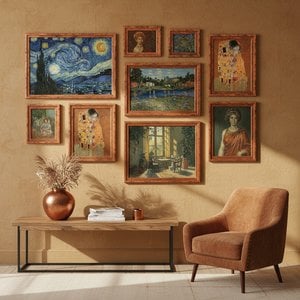
Explore 10 iconic paintings bathed in rich copper tones! From Rembrandt to Klimt, discover the stories behind these masterpieces & their warm color palettes. Find museum-quality art reproductions for your home at WahooArt.com.

Explore 10 iconic paintings bathed in 'Titan Buff' – from Rembrandt to Rubens. Discover the stories, techniques & warm tones that define these masterpieces. Find museum-quality art reproductions for your home at .

Journey through 10 iconic paintings bathed in 'sand' tones – from Van Gogh to Monet. Explore the stories, techniques & warm palettes of these timeless masterpieces. Find museum-quality art reproductions at and bring classic beauty home.

에드워드 호퍼의 시대를 초월하는 25개의 명작을 만나보세요. 미국의 고독과 도시 풍경을 담은 회화 작품들을 감상하고, WahooArt.com에서 고품질 미술 복제본으로 당신의 공간을 특별하게 꾸며보세요. 지금 바로 컬렉션을 탐험하세요!
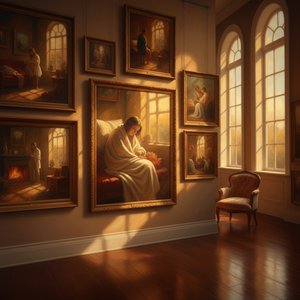
Explore the power of warm colors in art history! Discover how masters used reds, oranges & yellows to evoke emotion. Expert insights on Baroque drama, interior design & finding your perfect palette. WahooArt offers handmade reproductions.


최신 미술 뉴스, 특별 혜택 및 인테리어 아이디어를 가장 먼저 만나보세요.
프로젝트에 대해 알려주시면 저희 미술 전문가들이 맞춤형 아트 제안 3가지를 전달해 드립니다.
당신만을 위한 맞춤형 옵션 3가지를 무료로 추천해 드립니다!


 미리보기
미리보기
 프린트 구매
 공유하기
공유하기 공유하기
공유하기
 상세 정보
상세 정보

 다운로드
다운로드
 유사 작품
유사 작품 X-레이
X-레이 슬라이드 쇼


 더 보기
더 보기









 유리 옵션은 110cm 미만 크기에서만 선택 가능합니다.


