
x































작품의 원본 비율을 유지하는 미리 설정된 크기 중에서 선택하세요.

특정 프레임이나 공간에 맞도록 직접 크기를 입력할 수 있습니다. 선택하신 크기가 원본 이미지의 비율과 일치하지 않는 경우, 작품을 자르거나 추가적인 손으로 그린 요소를 사용하여 그림을 확장합니다. 제작 시작 전 승인을 위해 디지털 목업을 보내드립니다.
화면 미리 보기는 실제 자르기 또는 확장을 반영하지 않습니다. 최종 구성은 목업을 통해서만 정확하게 확인하실 수 있습니다.
맞춤 크기 제작도 가능하지만, 원본 비율을 유지하기 위해 사전 정의된 목록에서 크기를 선택하시는 것을 권장합니다.

Reading Lesson
복제본 크기
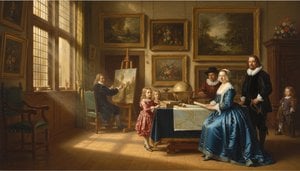
In the intimate world of Melchior Brassauw’s Reading Lesson, time seems to slow to the rhythmic pace of a turning page. This exquisite oil on copper, dating from around 1700, invites the viewer into a private, domestic sanctuary where the pursuit of knowledge meets the warmth of human connection. The scene unfolds with a profound sense of stillness, centered around an elderly man whose white beard serves as a focal point of wisdom and experience. As he reads aloud, his eyes fixed upon the text, two companions lean in, their gazes anchored by the gravity of his words. It is not merely a depiction of literacy, but a celebration of shared intellectual life, where the act of reading becomes a communal ritual that binds generations together.
The composition is masterfully orchestrated to draw the eye through a landscape of quiet domesticity. Scattered throughout the frame are books—some resting on surfaces, others held with reverence—acting as silent witnesses to the scene's scholarly atmosphere. The presence of a chair tucked near the edge of the frame and the soft arrangement of the figures create a sense of lived-in comfort, making the viewer feel less like an intruder and more like a quiet observer in the corner of a sunlit room. This careful arrangement of objects and people creates a narrative depth that rewards repeated viewing, revealing new layers of interaction with every glance.
As a prominent figure of the Dutch Golden Age, Brassauw employs the dramatic technique of chiaroscuro to breathe life into this small-scale masterpiece. The light does not merely illuminate; it sculpts. It catches the texture of the man's weathered skin, the crispness of the pages, and the subtle folds of clothing, casting soft shadows that lend a three-dimensional weight to the figures. This interplay of light and shadow creates an evocative atmosphere, imbuing the domestic setting with a sense of sacred importance, as if the light itself is sanctifying the moment of learning.
The choice of copper as a support medium is particularly significant for collectors and connoisseurs. Painting on copper allows for an incredibly smooth surface, enabling Brassauw to achieve a level of minute detail and luminous color that is difficult to replicate on canvas. The result is a jewel-like clarity; every glint of light on a book spine and every subtle expression on the listeners' faces possesses a crystalline sharpness. For those seeking to incorporate fine art into a sophisticated interior, such a piece offers an unparalleled richness of texture and a brilliant, enduring luster that commands attention in any lighting condition.
Beyond its technical brilliance, Reading Lesson resonates with a timeless emotional intelligence. It speaks to the universal human desire for connection, the respect for heritage, and the quiet joy found in simple, meaningful pursuits. In an era of constant digital distraction, this painting serves as a poignant reminder of the beauty of focused attention and the intimacy of face-to-face storytelling.
For interior designers and art enthusiasts, this reproduction offers more than just decoration; it provides a focal point of historical depth and intellectual elegance. Whether placed in a private library, a study, or a curated gallery wall, Brassauw’s work brings a sense of calm, scholarly prestige to a space. It is an investment in a piece of history that continues to whisper the stories of the past, making it a perfect acquisition for those who value art that nourishes both the eye and the soul.

In the golden era of Dutch and Flemish artistry, few names evoke the intimate charm of everyday life as poignally as Melchior Brassauw. Born in the vibrant intellectual hub of Leiden, Netherlands, around 1615, Brassauw emerged during a period when the art world was shifting its gaze from the grand, sweeping narratives of mythology toward the profound beauty found in the mundane. His journey was deeply rooted in the traditions of his homeland, yet his brush possessed a unique ability to transform a simple domestic scene into a dramatic stage of light and shadow. This mastery of chiaroscuro—the deliberate interplay between brilliance and obscurity—became the hallmark of his career, allowing him to breathe life into textures, fabrics, and the very air surrounding his subjects.
The foundation of Brassauw’s technical prowess can be traced back to his formative years under the guidance of Gerard Pietersz. van Zijl. As a pupil of Van Zijl, Brassauw inherited a devotion to meticulous observation and a keen eye for the natural world. From his mentor, he learned that realism was not merely about the accurate depiction of form, but about capturing the emotional resonance of a moment through light. This influence is evident in how Brassauw approached his canvases; he did not simply paint figures, but rather sculpted them using light, creating a sense of volume and depth that pulls the viewer into the heart of the composition.
While many of his contemporaries sought fame through epic historical scenes, Brassauw found his true calling in genre painting. His work serves as a window into the 17th-century soul, capturing ordinary individuals engaged in the quiet, rhythmic activities of daily existence. Whether depicting a musical gathering or a solitary moment of reflection, his paintings are characterized by an extraordinary attention to detail that borders on the miraculous. One might find themselves lost in the intricate weave of a silken sleeve, the subtle sheen of a polished tabletop, or the soft, fleeting expression captured on a sitter's face.
This dedication to detail served a higher purpose than mere decoration; it was an exploration of atmosphere. By focusing on the tactile qualities of his subjects, Brassauw created a palpable sense of presence. His compositions often feature:
The historical significance of Melchior Brassauw lies in his ability to elevate the "low" subject matter of genre painting to the level of high art. He proved that there was as much drama to be found in a room filled with musicians as there was in a battlefield or a palace. His work remains a vital part of the Dutch Golden Age legacy, representing the era's profound shift toward humanism and the celebration of the lived experience. Through his mastery of light, he ensured that even the most fleeting moments of the past would remain eternally luminous.
Today, his contributions are preserved in prestigious institutions such as the Rijksmuseum, where works like A Musical Company continue to captivate audiences with their timeless elegance. Brassauw’s ability to marry the technical rigor of his training with a deeply emotive style ensures that his place in the pantheon of great masters remains secure, reminding us all that there is profound beauty to be found in the shadows of the everyday.

1615 - 1672 , Netherlands
Embark on a journey through the Dutch Golden Age. Discover how masters like Rembrandt and Vermeer used chiaroscuro to manipulate light and shadow, creating timeless depth and spiritual resonance in art history's most captivating masterpieces.

Embark on a sophisticated journey through the Dutch Golden Age. Unveil the dramatic brilliance of Rembrandt’s chiaroscuro and the expressive landscapes of 17th-century masters in this authoritative exploration of light, shadow, and enduring artistic legacy.

Explore the dramatic mastery of Dutch Baroque art. Discover how chiaroscuro and light define the Golden Age, from Rembrandt's shadows to maritime grandeur. Perfect for classic art enthusiasts seeking deep historical insight and inspiration.


최신 미술 뉴스, 특별 혜택 및 인테리어 아이디어를 가장 먼저 만나보세요.
프로젝트에 대해 알려주시면 저희 미술 전문가들이 맞춤형 아트 제안 3가지를 전달해 드립니다.
당신만을 위한 맞춤형 옵션 3가지를 무료로 추천해 드립니다!


 미리보기
미리보기
 프린트 구매
 공유하기
공유하기 공유하기
공유하기
 상세 정보
상세 정보

 다운로드
다운로드
 유사 작품
유사 작품 X-레이
X-레이 슬라이드 쇼

 더 보기
더 보기









 유리 옵션은 110cm 미만 크기에서만 선택 가능합니다.


