빠른 제작과 다양한 마감 옵션을 선택할 수 있는 박물관 수준의 지클레이 및 캔버스 프린트. ( 수작업 채색 복제본 주문하기 디지털 이미지 판매 채널로 전환)





























작품의 원본 비율을 그대로 유지하는 프리셋 사이즈 중에서 선택해 보세요.

액자나 벽면 크기에 맞춰 필요한 가로와 세로 길이를 입력해 주세요. 프린트는 원본 이미지보다 크게 제작할 수 없으며 오직 자르는 것만 가능하므로, 비율이 다른 사이즈를 선택할 경우 이미지의 일부가 잘려 나갈 수 있습니다. 인쇄 작업에 들어가기 전, 최종 확인을 위해 디지털 목업을 보내드립니다. 이 페이지에 표시된 이미지는 실제 잘리는 영역을 나타내지 않으며, 오직 목업을 통해서만 정확한 확인이 가능합니다.
LA FORET DE CHENES
복제본 규격
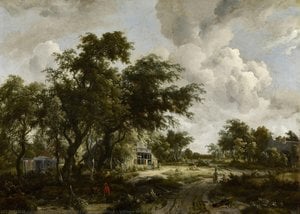
Meindert Hobbema’s “La Forêt de Chênes,” a captivating landscape painting from the late 17th century, isn't merely a depiction of a forest; it’s an immersive experience. Painted during a period of relative obscurity for the artist himself, yet increasingly appreciated in later decades, this work embodies the quiet grandeur and atmospheric depth that defined the Dutch Golden Age. Hobbema, a devoted pupil of Jacob van Ruysdael, masterfully captures the essence of the Dutch countryside – not through dramatic vistas or heroic figures, but with an exquisite sensitivity to light, texture, and the subtle poetry of nature. The painting transports us to a cool, dappled woodland, where sunlight filters through the dense canopy, casting long shadows and illuminating patches of moss-covered earth.

Hobbema’s technique is characterized by a remarkable layering of paint, creating an astonishingly realistic sense of depth and texture. He employs atmospheric perspective with exquisite precision—distant trees fade into a hazy blue-grey, while the foreground oaks stand proud and detailed, their rough bark rendered with meticulous care. The brushstrokes are visible yet controlled, contributing to the painting’s overall sense of realism without sacrificing elegance. The color palette is predominantly earthy – deep greens, browns, and greys dominate, punctuated by subtle hints of yellow and orange in the foliage, suggesting a late afternoon sun. This masterful use of light and shadow isn't simply decorative; it evokes a profound feeling of tranquility and solitude. The composition itself—a winding path leading into the heart of the forest—draws the viewer’s eye deeper into this serene world.
“La Forêt de Chênes” is a quintessential example of the Dutch Golden Age landscape tradition. Following in the footsteps of Jacob van Ruysdael, Hobbema focused on capturing the beauty of the Netherlands’ rural landscapes—not grand historical scenes or mythological narratives, but intimate glimpses into everyday life and the natural world. During this period, the Dutch Republic was experiencing a flourishing economy and a burgeoning artistic scene, and landscape painting became increasingly popular as a means of celebrating the country's prosperity and its connection to nature. Hobbema’s work reflects this cultural shift, offering a contemplative escape from the bustle of urban life.
Beyond its technical brilliance, “La Forêt de Chênes” resonates with deeper symbolic meaning. The towering oaks, often associated with strength, longevity, and wisdom, stand as silent witnesses to the passage of time. The winding path invites us on a journey of discovery, suggesting a connection between humanity and nature. The painting’s overall mood is one of peaceful contemplation—a reminder of the beauty and serenity that can be found in the natural world. It's a scene designed not just to be observed, but to be felt – a quiet invitation to slow down, breathe deeply, and connect with something larger than ourselves.
Reproductions of Hobbema’s “La Forêt de Chênes” offer a beautiful way to bring this timeless masterpiece into your home or office. Whether you choose a large-scale canvas print or a smaller metal poster, the painting's atmospheric depth and serene beauty will undoubtedly enhance any space. Consider framing it in a natural wood frame to complement the artwork’s earthy tones, or displaying it alongside other landscape paintings from the Dutch Golden Age for a cohesive and visually stunning collection.
"LA FORET DE CHENES"을(를) 다운로드하실 수 있습니다: 작품의 다운로드 페이지에서 고해상도 디지털 이미지 다운로드 이용이 가능합니다.
메인데르트 호베마의 "LA FORET DE CHENES"의 유사한 작품 페이지에서 관련 작품들을 만나보세요.
시각적 밝기 측면에서 볼 때, 메인데르트 호베마의 "LA FORET DE CHENES"은(는) shadow 수준입니다.


1638 - 1709 , 네덜란드

Explore the breathtaking mastery of Dutch Golden Age landscapes. From Italianate light to atmospheric realism, discover the techniques of 17th-century masters and learn how to bring these timeless, museum-quality masterpieces into your home through expert oil reproductions.
 실제 크기로 보기
 보내기
보내기 공유하기
공유하기
 상세 보기
상세 보기 가이드 보기

 이미지 다운로드
 유사 작품 더 보기
 X-레이
X-레이 슬라이드 쇼 보기
 Q&A
Q&A 통계 정보
통계 정보

 상세 보기
상세 보기









 유리 옵션은 110cm 미만 크기에서만 선택 가능합니다.