

 Oil On CanvasWallArtImpressionism
 191019th Century
 51.0 x 64.0 cm
 워커 아트 갤러리
빠른 제작과 다양한 마감 옵션을 선택할 수 있는 박물관 수준의 지클레이 및 캔버스 프린트. ( 수작업 채색 복제본 주문하기 디지털 이미지 판매 채널로 전환)





























작품의 원본 비율을 그대로 유지하는 프리셋 사이즈 중에서 선택해 보세요.

특정 프레임이나 공간에 맞춰 직접 치수를 입력하실 수 있습니다. 선택하신 사이즈가 원본 이미지의 비율과 일치하지 않을 경우, 작품을 크롭(자르기)하거나 이미지를 대칭 또는 단색 채우기로 확장하여 제작합니다. 제작 시작 전, 최종 확인을 위해 디지털 목업이 전송됩니다.
화면상의 미리보기는 실제 크롭이나 확장 상태를 반영하지 않으므로, 최종 구도는 오직 목업을 통해서만 정확하게 확인하실 수 있습니다.
맞춤 사이즈 제작도 가능하지만, 원본 비율을 유지하기 위해서는 사전 정의된 목록에서 치수를 선택하시는 것을 권장합니다.

Study of Two Sheep
복제본 규격

The history of British art is often written in the long, enduring strokes of masters who lived to see their legacies cemented by time. Yet, there exists a more poignant, haunting chapter found in the brief, luminous career of Maxwell Gordon Lightfoot. Born on July 19, 1886, in the Granby Street district of Liverpool, Lightfoot was a figure of immense promise whose life was tragically extinguished at the age of twenty-five. To look upon his work is to witness a soul caught in the transition between the meticulous traditions of the nineteenth century and the burgeoning, experimental spirit of early twentieth-century modernism. His story is not merely one of technical skill, but of a profound, atmospheric sensitivity that captured the ephemeral beauty of the English landscape and the quiet dignity of the human form.
Lightfoot’s artistic lineage was shaped by both familial circumstance and rigorous academic discipline. The unusual name he bore—a tribute from his mother to a father lost at sea—served as a constant, subtle reminder of the fragility of life, perhaps an element that would later manifest in the melancholic undertones of his compositions. His formal education began at the Chester Art School in 1901, providing him with a foundational mastery of draftsmanship. This was further refined during his time in Liverpool, where he attended evening classes at the Sandon Terrace Studios under the guidance of Gerald Chowne and J. Herbert McNair. These mentors, steeped in the delicate traditions of flower painting and the innovative aesthetics of the Glasgow Four, instilled in him an appreciation for subtle color palettes and structural harmony.
Before he was recognized as a rising star of the London art scene, Lightfoot honed his observational precision through a practical apprenticeship. Working as a chromolithographer for Turner and Dunnett, a firm specializing in seed catalogues, he learned the intricate dance of color layering and design. This period of commercial printmaking was far from a detour; rather, it provided him with an invaluable understanding of tonal depth and the graphic power of sepia and earth tones—elements that would become hallmarks of his later paintings. The precision required for botanical illustration undoubtedly informed the meticulous detail found in his more complex figure studies.
The true metamorphosis of his style occurred when he moved to London to study at the prestigious Slade School of Fine Art between 1907 and 1909. At the Slade, Lightfoot emerged as a formidable talent, earning accolades in figure painting, head painting, and composition from the cast. It was during this era that he found himself orbiting the Camden Town Group, a collective known for its gritty, Impressionistic approach to urban and domestic life. While his association with the group was relatively brief, his presence alongside contemporaries such as C.R.W. Nevinson and Mark Gertler placed him at the very heart of Britain's avant-garde movement. His work began to bridge the gap between the pastoral and the modern, utilizing muted browns, deep greens, and evocative sepia tones to create scenes that felt both timeless and intensely atmospheric.
Despite the immense talent that led critics to predict a "most distinguished career in the highest rank of painting," Lightfoot’s journey ended abruptly with his death in September 1911. The loss of such a vibrant talent left a void in the British art world, leaving behind a body of work that serves as a poignant "what if" in art history. His paintings, characterized by their soft, atmospheric light and soulful depictions of figures, remain a testament to a mastery that was never fully realized but was nonetheless deeply felt.
The historical significance of Lightfoot lies in his ability to capture the quiet, often overlooked moments of existence through a lens of refined Impressionism. His contributions can be summarized by several key artistic pillars:
Today, the works of Maxwell Gordon Lightfoot continue to resonate with those drawn to the beauty of the ephemeral. He remains a symbol of the fleeting nature of genius, an artist whose brief time in the sun left behind shadows of immense beauty and enduring grace.

1886 - 1911
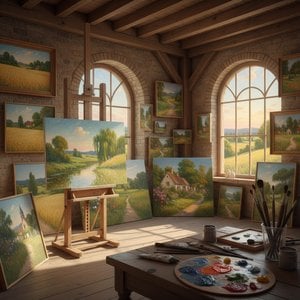
Discover the profound tranquility of rural art through an expert exploration of Impressionist landscapes. From pastoral scenes to textured oil masterpieces, learn how timeless nature-inspired artworks bring enduring elegance and serenity to sophisticated collectors.

Explore the serene beauty of sheep in fine art history. From Dutch Golden Age realism to Impressionist landscapes, discover how masters captured pastoral tranquility through exquisite oil paintings and museum-quality reproductions for discerning collectors.

Explore the profound beauty of village scene art. From Impressionist light to pastoral realism, discover how timeless landscapes capture nostalgia through expert artistry and historical depth. Perfect for collectors seeking evocative, museum-quality landscape inspirations.

 실제 크기로 보기
 보내기
보내기 공유하기
공유하기
 상세 보기
상세 보기 가이드 보기

 이미지 다운로드
 유사 작품 더 보기
 X-레이
X-레이 슬라이드 쇼 보기
 통계 정보
통계 정보 상세 보기
상세 보기









 유리 옵션은 110cm 미만 크기에서만 선택 가능합니다.


