


빠른 제작과 다양한 마감 옵션을 제공하는 박물관 수준의 지클레이 및 캔버스 프린트. ( 수작업 채색 복제본 주문하기 디지털 이미지로 전환)





























작품의 원본 비율을 그대로 유지하는 프리셋 사이즈 중에서 선택해 보세요.

액자나 벽면 크기에 맞춰 필요한 가로와 세로 길이를 입력해 주세요. 프린트는 원본 이미지보다 크게 제작할 수 없으며 오직 자르는 것만 가능하므로, 비율이 다른 사이즈를 선택할 경우 이미지의 일부가 잘려 나갈 수 있습니다. 인쇄 작업에 들어가기 전, 최종 확인을 위해 디지털 목업을 보내드립니다. 이 페이지에 표시된 이미지는 실제 잘리는 영역을 나타내지 않으며, 오직 목업을 통해서만 정확한 확인이 가능합니다.
Canal in Edam
복제본 크기
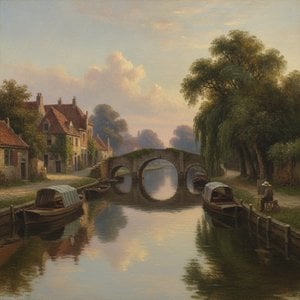
In the quiet corners of the Netherlands, where water meets the land in a delicate embrace, Max Liebermann found a profound subject for his brush. His 1904 masterpiece, Canal in Edam, serves as more than just a landscape; it is a poetic meditation on the rhythm of existence. As one gazes upon this oil on canvas, the viewer is immediately transported to a sun-drenched afternoon where time seems to slow. The painting captures a bustling yet peaceful street scene, where the gentle movement of a boat along the canal and the steady gait of a horse on the left flank create a harmonious dialogue between nature and human industry. It is an invitation to step out of the frantic pace of modern life and into a world defined by tranquility and light.
The composition is a masterclass in balanced perspective, guiding the eye through layers of depth that feel both expansive and intimate. Liebermann expertly places figures within the foreground and background, weaving a tapestry of human interaction that feels spontaneous rather than staged. This sense of movement—the pedestrians engaged in their daily rituals, the subtle ripples in the water—imbues the work with a living, breathing quality. For the collector or interior designer, this piece offers a sophisticated focal point that brings a sense of historical weight and atmospheric calm to any curated space.
To understand Canal in Edam is to understand the essence of German Impressionism. Liebermann, heavily influenced by the French masters like Claude Monet, utilized a technique where light is not merely an illumination but the primary subject itself. His brushstrokes are bold, expressive, and textured, eschewing rigid outlines in favor of soft edges that allow colors to bleed into one another with organic grace. This approach creates a warm, inviting atmosphere, where the sunlight feels as though it is actually warming the canvas.
The artist’s palette is a sophisticated arrangement of tones that capture the fleeting essence of a specific moment in time. Through the careful application of pigment, he achieves a luminous quality that makes the canal appear reflective and the street scene vibrant. This mastery of light and color does not just depict a location; it evokes a feeling of nostalgia and warmth. For those seeking to adorn a home with art that inspires emotion, the tactile nature of these impressionistic strokes provides a rich, sensory experience that remains captivating long after the first viewing.
Historically, Liebermann’s work represents a pivotal moment in art history where the focus shifted from the grand, heroic narratives of the past to the profound beauty found in the ordinary. Canal in Edam is a testament to this shift, celebrating the quiet dignity of small-town life and the simple joy of a shared afternoon. This interest in the everyday is a recurring theme in his oeuvre, seen also in works like Jewish Quarter in Amsterdam, where he applies the same meticulous attention to detail and sensitivity to human presence.
Owning a reproduction of such a significant work allows for the preservation of this historical charm within a contemporary setting. Whether placed in a sunlit library or a grand living room, a high-quality oil painting reproduction of this caliber serves as a bridge between the 19th-century Impressionist movement and modern aesthetic sensibilities. It is an investment in atmosphere, offering a timeless piece of heritage that continues to resonate with the beauty of the human experience.
"Canal in Edam"은(는) street scene, canal, daily life, impressionism, landscape, people walking, horse, waterway을(를) 담아내며, Serene한 분위기를 자아냅니다.
막스 리버만의 "Canal in Edam"의 X-Ray 뷰는 작품의 X선 분석 페이지에서 확인하실 수 있습니다. 이 페이지에서는 11개의 광학 레이어를 통해 이미지를 인터랙티브하게 살펴볼 수 있습니다.
막스 리버만의 "Canal in Edam"은(는) Landscape 형식입니다. 이 형식은 작품 구성의 비율을 나타냅니다.


1847 - 1935 , 독일

Explore the ethereal beauty of Impressionism. Discover how masters like Monet and Boudin captured fleeting light through revolutionary techniques, textures, and plein air mastery in this expert guide to the art of atmosphere.

Embark on a visual journey through the world's most serene seascapes. Discover the artistry of Impressionist masters and learn how to curate timeless maritime oil paintings for your luxury collection or interior design project with expert guidance.
Embark on a visual journey through the tranquil beauty of canal scenes in fine art. Discover how master painters capture light, reflection, and serenity through impressionistic landscapes and timeless maritime masterpieces.

Explore the technical mastery of Impressionist light and movement through expert analysis. Discover the secrets of the masters today.

Discover the profound elegance of genre painting. Explore how masters captured the beauty of everyday life through meticulous realism, from the Dutch Golden Age to Romantic Realism. Elevate your space with museum-quality, hand-painted oil reproductions and bespoke art commissions.
 미리보기
미리보기
 공유하기
공유하기 공유하기
공유하기
 상세 정보
상세 정보 가이드 보기

 다운로드
다운로드
 유사 작품 더 보기
 X-레이
X-레이 슬라이드 쇼 보기
 질의응답
질의응답
 통계 정보
통계 정보

 더 보기
더 보기









 유리 옵션은 110cm 미만 크기에서만 선택 가능합니다.


