


x

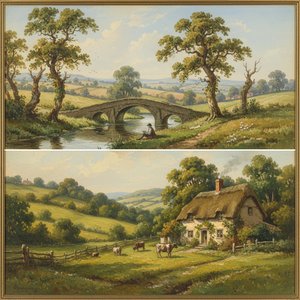
 American Illustration
 1901
1901 109.0 x 83.0 cm
작품의 원본 비율을 유지하는 미리 설정된 크기 중에서 선택하세요.

특정 프레임이나 공간에 맞춰 직접 치수를 입력하실 수 있습니다. 선택하신 사이즈가 원본 이미지의 비율과 일치하지 않을 경우, 작품을 크롭(자르기)하거나 이미지를 대칭 또는 단색 채우기로 확장하여 제작합니다. 제작 시작 전, 최종 확인을 위해 디지털 목업이 전송됩니다.
화면상의 미리보기는 실제 크롭이나 확장 상태를 반영하지 않으므로, 최종 구도는 오직 목업을 통해서만 정확하게 확인하실 수 있습니다.
맞춤 사이즈 제작도 가능하지만, 원본 비율을 유지하기 위해서는 사전 정의된 목록에서 치수를 선택하시는 것을 권장합니다.

Joy
복제본 크기


The canvases of Mary Ethel Hunter (1878-1936) offer a serene glimpse into the heart of late 19th and early 20th century England – a world steeped in Victorian sensibilities, religious devotion, and a burgeoning appreciation for the beauty of the natural world. More than just a painter, Hunter was a meticulous observer, translating her experiences and deeply held beliefs onto canvas with a quiet grace and remarkable technical skill. Her work isn’t merely decorative; it's imbued with a contemplative spirit, reflecting both the formal constraints of her era and a subtle, yet persistent, yearning for something beyond.
Born in Napier, New Zealand, to Edward and Hannah Togwood, Mary Ethel Hunter’s early life was shaped by strong family values and a deep connection to the Methodist Church. This religious foundation profoundly influenced her artistic vision, informing many of her subjects – particularly biblical scenes and floral arrangements laden with symbolic meaning. Her formal art training began in Auckland, but she later moved to Wellington, where she continued to hone her skills and develop her distinctive style. It was during this period that Hunter’s talent truly blossomed, establishing her as a respected artist within the Wellington art community.
Hunter's most celebrated works are undoubtedly her floral still lifes – meticulously rendered compositions dominated by roses, lilies, violets, and other blooms. These aren’t simply depictions of beauty; they’re carefully constructed narratives. Each flower is imbued with symbolic weight, echoing the language of flowers prevalent during the Victorian era, where colors and arrangements conveyed hidden meanings of love, loss, remembrance, and faith. A single red rose might represent passionate affection, while a cluster of lilies could symbolize purity or mourning. Her use of light and shadow is particularly noteworthy – often employing diffused natural light to create an ethereal atmosphere that enhances the sense of tranquility and reverence within each painting.
The influence of Pre-Raphaelite painters like Millais and Rossetti is evident in Hunter’s meticulous detail, rich color palettes, and penchant for depicting scenes from biblical stories. However, unlike her predecessors, Hunter avoids overt romanticism, instead favoring a more restrained and dignified approach. Her figures are often presented with quiet dignity, their gazes directed inward or towards the heavens – reflecting a deep sense of spirituality and inner contemplation.
Beyond her artistic pursuits, Mary Ethel Hunter was an active participant in several social movements of her time. She was deeply involved in the Women’s Christian Temperance Union (WCTU), campaigning tirelessly for the Six O'clock Closing of hotels – a controversial measure aimed at curbing alcohol consumption and its detrimental effects on society. Her dedication to this cause is documented in numerous diaries and letters, revealing a woman of unwavering conviction and tireless energy. She travelled extensively throughout New Zealand and Australia, organizing meetings, gathering signatures for petitions, and delivering impassioned speeches.
Later in life, Hunter moved to Nelson, where she became Matron of Alexandra Home – an institution dedicated to providing care for elderly women. This role demonstrated her compassionate nature and commitment to serving others. Her time at the home provided a new source of inspiration, evident in some of her later works that depict scenes of domestic tranquility and quiet dignity.
Mary Ethel Hunter’s artistic legacy is one of understated elegance and profound spiritual depth. While she never achieved widespread fame during her lifetime, her paintings are now recognized as significant examples of Victorian art – particularly for their meticulous detail, symbolic richness, and evocative atmosphere. Her work offers a valuable window into the social and cultural landscape of late 19th and early 20th century England, revealing the complex interplay between faith, beauty, and social reform. Her paintings continue to resonate with viewers today, inviting contemplation on themes of love, loss, faith, and the enduring power of nature.
Hunter’s contribution extends beyond her artistic output; she embodies a spirit of quiet determination and unwavering commitment to her beliefs – qualities that make her a compelling subject for historical study and a testament to the often-overlooked contributions of women artists in a male-dominated era.
1878 - 1936
Explore the serene landscapes of John Fulleylove (1845-1908), a celebrated English artist. Discover his charming watercolours & oils, evocative travel illustrations, and lasting legacy. Learn about his life, exhibitions, and artistic style.

Explore the rich history of rural landscape painting with WahooArt. Discover Impressionist masterpieces, key artists & movements. Find your perfect serene artwork and bring nature's beauty home.

Explore the rich history of pastoral art from classical Arcadia to contemporary interpretations. Discover key artists, themes & collecting tips at WahooArt.

Explore the rich history of pastoral landscape art, from classical Arcadia to Impressionism & beyond. Discover key artists, movements, and how to collect serene rural scenes for your home. Expert insights at WahooArt.

Explore the captivating landscapes & portraits of Brian Hatton (1887-1916), a promising British artist lost too soon. Discover his unique style, Herefordshire roots, and lasting legacy in early 20th-century art.


최신 미술 뉴스, 특별 혜택 및 인테리어 아이디어를 가장 먼저 만나보세요.
프로젝트에 대해 알려주시면 저희 미술 전문가들이 맞춤형 아트 제안 3가지를 전달해 드립니다.
당신만을 위한 맞춤형 옵션 3가지를 무료로 추천해 드립니다!

 작품 구매하기
 공유하기
공유하기 공유하기
공유하기
 상세 정보
상세 정보

 다운로드
다운로드
 유사 작품
유사 작품 X-레이
X-레이 슬라이드 쇼
 더 보기
더 보기






































 유리 옵션은 110cm 미만 크기에서만 선택 가능합니다.


