x
 Acrylic On CanvasWallArtAbstract Expressionism
 1948
1948 135.0 x 118.0 cm




























작품의 원본 비율을 유지하는 미리 설정된 크기 중에서 선택하세요.

특정 프레임이나 공간에 맞춰 직접 치수를 입력하실 수 있습니다. 선택하신 사이즈가 원본 이미지의 비율과 일치하지 않을 경우, 작품을 크롭(자르기)하거나 이미지를 대칭 또는 단색 채우기로 확장하여 제작합니다. 제작 시작 전, 최종 확인을 위해 디지털 목업이 전송됩니다.
화면상의 미리보기는 실제 크롭이나 확장 상태를 반영하지 않으므로, 최종 구도는 오직 목업을 통해서만 정확하게 확인하실 수 있습니다.
맞춤 사이즈 제작도 가능하지만, 원본 비율을 유지하기 위해서는 사전 정의된 목록에서 치수를 선택하시는 것을 권장합니다.

No. 9
복제본 크기
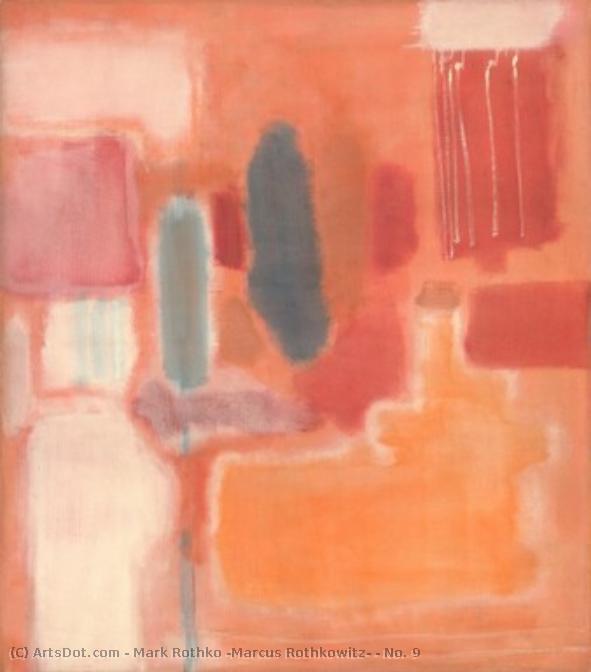
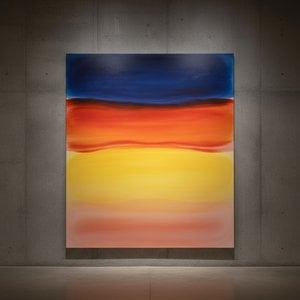
Mark Rothko's "No. 9," painted in 1948, isn’t merely a canvas splashed with color; it’s an immersion into the profound and often unsettling realm of human experience. Born Markus Yakovlevich Rothkowitz in Dvinsk, Latvia, in 1903, Rothko's early life was steeped in displacement – a constant negotiation between cultural identities shaped by pogroms and political instability. This inherent sense of otherness profoundly informed his artistic vision, driving him to explore themes of mortality, trauma, and the elusive search for meaning. “No. 9” embodies this exploration with an arresting simplicity, inviting viewers into a meditative space where color itself becomes a conduit for emotion.
At first glance, "No. 9" appears almost elemental – a collection of rectangular blocks in muted tones of ivory, slate blue, crimson red, and apricot orange. However, to reduce it to mere geometric abstraction would be a grave oversight. Rothko’s masterful technique lies in the subtle blending of these forms, creating an atmosphere of hazy depth. The edges are deliberately blurred, dissolving the boundaries between shapes and fostering a sense of ambiguity. It's not about precise representation; rather, it’s about conveying a feeling – a quiet melancholy, perhaps, or a yearning for something beyond comprehension. Notice how the slate blue streak, beginning near the center and cascading downwards, acts as a visual anchor, grounding the composition while simultaneously suggesting an inexorable flow.
Considering Rothko’s personal history – his early experiences with loss and displacement – it's not surprising that “No. 9” carries a palpable sense of grief and remembrance. The stacked shapes in the left corner, beginning with pale pink rectangles and culminating in an ivory-white rectangle extending off the bottom edge, could be interpreted as fragments of memory, stubbornly clinging to existence. The crimson red rectangle streaked with white lines evokes a feeling of blood or tears, while the overall composition suggests a landscape scarred by hardship. The repetition of forms – particularly the vertical rectangles – creates a hypnotic effect, drawing the viewer into a state of contemplation and inviting them to confront their own experiences of loss.
“No. 9” is a pivotal work in Rothko's development, marking a shift towards his signature style – large, luminous fields of color intended to evoke profound emotional responses. Painted just after his arrival in Portland and following the tragic loss of his father, it’s a testament to the artist’s ability to transform personal sorrow into universal themes. The painting’s enduring power lies not in its representational qualities but in its capacity to connect with viewers on an intuitive level, prompting introspection and offering a glimpse into the depths of human emotion. WahooArt offers meticulously crafted hand-painted reproductions that faithfully capture the essence of this iconic piece, allowing you to experience Rothko's vision firsthand.


1903 - 1970 , 라트비아
Explore the profound emotional depth of Mark Rothko's abstract expressionism. Discover the history, techniques & lasting impact of this pivotal Color Field painter. Expert insights for collectors and art enthusiasts.

Explore the vibrant world of Gene Davis and the Washington Color School. Discover his iconic stripe paintings, innovative techniques, and lasting impact on American abstract art. A deep dive for collectors & enthusiasts.

Explore 10 iconic paintings with captivating 'mushroom' tones! Discover Van Gogh, Monet & Rembrandt’s masterpieces—earthy palettes, rich history & artistic techniques. Find museum-quality art reproductions and curated decor ideas at

Explore the profound world of Color Field painting with WahooArt. Discover key artists like Rothko & Newman, its philosophical roots, and lasting impact on modern art. Expert insights for collectors.

Explore the evolution of geometric abstraction from Cubism to contemporary art. Discover key artists like Malevich & Mondrian, investment insights, and expert collecting advice at WahooArt.


최신 미술 뉴스, 특별 혜택 및 인테리어 아이디어를 가장 먼저 만나보세요.
프로젝트에 대해 알려주시면 저희 미술 전문가들이 맞춤형 아트 제안 3가지를 전달해 드립니다.
당신만을 위한 맞춤형 옵션 3가지를 무료로 추천해 드립니다!

 작품 구매하기
 공유하기
공유하기 공유하기
공유하기
 상세 정보
상세 정보

 다운로드
다운로드
 유사 작품
유사 작품 X-레이
X-레이 슬라이드 쇼
 더 보기
더 보기









 유리 옵션은 110cm 미만 크기에서만 선택 가능합니다.