

 Acrylic On CanvasWallArtColor Field Painting
 1957
1957 193.0 x 233.0 cm
이 페이지에 표시된 작품은 저작권법의 보호를 받으며, 이에 따라 동일한 복제품을 제작하거나 판매하는 것은 법으로 금지되어 있습니다. 이러한 권리 보호는 다음과 같은 국제 협약에 따라 시행됩니다. 베른 협약 또한 다음에서 명시하는 법률을 포함한 국내법에 의해 보호됩니다. 미국 저작권법 제17조.
이 방식은 저작권 보호를 받는 예술 작품을 복제하거나 그대로 재현하는 것이 아니기에 저작권 규정을 완벽히 준수합니다. 대신, 이는 창의적인 재해석의 과정을 거칩니다. 즉, 원작에서 영감을 받되 원작과 동일하지 않은 새로운 회화 작품을 의미합니다.
빠른 제작과 다양한 마감 옵션을 선택할 수 있는 박물관 수준의 지클레이 및 캔버스 프린트. ( 수작업 채색 복제본 주문하기 디지털 이미지 판매 채널로 전환)





























작품의 원본 비율을 그대로 유지하는 프리셋 사이즈 중에서 선택해 보세요.

액자나 벽면 크기에 맞춰 필요한 가로와 세로 길이를 입력해 주세요. 프린트는 원본 이미지보다 크게 제작할 수 없으며 오직 자르는 것만 가능하므로, 비율이 다른 사이즈를 선택할 경우 이미지의 일부가 잘려 나갈 수 있습니다. 인쇄 작업에 들어가기 전, 최종 확인을 위해 디지털 목업을 보내드립니다. 이 페이지에 표시된 이미지는 실제 잘리는 영역을 나타내지 않으며, 오직 목업을 통해서만 정확한 확인이 가능합니다.
No.20
복제본 규격
Mark Rothko’s artistic journey was inextricably linked to his formative years, steeped in the anxieties and displacements of early 20th-century Eastern Europe. Born Markus Yakovlevich Rothkowitz in Dvinsk (now Daugavpils), Latvia, in 1903, he carried within him a profound sensitivity shaped by the turbulent atmosphere surrounding his Jewish family during periods of pogroms and political unrest. This early exposure to human suffering would become a recurring theme throughout his oeuvre, informing his exploration of existential questions – mortality, trauma, and the persistent search for meaning in an often-chaotic world. The 1913 immigration to Portland, Oregon, represented not merely a geographical shift but a significant cultural upheaval. His father, a pharmacist and intellectual with strong socialist leanings, fostered a home brimming with debate and learning, yet the untimely death of Jacob Rothkowitz shortly after their arrival cast a long shadow, fueling a lifelong quest for emotional resonance in his art. This early experience of loss, coupled with the challenges inherent in assimilation, served as a catalyst for Rothko’s artistic exploration – a desire to grapple with profound human experiences through color and form.
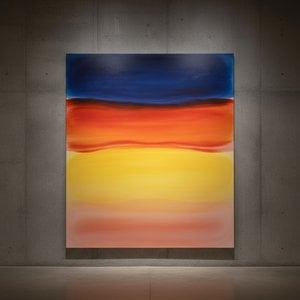
“No. 20,” created in 1957, stands as a quintessential example of Mark Rothko's mastery within the Color Field movement. Rejecting traditional representational techniques, Rothko embraced a radically simplified approach, focusing on large, luminous rectangles of color applied with thin washes of oil paint. The painting’s surface is remarkably flat, devoid of visible brushstrokes or any illusionistic depth. This deliberate lack of technique – a conscious rejection of the artist's hand – was central to Rothko’s intention: to create works that would evoke an emotional response directly within the viewer, bypassing intellectual analysis. The scale of “No. 20,” measuring 193 x 233 cm, further amplifies this effect, enveloping the observer in a sea of color and inviting contemplation. The subtle variations in hue – ranging from deep reds to darker, almost black tones – are achieved through meticulous layering and blending, creating an atmospheric depth that belies the painting’s apparent simplicity.
The composition of “No. 20” is deceptively straightforward, yet profoundly evocative. The three horizontal bands – a hazy red at the top, a dominant dark band in the center, and a slightly narrower darker strip below – are not merely decorative elements; they represent a carefully considered orchestration of color and form designed to elicit specific emotional responses. Rothko himself described his paintings as “windows on another world,” suggesting that the colors were intended to transport the viewer beyond the confines of their everyday experience. The deep reds, often associated with passion, blood, and spirituality, are tempered by the darker tones, which evoke feelings of melancholy, introspection, and perhaps even a sense of mortality. The overall effect is one of quiet intensity – a meditative space where the viewer can confront fundamental questions about existence without the need for explicit narrative or imagery.
WahooArt offers meticulously crafted, hand-painted reproductions of “No. 20” that capture the essence of this iconic work while retaining its remarkable luminosity and depth. Unlike digital prints, our reproductions utilize traditional oil painting techniques, faithfully recreating the subtle nuances of Rothko’s color palette and surface texture. Whether you're seeking to add a touch of contemplative serenity to your living room or a bold statement piece for a corporate space, a WahooArt reproduction of “No. 20” provides an authentic connection to one of the most influential artists of the 20th century. Explore our collection today and discover how Rothko’s profound vision can enrich your environment.

1903 - 1970 , 라트비아

Explore the profound emotional depth of Color Field painting. Discover the history of mid-century abstraction, from Rothko to Newman, and learn how pure color transforms the viewer's experience through our expert art history guide.

마크 로스코 최고작 25선을 만나보세요. 추상 표현주의 거장의 색채로 표현된 심오한 감정과 예술의 세계를 탐험하고, WahooArt에서 명화 복제본과 특별한 인테리어 아이디어를 찾아보세요. 지금 바로 컬렉션을 확인하세요!
Explore the profound emotional depth of Mark Rothko's abstract expressionism. Discover the history, techniques & lasting impact of this pivotal Color Field painter. Expert insights for collectors and art enthusiasts.

카지미르 말레비치의 최고작 25선을 만나보세요. 추상 미술의 혁신적인 세계, 슈프레마티즘의 정수를 담은 작품들의 이야기와 영감을 WahooArt에서 경험하세요. 고품질 아트 프린트와 인테리어 데코 아이디어를 지금 바로 확인하세요! WahooArt.com

추상표현주의의 심장을 뛰게 한 10대 걸작을 만나보세요. 폴록, 로스코 등 거장의 작품 비하인드 스토리와 예술적 영감을 WahooArt에서! 지금 바로 미술품 컬렉션을 탐험하고, 당신의 공간에 특별한 예술적 감성을 더하세요. WahooArt.com

 실제 크기로 보기
 보내기
보내기 공유하기
공유하기
 상세 보기
상세 보기 가이드 보기

 이미지 다운로드
 유사 작품 더 보기
 X-레이
X-레이 슬라이드 쇼 보기
 통계 정보
통계 정보 상세 보기
상세 보기









 유리 옵션은 110cm 미만 크기에서만 선택 가능합니다.


