
x































작품의 원본 비율을 유지하는 미리 설정된 크기 중에서 선택하세요.

특정 프레임이나 공간에 맞도록 직접 크기를 입력할 수 있습니다. 선택하신 크기가 원본 이미지의 비율과 일치하지 않는 경우, 작품을 자르거나 추가적인 손으로 그린 요소를 사용하여 그림을 확장합니다. 제작 시작 전 승인을 위해 디지털 목업을 보내드립니다.
화면 미리 보기는 실제 자르기 또는 확장을 반영하지 않습니다. 최종 구성은 목업을 통해서만 정확하게 확인하실 수 있습니다.
맞춤 크기 제작도 가능하지만, 원본 비율을 유지하기 위해 사전 정의된 목록에서 크기를 선택하시는 것을 권장합니다.

제1번
복제본 크기
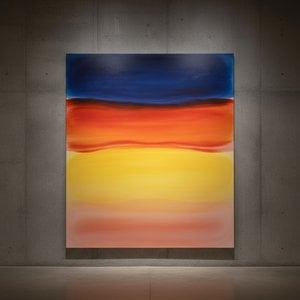
Mark Rothko’s “No. 1 (Royal Red and Blue)” stands as an emblem of Color Field painting, a movement that revolutionized abstract art in the mid-20th century. Painted in 1954 during his prolific period, this monumental canvas embodies Rothko's unwavering commitment to distilling emotion into pure pigment—a radical departure from representational forms.
Rothko’s approach was profoundly influenced by Zen Buddhism, where he sought to transcend intellectual understanding and access a state of meditative contemplation. He believed that color itself could convey profound spiritual truths—a conviction that underpinned his entire artistic practice.
The artwork’s dominant hues are deep reds and oranges, interwoven with cooler shades of blue and white. This seemingly disparate palette achieves remarkable balance through subtle gradations and layering. Rothko meticulously crafted these colors to evoke feelings of warmth, passion, and serenity simultaneously—a testament to his mastery of color theory.
Rothko deliberately avoided focal points, encouraging viewers to engage in an intuitive exploration of the canvas’s surface. This technique reflects his desire to bypass conscious perception and allow color to communicate directly with the subconscious mind.
The painting utilizes a thick impasto technique—where paint is applied liberally to the canvas, creating visible brushstrokes that contribute significantly to its textural richness. Rothko’s meticulous layering of pigment builds up depth and dimension, capturing movement and emotion with palpable intensity.
"No. 1 (Royal Red and Blue)" emerged during the height of Color Field painting’s influence, reacting against the formalism of earlier abstract movements. Rothko's work grappled with fundamental questions about human existence—mortality, suffering, and the search for meaning in a chaotic universe.
The rectangular forms themselves can be interpreted as representing spiritual realms—suggesting an openness to transcendence and contemplation. Ultimately, Rothko’s masterpiece invites viewers to confront their own emotions and engage in a personal dialogue with its profound visual language.

1903 - 1970 , 라트비아

마크 로스코 최고작 25선을 만나보세요. 추상 표현주의 거장의 색채로 표현된 심오한 감정과 예술의 세계를 탐험하고, WahooArt에서 명화 복제본과 특별한 인테리어 아이디어를 찾아보세요. 지금 바로 컬렉션을 확인하세요!
Explore the profound emotional depth of Mark Rothko's abstract expressionism. Discover the history, techniques & lasting impact of this pivotal Color Field painter. Expert insights for collectors and art enthusiasts.

추상표현주의의 심장을 뛰게 한 10대 걸작을 만나보세요. 폴록, 로스코 등 거장의 작품 비하인드 스토리와 예술적 영감을 WahooArt에서! 지금 바로 미술품 컬렉션을 탐험하고, 당신의 공간에 특별한 예술적 감성을 더하세요. WahooArt.com

Explore the philosophical and aesthetic foundations of Color Field painting with WahooArt. Discover key artists like Rothko & Newman, its spiritual influences, and lasting impact on modern art. Expert insights for collectors.

Explore the profound emotional world of Abstract Expressionism with WahooArt. Discover key artists like Pollock & Rothko, learn about collecting, and find museum-quality reproductions to inspire your space.


최신 미술 뉴스, 특별 혜택 및 인테리어 아이디어를 가장 먼저 만나보세요.
프로젝트에 대해 알려주시면 저희 미술 전문가들이 맞춤형 아트 제안 3가지를 전달해 드립니다.
당신만을 위한 맞춤형 옵션 3가지를 무료로 추천해 드립니다!


 미리보기
미리보기
 프린트 구매
 공유하기
공유하기 공유하기
공유하기
 상세 정보
상세 정보

 다운로드
다운로드
 유사 작품
유사 작품 X-레이
X-레이 슬라이드 쇼

 더 보기
더 보기









 유리 옵션은 110cm 미만 크기에서만 선택 가능합니다.


