
빠른 제작과 다양한 마감 옵션을 제공하는 박물관 품질의 지클레이 또는 캔버스 프린트. ( 손으로 그린 그림 구매 디지털 이미지로 전환)





























작품의 원본 비율을 유지하는 미리 설정된 크기 중에서 선택하세요.

특정 프레임이나 공간에 맞춰 직접 치수를 입력하실 수 있습니다. 선택하신 사이즈가 원본 이미지의 비율과 일치하지 않을 경우, 작품을 크롭(자르기)하거나 이미지를 대칭 또는 단색 채우기로 확장하여 제작합니다. 제작 시작 전, 최종 확인을 위해 디지털 목업이 전송됩니다.
화면상의 미리보기는 실제 크롭이나 확장 상태를 반영하지 않으므로, 최종 구도는 오직 목업을 통해서만 정확하게 확인하실 수 있습니다.
맞춤 사이즈 제작도 가능하지만, 원본 비율을 유지하기 위해서는 사전 정의된 목록에서 치수를 선택하시는 것을 권장합니다.

Green and Tangerine on Red
복제본 크기
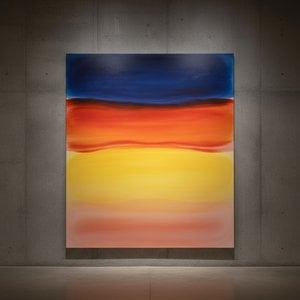
Mark Rothko's *Green and Tangerine on Red*, painted in 1956, isn’t merely a painting; it’s an immersion. Born Markus Yakovlevich Rothkowitz in Dvinsk, Latvia, in 1903, his early life was steeped in the anxieties of a Jewish family navigating a turbulent landscape—a formative experience that would profoundly shape his artistic vision. This sense of displacement and emotional depth became the bedrock of his work, seeking to distill human experience into its purest form. The painting emerged during a pivotal moment in Rothko’s career, aligning with his exploration of Color Field painting – a movement that rejected traditional representational art in favor of expansive fields of color designed to evoke profound emotional responses. It's a testament to the power of abstraction to bypass intellectual analysis and speak directly to the viewer’s soul.
At first glance, *Green and Tangerine on Red* appears deceptively simple – two vast rectangles dominating the canvas. One, a deep, resonant green; the other, a vibrant tangerine, set against a field of crimson red. However, this apparent simplicity belies an intricate layering of techniques. Rothko didn’t employ brushstrokes in the traditional sense. Instead, he built up layers of translucent paint, often rubbing them together with rags to create subtle shifts in tone and luminosity. This process resulted in a remarkably smooth surface, almost velvety to the touch – a deliberate choice intended to dissolve the boundaries between the colors and create an illusion of depth and movement. The edges of these rectangles are deliberately soft and undefined, blurring the lines between form and color, contributing to the painting’s ethereal quality. The careful balance of hues—the coolness of green against the warmth of tangerine and the intensity of red—creates a dynamic tension that draws the eye across the canvas.
Rothko himself resisted categorization, refusing to label his work as “Color Field.” He insisted it was about capturing the essence of human experience – both its moments of joy and sorrow. *Green and Tangerine on Red* is often interpreted as a meditation on duality: the interplay between hope and despair, light and darkness. The vibrant orange rectangle can be seen as representing the brighter aspects of life—a fleeting moment of happiness or connection—while the darker green and red suggest the underlying anxieties and uncertainties that inevitably accompany existence. The painting’s power lies in its ability to evoke a visceral response – a feeling of melancholy, contemplation, or even transcendence. It's not about depicting a specific scene but rather conveying an intangible emotional state.
Currently residing at the Phillips Collection in Washington D.C., *Green and Tangerine on Red* stands as one of Rothko’s most iconic works, embodying his mature style and philosophical approach to art. The painting's journey reflects its enduring significance; it was initially intended for the Seagram Murals but ultimately rejected by Rothko due to concerns about its commercialization. It has since been exhibited globally, captivating audiences with its profound emotional resonance. Reproductions of this masterpiece are available through WahooArt.com, offering a way to bring this powerful work into your own space and experience its evocative beauty firsthand. Its continued presence in museums and private collections ensures that Rothko’s legacy as one of the 20th century's most influential artists will endure for generations to come.

1903 - 1970 , 라트비아
Explore the profound emotional depth of Mark Rothko's abstract expressionism. Discover the history, techniques & lasting impact of this pivotal Color Field painter. Expert insights for collectors and art enthusiasts.

마크 로스코 최고작 25선을 만나보세요. 추상 표현주의 거장의 색채로 표현된 심오한 감정과 예술의 세계를 탐험하고, WahooArt에서 명화 복제본과 특별한 인테리어 아이디어를 찾아보세요. 지금 바로 컬렉션을 확인하세요!

Explore the profound emotional depth of Color Field painting. Discover the history of mid-century abstraction, from Rothko to Newman, and learn how pure color transforms the viewer's experience through our expert art history guide.

추상표현주의의 심장을 뛰게 한 10대 걸작을 만나보세요. 폴록, 로스코 등 거장의 작품 비하인드 스토리와 예술적 영감을 WahooArt에서! 지금 바로 미술품 컬렉션을 탐험하고, 당신의 공간에 특별한 예술적 감성을 더하세요. WahooArt.com

Explore the profound history and emotional depth of Color Field painting. From Mark Rothko to Barnett Newman, discover how pure color redefined modern art through our expert-led guide for students and collectors alike.


 미리보기
미리보기
 공유하기
공유하기 공유하기
공유하기
 상세 정보
상세 정보

 다운로드
다운로드
 유사 작품
유사 작품 X-레이
X-레이 슬라이드 쇼
 통계 정보
통계 정보

 더 보기
더 보기









 유리 옵션은 110cm 미만 크기에서만 선택 가능합니다.


