원하는 크기와 액자로 주문 제작되는, 작가들이 직접 캔버스에 손으로 그린 유화 작품입니다. ( 프린트 판매로 전환 디지털 이미지로 전환)
작품의 원본 비율을 유지하는 미리 설정된 크기 중에서 선택하세요.

특정 프레임이나 공간에 맞도록 직접 크기를 입력할 수 있습니다. 선택하신 크기가 원본 이미지의 비율과 일치하지 않는 경우, 작품을 자르거나 추가적인 손으로 그린 요소를 사용하여 그림을 확장합니다. 제작 시작 전 승인을 위해 디지털 목업을 보내드립니다.
화면 미리 보기는 실제 자르기 또는 확장을 반영하지 않습니다. 최종 구성은 목업을 통해서만 정확하게 확인하실 수 있습니다.
맞춤 크기 제작도 가능하지만, 원본 비율을 유지하기 위해 사전 정의된 목록에서 크기를 선택하시는 것을 권장합니다.

Palermo Procession
복제본 크기
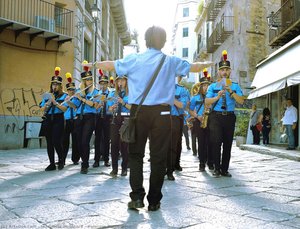
In the evocative photograph Palermo Procession, artist Marinella Senatore invites us into a fleeting moment of communal grace captured amidst the historic streets of Italy. Though the image is presented in a stark, timeless black and white, it vibrates with an undeniable energy that transcends its monochromatic palette. The scene depicts a group of dancers, their bodies caught in mid-motion as they perform what appears to be a choreographed ballet routine against the textured backdrop of an urban landscape. There is a profound sense of rhythm flowing through the frame; the uplifted arms and synchronized postures of the performers suggest a shared heartbeat, turning a simple street corner into a temporary stage for artistic expression.
The composition utilizes the architectural lines of the surrounding buildings to create a natural proscenium, framing the dancers within the intimate confines of the city. This juxtaposition between the structured, static environment of the stone facades and the fluid, ephemeral movement of the human figures creates a captivating tension. The presence of a solitary parked car and the weathered textures of the street serve as grounding elements, reminding the viewer that this extraordinary display of beauty is occurring within the fabric of everyday life. It is this very intersection of the mundane and the magnificent that makes the piece so deeply resonant for those who appreciate art that breathes with the pulse of reality.
To understand Palermo Procession, one must look toward the multidisciplinary soul of Marinella Senatore. As an artist whose practice is rooted in the empowerment of communities, Senatore does not merely observe a scene; she documents the magic that occurs when collective human effort meets creative intention. Her work often blurs the lines between fine art, music, and social engagement, making this photograph more than just a visual record—it is a testament to the power of participatory performance. The dancers are not isolated subjects but part of a larger, living tapestry of cultural celebration.
For the discerning collector or interior designer, this piece offers a sophisticated layer of storytelling. It carries a symbolic weight that speaks to themes of unity, heritage, and the resilience of culture. The lack of color strips away distractions, forcing the eye to focus on the interplay of light, shadow, and form, which lends the work an archival, historical quality. Whether placed in a contemporary gallery setting or as a focal point in a curated residential space, Palermo Procession serves as a window into a world where art is not something merely viewed behind glass, but something lived, breathed, and danced through the streets of our shared existence.


1977 - , Italy

Elevate your most cherished memories with WahooArt’s bespoke service. We transform your personal photos into breathtaking, hand-painted black & white oil masterpieces. Experience museum-quality craftsmanship and timeless elegance for your private collection. Discover the art of legacy.

Explore the profound artistry of black and white photography. From historical mastery to the interplay of light and shadow, discover how monochrome captures timeless emotion and form through a sophisticated lens of art history.

Explore the captivating journey of street art from urban walls to prestigious galleries. Discover how contemporary graffiti has evolved into a high-end collectible movement, redefining modern interior design and global art culture.


 공유하기
공유하기 공유하기
공유하기
 상세 정보
상세 정보 가이드 보기

 다운로드
다운로드
 유사 작품
유사 작품 슬라이드 쇼
 통계 정보
통계 정보


 더 보기
더 보기






































 유리 옵션은 110cm 미만 크기에서만 선택 가능합니다.