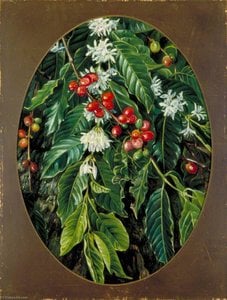
Oil On CanvasWallArtNorthern Renaissance
 1880
1880 107.0 x 44.0 cm
 Marianne North Gallery
원하는 크기와 액자로 주문 제작되는, 작가들이 직접 캔버스에 손으로 그린 유화 작품입니다. ( 프린트 판매로 전환 디지털 이미지로 전환)





























작품의 원본 비율을 유지하는 미리 설정된 크기 중에서 선택하세요.

특정 프레임이나 공간에 맞도록 직접 크기를 입력할 수 있습니다. 선택하신 크기가 원본 이미지의 비율과 일치하지 않는 경우, 작품을 자르거나 추가적인 손으로 그린 요소를 사용하여 그림을 확장합니다. 제작 시작 전 승인을 위해 디지털 목업을 보내드립니다.
화면 미리 보기는 실제 자르기 또는 확장을 반영하지 않습니다. 최종 구성은 목업을 통해서만 정확하게 확인하실 수 있습니다.
맞춤 크기 제작도 가능하지만, 원본 비율을 유지하기 위해 사전 정의된 목록에서 크기를 선택하시는 것을 권장합니다.

The Papyrus
복제본 크기
Marianne North's "The Papyrus," painted in 1880, isn’t merely a botanical illustration; it’s a meticulously crafted portal to a bygone era of scientific exploration and artistic devotion. This captivating work, housed within the serene Marianne North Gallery at the Royal Botanic Gardens, Kew, transports the viewer to a verdant corner of Sicily, teeming with life and echoing with the quiet ambition of its creator. The painting immediately draws the eye with its vibrant palette – deep greens, earthy browns, and subtle blues – creating an atmosphere of tranquil beauty that belies the arduous journey undertaken by North herself.
At first glance, “The Papyrus” depicts a seemingly simple scene: a waterway lined with towering *Oenanthe* plants, commonly known as Egyptian rush. However, closer inspection reveals a remarkable level of detail and artistic skill. Each stalk is rendered with painstaking precision, capturing the delicate texture of its fibrous surface, while the seed heads are depicted in all their intricate glory. The artist’s mastery lies not just in her ability to accurately represent these plants but also in her talent for evoking their inherent beauty and vitality. It's a testament to North’s dedication – she spent years traversing continents, braving challenging terrains, and meticulously documenting the flora of remote regions.
To fully appreciate “The Papyrus,” one must understand the extraordinary life of its artist. Marianne North was a true pioneer – a woman who defied societal expectations and forged her own path as both a botanist and an accomplished painter. Born in 1830, she initially pursued a career as a vocalist but abandoned it after failing health led her to discover a passion for capturing the beauty of the natural world on canvas. Driven by a thirst for knowledge and a desire to explore the globe, North embarked on a remarkable series of expeditions throughout the late 19th century, venturing into jungles, mountains, and deserts – often alone and facing considerable hardship.
Her travels were not simply recreational; they were meticulously planned scientific endeavors. North carried with her an easel, paints, and brushes, documenting hundreds of plant species in their natural habitats. She wasn’t content to merely observe; she actively sought out rare specimens, carefully studying their morphology and distribution. This dedication resulted in a vast collection of botanical paintings – over 300 works that now form the core of the Marianne North Gallery at Kew. Her work stands as a remarkable record of global biodiversity, offering invaluable insights into the plant life of different regions.
North’s artistic style is deeply rooted in the conventions of Northern Renaissance painting, particularly the detailed botanical illustrations that flourished during the Dutch Golden Age. She employed a technique known as “glazing,” layering thin washes of oil paint to build up color and form gradually, creating a luminous and richly textured surface. This method allowed her to capture the subtle nuances of light and shadow, lending depth and realism to her subjects. The composition itself echoes the principles of Dutch still life painting – the careful arrangement of elements within a defined space, the use of dramatic lighting, and the emphasis on detail.
Beyond its technical merits, “The Papyrus” carries symbolic weight. It represents North’s unwavering commitment to scientific inquiry and her profound respect for the natural world. The *Oenanthe* plants themselves hold a certain significance – they were commonly used in ancient Egypt for medicinal purposes and as symbols of rebirth and regeneration. Furthermore, the painting can be interpreted as a celebration of Victorian exploration and discovery, reflecting a period of intense scientific curiosity and a growing awareness of the planet’s diverse ecosystems. The inclusion of elements reminiscent of the Rhind Mathematical Papyrus, a key document in ancient Egyptian mathematics, subtly connects North's work to a long tradition of human understanding and observation.
“The Papyrus” is more than just a beautiful painting; it’s a window into the life and mind of a remarkable woman. It invites us to contemplate the interconnectedness of art, science, and exploration, and to appreciate the enduring legacy of Marianne North's pioneering work. Reproductions of this masterpiece offer a stunning way to bring a touch of Victorian botanical artistry into any interior space – a reminder of the beauty and wonder that can be found in the natural world.


1830 - 1890 , 영국
Discover the exquisite world of Victorian botanical art. Explore the intersection of scientific precision and luxury aesthetics through masterfully curated floral illustrations and hand-painted oil reproductions for discerning collectors and fine interiors.

Discover the breathtaking botanical world of Marianne North. Explore her vibrant Victorian oil paintings of exotic landscapes, from Brazil to Jamaica, through an expert art-historical lens. Perfect for classic art enthusiasts and collectors of fine natural history art.

Embark on a sophisticated journey through the Dutch Golden Age. Unveil the dramatic brilliance of Rembrandt’s chiaroscuro and the expressive landscapes of 17th-century masters in this authoritative exploration of light, shadow, and enduring artistic legacy.

Explore the breathtaking mastery of Dutch Golden Age landscapes. From Italianate light to atmospheric realism, discover the techniques of 17th-century masters and learn how to bring these timeless, museum-quality masterpieces into your home through expert oil reproductions.


 미리보기
미리보기
 공유하기
공유하기 공유하기
공유하기
 상세 정보
상세 정보

 다운로드
다운로드
 유사 작품
유사 작품 X-레이
X-레이 슬라이드 쇼
 통계 정보
통계 정보 더 보기
더 보기









 유리 옵션은 110cm 미만 크기에서만 선택 가능합니다.