
 캔버스에 아크릴 물감월아트Romantic Portraiture
 1944
1944 102.0 x 76.0 cm
 Leeds Art Gallery
빠른 제작과 다양한 마감 옵션을 제공하는 박물관 품질의 지클레이 또는 캔버스 프린트. ( 손으로 그린 그림 구매 디지털 이미지로 전환)





























작품의 원본 비율을 유지하는 미리 설정된 크기 중에서 선택하세요.

특정 프레임이나 공간에 맞춰 직접 치수를 입력하실 수 있습니다. 선택하신 사이즈가 원본 이미지의 비율과 일치하지 않을 경우, 작품을 크롭(자르기)하거나 이미지를 대칭 또는 단색 채우기로 확장하여 제작합니다. 제작 시작 전, 최종 확인을 위해 디지털 목업이 전송됩니다.
화면상의 미리보기는 실제 크롭이나 확장 상태를 반영하지 않으므로, 최종 구도는 오직 목업을 통해서만 정확하게 확인하실 수 있습니다.
맞춤 사이즈 제작도 가능하지만, 원본 비율을 유지하기 위해서는 사전 정의된 목록에서 치수를 선택하시는 것을 권장합니다.

레이디 스노우돈
복제본 크기

Margaret Lindsay Williams (1888-1960) was a celebrated Welsh artist renowned for her striking portraits of British royalty, European nobility, and American presidents. Though highly successful during her lifetime, her work experienced a period of relative obscurity before being rediscovered as an important figure in 20th-century portraiture.
Born in Cardiff, Wales, Margaret Lindsay Williams was the eldest daughter of Samuel A. Williams, a shipbroker, and Martha Margaret Lindsay, of Scottish descent. From the age of nine, she resided at 9 Windsor Road, Barry. Her artistic talent became evident early on, winning a gold medal for art at Cardiff School of Art in 1904. She continued her studies at the Pelham Street School of Painting in Kensington (1905), preparing for entry into the prestigious Royal Academy.
Williams enrolled at the Royal Academy School in 1906, quickly distinguishing herself. In 1911, she achieved a remarkable feat – winning a gold medal for her painting The City of Refuge , becoming both the youngest artist and the first from Wales to receive this honor. Supported by her father, she established her own studio at Eaton Terrace in St John's Wood that same year. A travel scholarship followed in 1912, allowing her to study in Italy and Holland under the guidance of John Singer Sargent .
Williams’ style evolved from early academic training towards a distinctive approach to portraiture. She skillfully captured not only physical likeness but also the personality and status of her sitters. Her work demonstrates a mastery of technique, with meticulous attention to detail and a refined use of color. While primarily known for portraits, she also explored religious themes and imaginative compositions during and after World War I.
At the outbreak of World War I, Williams actively sought an appointment as an official war artist with the Welsh Division in France. Despite support from David Lloyd George , her request was denied due to prevailing societal norms regarding women’s roles during wartime. She contributed illustrations for a prose anthology supporting Welsh troops and later undertook large-scale commissions, including depictions of scenes at Cardiff Royal Infirmary and Cardiff City Hall.
Williams continued to receive commissions from prominent families in Wales and London throughout the mid-20th century. She painted portraits of figures like Henry Ford and Field Marshal Slim. Although celebrated during her lifetime, her work faded from prominence after her death in 1960. Today, there is a growing recognition of her talent and contribution to British portraiture, with renewed interest in her life and artistic achievements.
Margaret Lindsay Williams was significantly influenced by John Singer Sargent’s approach to portraiture. Her work also reflects the academic traditions of the Royal Academy and a broader engagement with contemporary artistic trends.

1888 - 1960

Transform scattered family photos into a single, breathtaking oil masterpiece. WahooArt specializes in hand-painted custom portraits that merge loved ones from multiple images into one timeless heirloom. Experience museum-quality artistry and a 100% satisfaction guarantee.

Transform your family's history into a timeless masterpiece. WahooArt specializes in luxury, large-scale custom group portrait commissions for 10+ people. Hand-painted by master artists using traditional oil techniques to create an enduring legacy for your home or organization.
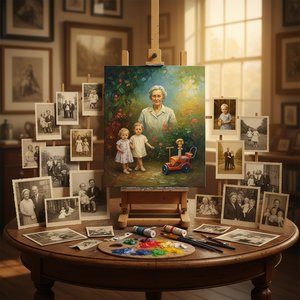
Transform scattered family photos into timeless oil masterpieces with WahooArt. Our master artists hand-paint bespoke portraits that turn precious memories into elegant, generational heirlooms. Experience premium quality, digital previews, and a 100% satisfaction guarantee.

Transform your most cherished family moments into timeless heirlooms with WahooArt's custom hand-painted oil portraits. Enjoy up to 3 faces free in a bespoke masterpiece designed to last generations. Experience premium artistry, professional transparency, and our 100% satisfaction guarantee.


 미리보기
미리보기
 공유하기
공유하기 공유하기
공유하기
 상세 정보
상세 정보

 다운로드
다운로드
 유사 작품
유사 작품 X-레이
X-레이 슬라이드 쇼
 통계 정보
통계 정보 더 보기
더 보기









 유리 옵션은 110cm 미만 크기에서만 선택 가능합니다.


