
 Acrylic On CanvasWallArtExpressionism
 1968
1968 34.0 x 23.0 cm
빠른 제작과 다양한 마감 옵션을 제공하는 박물관 품질의 지클레이 또는 캔버스 프린트. ( 손으로 그린 그림 구매 디지털 이미지로 전환)





























작품의 원본 비율을 유지하는 미리 설정된 크기 중에서 선택하세요.

특정 프레임이나 공간에 맞춰 직접 치수를 입력하실 수 있습니다. 선택하신 사이즈가 원본 이미지의 비율과 일치하지 않을 경우, 작품을 크롭(자르기)하거나 이미지를 대칭 또는 단색 채우기로 확장하여 제작합니다. 제작 시작 전, 최종 확인을 위해 디지털 목업이 전송됩니다.
화면상의 미리보기는 실제 크롭이나 확장 상태를 반영하지 않으므로, 최종 구도는 오직 목업을 통해서만 정확하게 확인하실 수 있습니다.
맞춤 사이즈 제작도 가능하지만, 원본 비율을 유지하기 위해서는 사전 정의된 목록에서 치수를 선택하시는 것을 권장합니다.

Selected Details after Courbet
복제본 크기
Marcel Duchamp’s “Selected Details after Courbet,” created in 1968, is a deceptively simple etching that speaks volumes about the artist's evolving aesthetic sensibilities. Produced during his later period—a departure from the groundbreaking readymades of his early career—this artwork exemplifies Duchamp’s fascination with distilling artistic essence into fundamental forms, mirroring the spirit of Expressionism.
The drawing’s core is a seated female figure, positioned centrally on the paper. Her posture exudes a serene stillness, yet carries an undeniable ambiguity—a characteristic of Duchamp's deliberate avoidance of explicit narrative. Two birds are subtly integrated into the scene: one perched gracefully near the upper right corner and another nestled at the lower left edge. This juxtaposition emphasizes the interplay between human presence and the natural world, reflecting Courbet’s own exploration of landscape and figure.
Duchamp employs loose, gestural lines—primarily hatching and crosshatching—to define the contours of the woman and birds. These lines aren't meticulously rendered; rather, they prioritize textural variation and convey a sense of spontaneity. The technique deliberately eschews realism, focusing instead on capturing the essence of form through expressive mark-making – a significant shift from his earlier explorations.
"Selected Details after Courbet" transcends mere visual representation. The presence of birds—often associated with freedom and observation—suggests a deeper contemplation of existence. Duchamp’s stylistic choice invites viewers to consider the artwork not just as an image, but as a conduit for introspection and emotional resonance. It embodies his belief that art should provoke thought rather than simply imitate reality.
This drawing builds upon Duchamp’s pioneering work with Dadaism and readymades—particularly “Fountain”—demonstrating a continuing commitment to challenging artistic conventions. As evidenced by the title itself, it acknowledges Courbet's influence while simultaneously asserting Duchamp’s independent artistic voice. The artwork resides in the Philadelphia Museum of Art, alongside other celebrated pieces from Duchamp’s oeuvre, cementing his place as one of the most transformative figures in 20th-century art.


1887 - 1968 , 프랑스

Explore the profound artistry of graphite drawing. Discover professional techniques for mastering depth, texture, and detail through a lens of art history, from classical sketches to modern masterpieces. Elevate your understanding of the pencil medium with our expert guide.
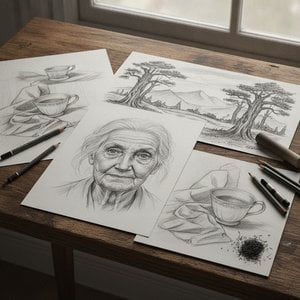
Explore the profound elegance of pencil and charcoal sketching. Discover how masters use line, shadow, and chiaroscuro to capture light and texture, bridging the gap between preparatory studies and timeless fine art masterpieces.

Elevate your artistic practice with this expert guide to mastering the line. Discover advanced techniques in graphite, charcoal, and contour drawing designed for art students seeking technical precision and expressive depth in their fine art studies.


 미리보기
미리보기
 공유하기
공유하기 공유하기
공유하기
 상세 정보
상세 정보 Guide
Guide

 다운로드
다운로드
 유사 작품
유사 작품 X-레이
X-레이 슬라이드 쇼
 통계 정보
통계 정보 더 보기
더 보기









 유리 옵션은 110cm 미만 크기에서만 선택 가능합니다.


