
x


 Acrylic On CanvasWallArtSurrealism
 1963Modern
 37.0 x 58.0 cm




























작품의 원본 비율을 유지하는 미리 설정된 크기 중에서 선택하세요.

특정 프레임이나 공간에 맞도록 직접 크기를 입력할 수 있습니다. 선택하신 크기가 원본 이미지의 비율과 일치하지 않는 경우, 작품을 자르거나 추가적인 손으로 그린 요소를 사용하여 그림을 확장합니다. 제작 시작 전 승인을 위해 디지털 목업을 보내드립니다.
화면 미리 보기는 실제 자르기 또는 확장을 반영하지 않습니다. 최종 구성은 목업을 통해서만 정확하게 확인하실 수 있습니다.
맞춤 크기 제작도 가능하지만, 원본 비율을 유지하기 위해 사전 정의된 목록에서 크기를 선택하시는 것을 권장합니다.

The Jacob's Dream (8)
복제본 크기
Marc Chagall’s “The Jacob’s Dream” (1963) isn’t merely a painting; it’s an immersion into a deeply personal mythology, a vibrant tapestry woven from the threads of Jewish folklore, biblical narrative, and the artist's own lifelong spiritual quest. This masterpiece, rendered in gouache, oil, and pastel on paper, captures a pivotal moment – Jacob’s encounter with divine messengers while journeying to his new home in Haran – transforming a foundational story into a dreamscape brimming with symbolic richness. The painting immediately draws the viewer in with its arresting color palette: deep purples and blues dominate the nocturnal scene, punctuated by bursts of fiery red, representing Jacob himself and the ascending angels. It’s a world both familiar and profoundly strange, echoing the artist's own unique vision.
At the heart of “The Jacob’s Dream” lies the iconic ladder, a motif that recurs throughout Chagall’s oeuvre. Here, it doesn’t simply represent a physical ascent; it embodies a spiritual journey, a bridge between the earthly and divine realms. The ladder, rooted firmly in the earth, reaches upwards towards the heavens, carrying angels who are both messengers and witnesses to this extraordinary event. The presence of seven angels circling the ladder reinforces its connection to the Hebrew alphabet, adding another layer of symbolic depth. Notably, Jacob’s open eye – a recurring feature in Chagall's depictions of dreams – suggests an active participation in this encounter, a recognition of the sacred unfolding before him. The inclusion of Isaac and Jesus on either side of the ladder further emphasizes the painting’s theological significance, linking ancient prophecy with Christian faith.
To understand “The Jacob’s Dream,” one must consider its origins in Chagall’s childhood home of Vitebsk. The town, a melting pot of Russian Orthodox and Jewish cultures, profoundly shaped the artist’s aesthetic sensibility. The influence of this diverse environment is evident in the painting's composition – the swirling figures, the vibrant colors, and the sense of movement all evoke the energy and spirit of Vitebsk. Chagall frequently depicted his hometown, often imbuing it with fantastical elements drawn from Jewish folklore and religious stories. This particular scene, rooted in Genesis 28:14-15, is a testament to how deeply personal and emotionally resonant these memories were for him.
Chagall’s masterful use of color and line creates an atmosphere of both wonder and unease. The dreamlike quality of the scene – the elongated figures, the distorted perspective, the fantastical elements – invites viewers to suspend their disbelief and enter into Jacob’s subjective experience. The painting isn't a literal depiction of the biblical story; it’s a distillation of its essence, filtered through Chagall’s unique artistic vision. It speaks not just to the narrative of Jacob’s dream but also to the universal human longing for connection with something greater than oneself – a yearning that resonates powerfully across cultures and generations. “The Jacob’s Dream” remains a profoundly moving testament to the power of art to capture the complexities of faith, memory, and the enduring mysteries of the human spirit.


1887 - 1985 , 벨라루스

Embark on a sophisticated journey through the surrealist movement. Discover how masters like Dalí and Ernst blurred the lines between dreams and reality through innovative techniques, exploring the profound impact of the subconscious on fine art history with expert authority.
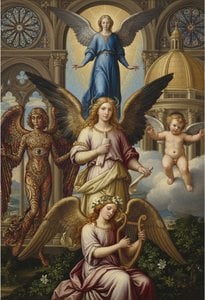
Explore the profound beauty of angelic figures in art history. From Renaissance masterpieces to celestial symbolism, our expert guide offers a sophisticated journey through the divine imagery of the Old Masters for discerning collectors and art enthusiasts.

Embark on a journey through the subconscious with our expert guide to Surrealism. Discover the profound symbolism of masters like Dalí and Ernst, exploring how dreamlike imagery reshaped art history and continues to inspire collectors and enthusiasts worldwide.


최신 미술 뉴스, 특별 혜택 및 인테리어 아이디어를 가장 먼저 만나보세요.
프로젝트에 대해 알려주시면 저희 미술 전문가들이 맞춤형 아트 제안 3가지를 전달해 드립니다.
당신만을 위한 맞춤형 옵션 3가지를 무료로 추천해 드립니다!


 미리보기
미리보기
 프린트 구매
 공유하기
공유하기 공유하기
공유하기
 상세 정보
상세 정보

 다운로드
다운로드
 유사 작품
유사 작품 X-레이
X-레이 슬라이드 쇼
 더 보기
더 보기









 유리 옵션은 110cm 미만 크기에서만 선택 가능합니다.


