작가 약력
꿈과 색채의 시인, 마르크 샤갈
마르크 샤갈은 1887년 벨라루스 리오즈나 마을에서 모이셰 샤갈이라는 이름으로 태어났습니다. 그의 삶은 20세기 격동의 시간을 반영하며, 동시에 깊은 개인적 비전을 통해 유대교 민속과 상상력에 대한 변함없는 믿음을 담아냈습니다. 고향인 비테브스크는 단순한 출생지가 아닌, 그의 예술 세계의 핵심이 되었습니다. 하늘을 나는 인물들, 기발한 동물들, 그리고 기억 속 풍경의 생생한 색채로 채워진 반복적인 모티프가 그 증거입니다. 러시아 정교회 교회와 번화한 유대인 시장이 공존하는 도시의 독특한 문화적 혼합은 그의 예술을 쉽게 분류할 수 없게 만드는 미학적 감수성을 만들어냈습니다. 그는 지역 사인 페인터 밑에서, 그리고 이후 상트페테르부르크에서 르옹 바크스트에게 정식 교육을 받았지만, 어떤 특정 예술 운동에도 완전히 동화되지 않았습니다. 입체주의, 상징주의, 야수파의 요소를 흡수했지만, 항상 자신의 강렬한 개인적 시각을 통해 걸러내어 독특하고 분명한 샤갈 스타일을 창조했습니다.
초창기의 흔들림과 예술적 언어의 형성
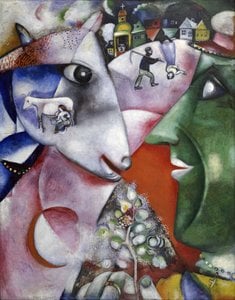
샤갈의 초기 작품들은 이미 그가 개발할 뚜렷한 언어를 암시했습니다. 나 그리고 마을(1911)은 단순한 장소 묘사가 아닌, 정체성, 기억, 개인과 공동체의 관계를 탐구하는 작품입니다. 마을은 현실적으로 묘사되지 않고, 상징적인 의미로 가득 찬 회상들의 파편화된 모음으로 표현됩니다. 이러한 개인적 경험을 보편적인 주제로 변환시키는 능력은 그의 예술의 특징이 되었습니다. 그의 팔레트는 대담하고 표현력이 풍부했으며, 종종 문자 그대로의 묘사보다는 감정을 전달하기 위해 생생하고 비자연스러운 색상을 사용했습니다. 인물들은 중력을 거스르며 캔버스 위를 떠다니고 춤추며, 보는 이들을 그의 내면 세계로 초대하는 듯한 꿈결 같은 분위기를 자아냅니다. 이러한 스타일적 접근은 우연이 아니었습니다. 그것은 현실의 단순한 모방을 넘어 감정의 본질, 기억의 무게, 민속의 힘을 포착하고자 하는 열망에서 비롯된 것이었습니다. 러시아 혁명은 샤갈을 비테브스크로 다시 불러들였고, 그는 문화적 활동에 참여하여 잠시 번성했던 미술 학교를 설립했습니다. 이 시기는 창조적인 에너지와 정치적 실망이 공존하는 시기였으며, 이는 그의 예술적 여정을 계속 형성하는 긴장감을 만들어냈습니다.
세계를 횡단하며 꽃피운 예술혼: 파리, 뉴욕 그리고 그 너머
결국 샤갈은 러시아를 떠나 프랑스에 정착하여 국제적인 명성을 얻고 다작 활동을 펼쳤습니다. 비테브스크 위로(1920-1922)는 그의 어린 시절의 기억과의 지속적인 교감을 보여주며, 성경 이야기를 주제로 한 작품들은 종교적 테마에 대한 관심이 커지고 있음을 드러냅니다. 제2차 세계 대전 발발로 인해 그는 나치 점령 하의 프랑스를 떠나 미국으로 피신했고, 7년 동안 뉴욕에서 생활했습니다. 이 시기는 깊은 감정적인 동요와 예술적 실험으로 가득 차 있었습니다. 그는 자신의 예술 속에서 위안을 찾았으며, 그 시대의 불안과 불확실성을 반영하는 강력한 작품들을 창조했습니다. 백색 십자가(1938)는 고통과 박해를 묘사한 작품으로, 이 시기의 그의 예술에 대한 증거입니다. 전쟁 이후 샤갈은 프랑스로 돌아와 1985년 97세의 나이로 세상을 떠날 때까지 그림을 그리고 창작 활동을 이어갔습니다.
영원히 빛나는 유산
말년에 마르크 샤갈은 파리 오페라 극장의 천장(1964)과 예루살렘의 하다사 히브리 대학교 의료 센터 회당의 스테인드글라스 창문 등 수많은 명망 있는 의뢰를 받았습니다. 이러한 대규모 프로젝트는 그의 예술적 비전을 건축 공간으로 전환시켜 경외심과 놀라움을 불러일으키는 몰입형 환경을 만들었습니다. 샤갈의 영향력은 후대 예술가들에게도 부정할 수 없습니다. 그의 서정적인 품질, 감정적인 깊이, 상상력이 풍부한 힘은 초현실주의자들을 포함하여 환상과 상징주의를 포용하는 다양한 운동에 영향을 미쳤습니다. 그는 유럽 현대주의와 유대 문화적 정체성 사이의 간극을 메우며 “20세기 최고의 유대인 예술가”로 알려지게 되었습니다. 그의 작품은 개인적인 경험, 민속, 보편적인 주제를 융합하는 능력을 통해 전 세계 관객들에게 계속해서 공감을 불러일으키고 있습니다. 그의 작품은 경계를 초월하고, 우리 모두의 인간성을 연결하며, 삶의 아름다움과 신비에 빛을 비추는 예술이 얼마나 강력한지를 상기시켜 줍니다.
영원히 남겨진 흔적
마르크 샤갈의 유산은 그림과 스테인드글라스 너머로 확장됩니다. 그것은 꿈과 빛나는 희망으로 그려진 세상 속에서 자신을 잃어버리도록 초대하는 그의 비전, 즉 영원한 힘을 지닌 비전에 있습니다. 그는 깊고 보편적인 공감을 불러일으키는 예술 작품들을 남겨두었습니다. 니스의 마르크 샤갈 미술관은 그의 지속적인 영향력을 증명하며, 방문객들에게 이 특별한 예술가의 마음과 영혼을 엿볼 수 있는 기회를 제공합니다. 그의 예술은 계속해서 영감을 주고, 도전하고, 우리를 감동시키며, 그의 생생하고 상상력이 풍부한 정신이 대대로 이어질 것임을 보장합니다.



 미리보기
미리보기
 프린트 구매
 공유하기
공유하기 공유하기
공유하기
 상세 정보
상세 정보

 다운로드
다운로드
 유사 작품
유사 작품 X-레이
X-레이 슬라이드 쇼


 더 보기
더 보기






































 유리 옵션은 110cm 미만 크기에서만 선택 가능합니다.