

이 페이지에 표시된 작품은 저작권법의 보호를 받으며, 이에 따라 동일한 복제품을 제작하거나 판매하는 것은 법으로 금지되어 있습니다. 이러한 권리 보호는 다음과 같은 국제 협약에 따라 시행됩니다. 베른 협약 또한 다음에서 명시하는 법률을 포함한 국내법에 의해 보호됩니다. 미국 저작권법 제17조.
이 방식은 저작권 보호를 받는 예술 작품을 복제하거나 그대로 재현하는 것이 아니기에 저작권 규정을 완벽히 준수합니다. 대신, 이는 창의적인 재해석의 과정을 거칩니다. 즉, 원작에서 영감을 받되 원작과 동일하지 않은 새로운 회화 작품을 의미합니다.
빠른 제작과 다양한 마감 옵션을 제공하는 박물관 수준의 지클레이 및 캔버스 프린트. ( 수작업 채색 복제본 주문하기 디지털 이미지로 전환)
작품의 원본 비율을 그대로 유지하는 프리셋 사이즈 중에서 선택해 보세요.

액자나 벽면 크기에 맞춰 필요한 가로와 세로 길이를 입력해 주세요. 프린트는 원본 이미지보다 크게 제작할 수 없으며 오직 자르는 것만 가능하므로, 비율이 다른 사이즈를 선택할 경우 이미지의 일부가 잘려 나갈 수 있습니다. 인쇄 작업에 들어가기 전, 최종 확인을 위해 디지털 목업을 보내드립니다. 이 페이지에 표시된 이미지는 실제 잘리는 영역을 나타내지 않으며, 오직 목업을 통해서만 정확한 확인이 가능합니다.
Untitled
복제본 크기

Maqbool Fida Husain, known globally as M.F. Husain, remains a towering figure in the pantheon of 20th-century art, a master who bridged the gap between ancient Indian tradition and the avant-garde movements of the West. Born in 1915 in the small town of Pandharpur, Maharashtra, his early years were steeped in the vibrant cultural textures of rural India. This foundational period instilled in him a lifelong fascination with the rhythms of Indian life, from the sweeping epics of mythology to the humble daily struggles of the common man. His journey was not merely one of personal ambition but a profound response to the seismic shifts of his era, including the transformative power of Gandhian ideals and the heavy, transformative shadows cast by the Partition of 1947.
As his artistic consciousness matured, Husain became a central protagonist in the Bombay Progressive Artists' Group (BPAG). This influential collective sought to break free from the constraints of colonial academic realism, striving instead to forge a new, modern Indian identity. Within this crucible of creativity, Husain developed his signature aesthetic—a breathtaking fusion of European Cubism and indigenous narrative depth. Drawing inspiration from the structural innovations of masters like Picasso and Braque, he did not merely mimic their fragmentation of form; rather, he repurposed the geometric language of Cubism to articulate the fluid, spiritual, and often chaotic energy of the Indian subcontinent. His canvases became windows into a world where bold, sweeping lines and a vibrant, sun-drenched palette could convey both the monumental scale of gods and the intimate dignity of human existence.
The brilliance of Husain’s oeuvre lies in its ability to weave disparate threads of human experience into a singular, cohesive visual language. His work is famously characterized by its narrative power, often drawing heavily from the Ramayana and the Mahabharata. Through these epic tales, he explored themes of dharma, conflict, and cosmic order, using fragmented planes and rhythmic compositions to breathe new life into ancient legends. Yet, his gaze was never solely fixed on the heavens; it was equally grounded in the earthly realities of his time. He possessed a rare ability to capture the essence of contemporary icons, such as his poignant depictions of Mother Teresa, where bold lines and soft, flowing drapes evoke a sense of profound compassion and spiritual weight.
Beyond mythology, Husain’s art served as a vital medium for social commentary and cultural documentation. His fascination with the movement of modern India led him to explore diverse subjects ranging from the cinematic allure of Bollywood to the political gravity of the post-independence era. This versatility allowed him to touch upon various facets of the human condition:
The significance of M.F. Husain extends far beyond the borders of India, marking him as a true global ambassador of modernism. His ability to synthesize the structural rigor of Western abstraction with the emotive richness of Eastern storytelling created a unique visual dialect that resonated across continents. Even as his later years were marked by controversy and eventual exile, his contribution to the evolution of contemporary art remained unassailable. He transformed the canvas into a site of intense dialogue, where history, myth, and modernity collided in a spectacular display of color and form.
Today, the legacy of Maqbool Fida Husain continues to inspire generations of artists and collectors alike. His paintings are not merely objects of aesthetic beauty but are profound historical documents that capture the spirit of an era. To encounter a Husain masterpiece is to witness the heartbeat of a nation—a rhythmic, fragmented, and brilliantly colored celebration of life, struggle, and the eternal dance of the human soul. Through his unwavering dedication to his vision, he ensured that the essence of Indian modernism would forever be etched into the global consciousness.

1915 - 2011 , India
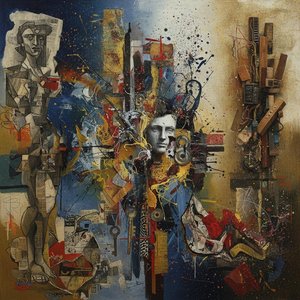
Journey through history with 10 iconic mixed media masterpieces that redefined modern art. Explore the stories, textures, and techniques behind these legendary works. Find museum-quality reproductions and curated decor inspiration at WahooArt.com. Discover all masterpieces online.

Explore 10 iconic graphite masterpieces that redefined art history. Discover museum-quality legends on WahooArt.com.
 미리보기
미리보기
 공유하기
공유하기 공유하기
공유하기
 상세 정보
상세 정보 가이드 보기

 다운로드
다운로드
 유사 작품 더 보기
 X-레이
X-레이 슬라이드 쇼 보기
 질의응답
질의응답
 통계 정보
통계 정보
 더 보기
더 보기






































 유리 옵션은 110cm 미만 크기에서만 선택 가능합니다.


