
x


 Acrylic On CanvasWallArtLudwig van Beethoven
 1820
1820 24.0 x 16.0 cm
 Beethoven-Haus Bonn
빠른 제작과 다양한 마감 옵션을 제공하는 박물관 품질의 지클레이 또는 캔버스 프린트. ( 손으로 그린 그림 구매 이미지 구매)





























작품의 원본 비율을 유지하는 미리 설정된 크기 중에서 선택하세요.

특정 프레임이나 공간에 맞춰 직접 치수를 입력하실 수 있습니다. 선택하신 사이즈가 원본 이미지의 비율과 일치하지 않을 경우, 작품을 크롭(자르기)하거나 이미지를 대칭 또는 단색 채우기로 확장하여 제작합니다. 제작 시작 전, 최종 확인을 위해 디지털 목업이 전송됩니다.
화면상의 미리보기는 실제 크롭이나 확장 상태를 반영하지 않으므로, 최종 구도는 오직 목업을 통해서만 정확하게 확인하실 수 있습니다.
맞춤 사이즈 제작도 가능하지만, 원본 비율을 유지하기 위해서는 사전 정의된 목록에서 치수를 선택하시는 것을 권장합니다.

Sketchbook
복제본 크기
The world of Ludwig van Beethoven is often presented through the grand pronouncements of his symphonies and sonatas – monumental works that reverberate with heroic struggle and transcendent beauty. Yet, nestled within the vastness of his output lies a quieter, more intimate realm: his sketchbooks. Specifically, the “Sketchbook of 1815-1816,” currently housed at the Princeton University Library, offers an unparalleled glimpse into the composer’s creative process during a pivotal period of his life – a time marked by increasing deafness and profound artistic transformation. This unassuming collection of roughly sixty loose sheets, bound together with simple twine, is not merely a record of musical ideas; it's a visual diary, revealing the meticulous thought and restless experimentation that fueled some of Beethoven’s most enduring compositions.
The sketchbook itself is remarkably modest in appearance. The paper is of a standard quality, bearing the marks of frequent use – creases, smudges, and faint pencil markings attest to its active role as a sounding board for the composer's evolving musical concepts. Unlike the polished manuscripts that often dominate our understanding of Beethoven’s work, these sketches are raw, immediate, and intensely personal. They represent the genesis of ideas, the tentative exploration of harmonies and melodies before they were refined into the finished forms we know so well. The pages aren’t filled with fully realized scores; instead, they contain fragmented musical phrases, harmonic progressions, rhythmic motifs, and even brief annotations – a chaotic yet compelling testament to the composer's internal dialogue.
Beethoven’s technique in these sketches is characterized by an extraordinary directness. He rarely employs elaborate notation or complex musical symbols; instead, he relies on shorthand—a system of dots, dashes, and abbreviations that quickly convey the essence of a musical idea. The drawings themselves are remarkably expressive, capturing not just the notes but also the *feeling* behind them. He frequently uses gestural markings – quick, sweeping lines that mimic the movement of his hand as he played the piano—to suggest dynamics, phrasing, and articulation. The sketches aren’t merely representations of music; they're attempts to translate the physical sensation of sound onto paper.
The style is remarkably varied, reflecting the diverse range of musical ideas that occupied Beethoven’s mind during this period. There are studies for his Piano Sonata No. 13 in Db Major (“Pathétique”), sketches for the “Moonlight” Sonata, and fragments related to the Missa Solemnis – a monumental choral work that consumed him for nearly two decades. The sketchbook also contains musical ideas relating to various vocal works, including songs and operatic excerpts. The sheer volume of material suggests a constant state of creative ferment, with Beethoven relentlessly exploring new possibilities.
To understand the significance of this sketchbook, it’s crucial to consider the historical context in which it was created. Beethoven was living in Vienna during a period of immense social and political upheaval. The Napoleonic Wars had recently ended, leaving Europe reeling from the aftermath of conflict and revolution. Beethoven himself was grappling with his own personal struggles – the gradual loss of his hearing, coupled with a growing sense of isolation and disillusionment. These challenges profoundly shaped his artistic vision, leading him to explore themes of struggle, resilience, and ultimately, transcendence in his music.
The sketchbook provides invaluable insight into this turbulent era. The sketches themselves are imbued with a sense of urgency and intensity, reflecting the composer’s emotional state. Many scholars believe that the “Sketchbook of 1815-1816” was created during a period of intense introspection and self-doubt – a time when Beethoven was questioning his own abilities and searching for new ways to express himself musically. The sketches are not simply musical exercises; they’re also reflections on the human condition, capturing the anxieties and aspirations of a man confronting profound personal challenges.
Beyond its technical and historical significance, the sketchbook holds a powerful emotional resonance. The fragmented nature of the sketches—the incomplete phrases, the tentative markings—evokes a sense of vulnerability and honesty. It’s as if we are granted access to Beethoven's inner thoughts, his struggles, and his hopes. The act of sketching itself becomes a symbolic gesture – an attempt to capture fleeting moments of inspiration before they vanish forever.
The sketchbook is not merely a document of musical creation; it’s a testament to the enduring power of human creativity in the face of adversity. It reminds us that even in the darkest of times, the impulse to create—to express oneself through art—can provide solace and meaning. Reproductions of these sketches offer a unique opportunity to connect with one of history's greatest composers on a deeply personal level, revealing the raw emotion and intellectual rigor behind his monumental works.


1770 - 1827 , 독일
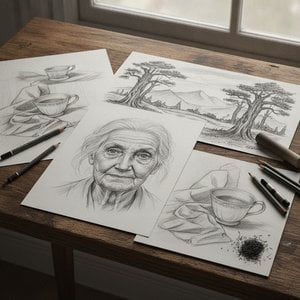
Explore the profound elegance of pencil and charcoal sketching. Discover how masters use line, shadow, and chiaroscuro to capture light and texture, bridging the gap between preparatory studies and timeless fine art masterpieces.

Explore the profound beauty of the sketch. Discover how masters use charcoal and graphite to capture raw emotion, anatomical precision, and fluid movement, bridging the gap between ephemeral marks and eternal oil masterpieces.
Explore the profound influence of geometry and line in fine art. Discover how structural composition creates visual impact, from Cubist mastery to Op Art precision, and learn to curate sophisticated, mathematically balanced collections for discerning art connoisseurs.
Discover the profound impact of composition on fine art. Explore how masters use geometry, light, and structural harmony to breathe life into masterpieces—an essential guide for discerning collectors seeking depth in every brushstroke.


최신 미술 뉴스, 특별 혜택 및 인테리어 아이디어를 가장 먼저 만나보세요.
프로젝트에 대해 알려주시면 저희 미술 전문가들이 맞춤형 아트 제안 3가지를 전달해 드립니다.
당신만을 위한 맞춤형 옵션 3가지를 무료로 추천해 드립니다!


 미리보기
미리보기
 공유하기
공유하기 공유하기
공유하기
 상세 정보
상세 정보

 다운로드
다운로드
 유사 작품
유사 작품 X-레이
X-레이 슬라이드 쇼
 더 보기
더 보기









 유리 옵션은 110cm 미만 크기에서만 선택 가능합니다.


