
빠른 제작과 다양한 마감 옵션을 제공하는 박물관 품질의 지클레이 또는 캔버스 프린트. ( 손으로 그린 그림 구매 디지털 이미지로 전환)





























작품의 원본 비율을 유지하는 미리 설정된 크기 중에서 선택하세요.

특정 프레임이나 공간에 맞춰 직접 치수를 입력하실 수 있습니다. 선택하신 사이즈가 원본 이미지의 비율과 일치하지 않을 경우, 작품을 크롭(자르기)하거나 이미지를 대칭 또는 단색 채우기로 확장하여 제작합니다. 제작 시작 전, 최종 확인을 위해 디지털 목업이 전송됩니다.
화면상의 미리보기는 실제 크롭이나 확장 상태를 반영하지 않으므로, 최종 구도는 오직 목업을 통해서만 정확하게 확인하실 수 있습니다.
맞춤 사이즈 제작도 가능하지만, 원본 비율을 유지하기 위해서는 사전 정의된 목록에서 치수를 선택하시는 것을 권장합니다.

Joseph Reade
복제본 크기
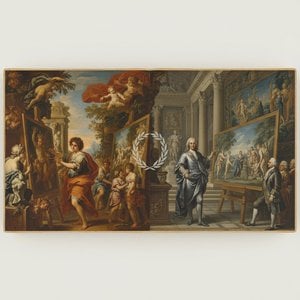
In the quiet, commanding presence of Louis Léopold Boilly’s "Joseph Reade," one finds more than just a likeness; one encounters a window into the refined soul of early 19th-century Europe. Created around 1825, this oil on canvas masterpiece captures the burgeoning spirit of the French bourgeoisie with an intimacy that feels remarkably modern. As you gaze upon the subject, there is an immediate sense of meeting a man of substance and quiet dignity. Boilly, a master of capturing the nuances of social standing, does not rely on grand, theatrical gestures to convey importance. Instead, he utilizes a delicate tonal palette and meticulous observation to present Reade as a figure of intellectual curiosity and gentlemanly grace, embodying the very essence of the era's evolving social fabric.
The emotional resonance of the piece lies in its profound stillness. There is a palpable tension between the formal attire of the subject and the soulful, direct gaze that seems to bridge the centuries. For the collector or the interior designer, this painting offers a sense of timelessness. It does not merely decorate a space; it anchors it with a narrative of historical weight and sophisticated poise. The portrait serves as a silent interlocutor in any room, inviting contemplation and providing a focal point of classical elegance that complements both traditional manor settings and contemporary, minimalist interiors.
To understand the allure of "Joseph Reade," one must look closer at Boilly’s extraordinary technical prowess. The artist was a virtuoso of trompe-l'œil and fine detail, a skill set that allows him to manipulate light and shadow with breathtaking precision. In this work, his technique of layering thin, translucent glazes of oil paint creates a luminous surface that seems to glow from within. This method is particularly evident in the way he renders the contrasting textures of the subject's attire. The crisp, brilliant white of the cravat stands in sharp, tactile relief against the deep, absorbing darkness of the coat, creating a visual rhythm that guides the viewer's eye across the canvas.
Boilly’s ability to mimic the physical properties of fabric—the stiffness of starched linen versus the heavy drape of wool—is nothing short of masterful. This dedication to realism serves a higher purpose than mere imitation; it breathes life into the subject, making the historical moment feel tangible and present. For those seeking a high-quality reproduction, these fine details are what define the work's value. A faithful hand-painted recreation captures this interplay of light and shadow, ensuring that the subtle gradations of color and the lifelike textures remain the centerpiece of your art collection.
Beyond the technical brilliance, "Joseph Reade" stands as a vital historical document. Boilly lived through the most transformative eras of French history, from the Napoleonic Empire to the Bourbon Restoration. His work serves as a visual diary of the middle-class social life that emerged during these shifts. While many of his contemporaries focused on epic battles or mythological allegories, Boilly found greatness in the everyday. He captured the subtle shifts in fashion, the changing etiquette of the salon, and the quiet dignity of the individual.
In this portrait, we see a convergence of Parisian artistry and English gentlemanly ideals. The painting acts as a cultural bridge, reflecting how the aesthetic values of France were mirrored and admired across the Channel. Owning or displaying a piece inspired by Boilly is an homage to this era of refinement. It is an invitation to celebrate a period where art was used to document the beauty of human character and the sophisticated textures of civilized life. Whether as a centerpiece for a curated gallery wall or a soulful addition to a private study, "Joseph Reade" remains an enduring symbol of artistic excellence and historical grace.


1761 - 1845

바로크 예술의 풍요로운 세계를 탐험하고, 현대 인테리어에 감동을 불어넣는 방법을 WahooArt에서 만나보세요. 카라바조, 렘브란트 등 거장들의 작품과 키아로스쿠로 기법 활용 노하우를 공개합니다.

Explore the dramatic world of Baroque art! Discover iconic artists like Caravaggio & Rubens, defining techniques, and its lasting impact on art history. Expert insights for collectors & enthusiasts at WahooArt.

Explore the life & art of Charles Le Brun, master of French Baroque Classicism. Discover his royal commissions, influence on Versailles, and enduring legacy through detailed analysis & stunning artworks.

화려함과 극적인 표현이 압권! 바로크 미술을 대표하는 10대 걸작의 숨겨진 이야기를 만나보세요. 베르니니, 루벤스 등 거장의 작품부터 바로크 색감, 예술적 기법까지 – WahooArt.com에서 명품 복제 & 인테리어 영감을 얻으세요! 지금 바로 컬렉션을 탐험해보세요.
Explore the life & art of Simon Vouet, a pivotal French Baroque painter who introduced Italian styles to France. Discover his masterpieces and lasting influence on 17th-century art.


 미리보기
미리보기
 공유하기
공유하기 공유하기
공유하기
 상세 정보
상세 정보 가이드 보기

 다운로드
다운로드
 유사 작품
유사 작품 X-레이
X-레이 슬라이드 쇼
 통계 정보
통계 정보


 더 보기
더 보기









 유리 옵션은 110cm 미만 크기에서만 선택 가능합니다.


