
원하는 크기와 액자로 주문 제작되는, 작가들이 직접 캔버스에 손으로 그린 유화 작품입니다. ( 프린트 판매로 전환 디지털 이미지로 전환)





























작품의 원본 비율을 유지하는 미리 설정된 크기 중에서 선택하세요.

특정 프레임이나 공간에 맞도록 직접 크기를 입력할 수 있습니다. 선택하신 크기가 원본 이미지의 비율과 일치하지 않는 경우, 작품을 자르거나 추가적인 손으로 그린 요소를 사용하여 그림을 확장합니다. 제작 시작 전 승인을 위해 디지털 목업을 보내드립니다.
화면 미리 보기는 실제 자르기 또는 확장을 반영하지 않습니다. 최종 구성은 목업을 통해서만 정확하게 확인하실 수 있습니다.
맞춤 크기 제작도 가능하지만, 원본 비율을 유지하기 위해 사전 정의된 목록에서 크기를 선택하시는 것을 권장합니다.

Studies of crabs
복제본 크기
To gaze upon Leonardo da Vinci’s “Studies of Crabs” is to step directly into the workshop of a genius, witnessing the raw, unadulterated curiosity that defined the High Renaissance. Created around 1518 during his later years in Florence, this delicate graphite sketch transcends the boundaries of mere biological illustration. It serves as a profound testament to the humanist spirit—a period where the lines between art and science were not just blurred, but entirely inseparable. In these quiet strokes, we find the heartbeat of an era obsessed with decoding the hidden mechanics of the natural world.
The subject matter, while seemingly humble, reveals Da Vinci’s unparalleled commitment to anatomical precision. The drawing focuses intently on crustaceans, capturing two crabs in various stages of movement. One can almost sense the skittering energy of the creatures as they traverse the paper; one appears to be mid-stride, while another suggests a sudden, reflexive jump. Through his masterful use of sfumato—the subtle, smoky blending of tones—Leonardo breathes life into the hard carapaces and articulated limbs, creating an illusion of depth and organic vitality that remains breathtaking centuries later.
Technically, this work is a masterclass in the economy of line. Using graphite on paper, Da Vinci employs a delicate touch to render the intricate textures of the crabs' bodies. There is no grand narrative or sweeping landscape here; instead, the artist prioritizes the minute details of musculature and exoskeleton. This focus reflects the broader Renaissance fascination with scientific inquiry and dissection. For Leonardo, the study of a small sea creature was as vital to understanding the universe as the study of human anatomy or the flow of water.
The paper itself, bearing the soft patina of age, adds a layer of historical weight to the piece. The subtle shadows and light play across the textured surface, inviting the viewer to contemplate the passage of time. For the discerning collector or interior designer, this artwork offers a unique opportunity to introduce a sense of intellectual depth and quiet sophistication into a space. It is not merely a decoration; it is an invitation to slow down and appreciate the intricate beauty found in the smallest corners of existence.
Beyond its scientific merit, “Studies of Crabs” carries a subtle symbolic resonance. The crab, with its resilient shell and ability to navigate both land and sea, has long been associated with adaptability and strength—traits that mirror Leonardo’s own indomitable spirit. His ability to pivot between the roles of painter, engineer, and anatomist is reflected in the very way he approaches this subject: with the eye of a scientist and the soul of a poet.
Integrating a high-quality reproduction of this masterpiece into a curated collection or a modern interior can transform a room. It provides a focal point that sparks conversation, offering a sense of timelessness and scholarly elegance. Whether placed in a sunlit study or a contemporary gallery-style living space, Da Vinci’s sketches serve as a constant reminder of the beauty found in meticulous observation and the eternal power of human curiosity.


1452 - 1519 , 이탈리아
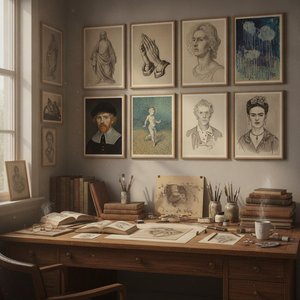
Journey through history with 10 iconic artworks exploring the theme of study. From classical sketches to masterwork oil paintings, discover the stories behind these timeless pieces. Find museum-quality art reproductions and decor inspiration. Explore the full collection on WahooArt.com.

Journey through history with 10 legendary graphite pencil masterpieces. Explore the profound techniques and stories behind these iconic monochrome works. Find museum-quality art reproductions and curated decor inspiration. Discover all masterpieces on WahooArt.com.


 미리보기
미리보기
 공유하기
공유하기 공유하기
공유하기
 상세 정보
상세 정보 Guide
Guide

 다운로드
다운로드
 유사 작품
유사 작품 X-레이
X-레이 슬라이드 쇼
 통계 정보
통계 정보


 더 보기
더 보기









 유리 옵션은 110cm 미만 크기에서만 선택 가능합니다.


