

 Song Dynasty Painting
 98.0 x 56.0 cm
 CAFA 미술관
작가가 직접 캔버스에 손으로 그린 유화 작품으로, 원하는 크기와 액자로 맞춤 제작해 드립니다. ( 프린트 판매로 전환 디지털 이미지 판매 채널로 전환)
작품의 원본 비율을 그대로 유지하는 프리셋 사이즈 중에서 선택해 보세요.

특정 프레임이나 공간에 맞춰 원하는 크기를 직접 입력하실 수 있습니다. 선택하신 크기가 원본 이미지의 비율과 일치하지 않을 경우, 작품을 자르거나 추가적인 수작업 요소를 더해 그림을 확장하여 제작합니다. 제작 시작 전, 최종 확인을 위해 디지털 목업을 보내드립니다.
화면상의 미리 보기는 실제 크롭(자르기)이나 확장된 상태를 완벽히 반영하지 않을 수 있습니다. 최종 구도는 오직 목업을 통해서만 정확하게 확인하실 수 있습니다.
맞춤 크기 제작도 가능하지만, 원본의 비율을 그대로 유지하기 위해서는 미리 정의된 목록에서 크기를 선택하시는 것을 권장합니다.

Reading in the Shade
복제본 규격

Born in Jiaozhou, Shandong province, during the late 17th century (though precise dates remain elusive), Leng Mei – also known as Jichen – stands as a pivotal figure in the development of Chinese portraiture during the Qing dynasty. His life and artistic journey are inextricably linked to the imperial court, where he honed his skills under the tutelage of Jiao Bingzhen, a renowned artist himself, and ultimately became celebrated for his exquisite depictions of court ladies—a genre that would define much of his legacy.
Leng Mei’s early life remains somewhat shrouded in mystery. He was a native of Jiaozhou, a region known for its artistic traditions, and it is believed he received his initial training within the local art scene before being formally apprenticed to Jiao Bingzhen. This association proved crucial, as Jiao Bingzhen's influence shaped Leng Mei’s approach to perspective, modeling, and overall composition – elements that would later become hallmarks of his distinctive style.
Leng Mei’s career truly blossomed within the walls of the Qing court. He began serving as an artist in the Imperial Painting Academy during the Kangxi reign, and continued to contribute significantly to various imperial projects throughout the reigns of Yongzheng and Qianlong. His involvement extended beyond mere illustration; he was frequently tasked with painting palace buildings, elaborate costumes, and, most notably, portraits of court ladies.
Unlike many of his contemporaries who emulated Western techniques – as seen in the work of Ding Guanpeng – Leng Mei remained firmly rooted in traditional Chinese aesthetics. He skillfully blended meticulous detail with a subtle understanding of color and composition, creating images that were both realistic and imbued with an ethereal quality. His portraits weren’t simply likenesses; they captured the grace, elegance, and inner lives of the women who graced the imperial court.
His work was highly valued by the Qianlong Emperor, a discerning patron known for his appreciation of refined artistry. The *Records of the Imperial Workshops* from 1743 reveal that even after Leng Mei’s death, his paintings were signed with his name by imperial decree, demonstrating the profound respect and trust he commanded within the court.
Leng Mei's artistic style is characterized by a remarkable sensitivity to detail and an understated elegance. He employed a refined technique of brushwork, utilizing subtle gradations of color to create a sense of depth and volume. His figures are rendered with a delicate grace, capturing the poise and bearing of court ladies with exceptional accuracy.
A key element of his style is his masterful use of light and shadow. He skillfully employed atmospheric perspective to create a sense of distance and space, while simultaneously highlighting the beauty and refinement of his subjects. His compositions are often balanced and harmonious, reflecting a deep understanding of traditional Chinese principles of design.
Unlike some of his contemporaries who adopted Western techniques, Leng Mei’s work retains a distinctly Chinese sensibility. His portraits are not merely representations of physical appearance; they are imbued with an emotional depth that speaks to the inner lives of the women he depicted.
Leng Mei's contributions to Chinese portraiture during the Qing dynasty were significant, establishing him as a leading figure in the genre. His refined style and meticulous attention to detail influenced generations of artists who followed, shaping the development of courtly portraiture for decades to come.
His works are now held in prestigious collections worldwide, including at The Art Institute of Chicago, where his paintings offer a captivating glimpse into the world of Qing Dynasty court life. Leng Mei’s legacy endures as a testament to the enduring power and beauty of traditional Chinese art – a reminder that even within the confines of imperial service, artistic expression could flourish with grace, subtlety, and profound emotional resonance.
Further exploration can be found at WahooArt.com and Wikipedia.

China

Embark on a scholarly journey through the alchemy of lithography. This definitive guide offers collectors profound insights into the chemical mastery of stone and ink, the medium's historical legacy, and essential expertise for acquiring rare, museum-quality prints with absolute confidence.
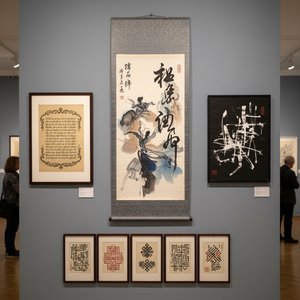
Explore the profound beauty of calligraphy art. From the fluid running script of Chinese masters to historical ink masterpieces, discover how the elegance of line transforms spaces with timeless grace and scholarly sophistication.
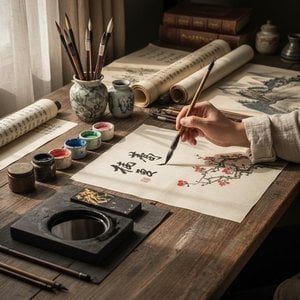
Embark on a sophisticated exploration of ink wash painting and Sumi-e. Uncover the profound historical lineages, Zen philosophies, and technical mastery behind this timeless medium in our authoritative guide for fine art enthusiasts.
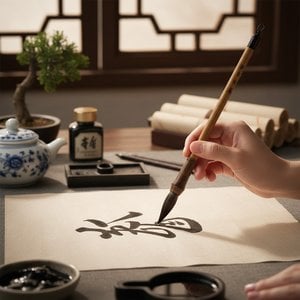
Embark on a profound journey through the soul of Chinese calligraphy. Explore the historical mastery of ink, brush, and script, from ancient Zhuanshu to elegant running script, and discover how this timeless art form reflects the enduring spirit of classical East Asian aesthetics.

Discover the art of high-end Giclée and fine art reproductions. Our expert guide explores pigment-based inks, museum-grade substrates, and premium textured prints for the discerning collector seeking archival excellence and unparalleled color fidelity.

 실제 크기로 보기
 보내기
보내기 공유하기
공유하기
 상세 보기
상세 보기 가이드 보기

 이미지 다운로드
 유사 작품 더 보기
 X-레이
X-레이 슬라이드 쇼 보기
 통계 정보
통계 정보 상세 보기
상세 보기






































 유리 옵션은 110cm 미만 크기에서만 선택 가능합니다.


![Untitled [uwaki No Sō (the Fickle Onethe Fickle One)] — 기타가와 우타마로, Impressionistic Style](/media/artworks/images-thumb/46/8e/468eafb3b6da18ad90b6e962513246d1.jpg)


