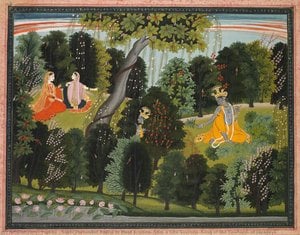
Traditional Indian Painting
 1991
1991 45.0 x 33.0 cm
 Kerala Museum
빠른 제작과 다양한 마감 옵션을 제공하는 박물관 품질의 지클레이 또는 캔버스 프린트. ( 손으로 그린 그림 구매 디지털 이미지로 전환)
작품의 원본 비율을 유지하는 미리 설정된 크기 중에서 선택하세요.

특정 프레임이나 공간에 맞춰 직접 치수를 입력하실 수 있습니다. 선택하신 사이즈가 원본 이미지의 비율과 일치하지 않을 경우, 작품을 크롭(자르기)하거나 이미지를 대칭 또는 단색 채우기로 확장하여 제작합니다. 제작 시작 전, 최종 확인을 위해 디지털 목업이 전송됩니다.
화면상의 미리보기는 실제 크롭이나 확장 상태를 반영하지 않으므로, 최종 구도는 오직 목업을 통해서만 정확하게 확인하실 수 있습니다.
맞춤 사이즈 제작도 가능하지만, 원본 비율을 유지하기 위해서는 사전 정의된 목록에서 치수를 선택하시는 것을 권장합니다.

Untitled
복제본 크기

Lalu Prasad Shaw, born in Suryapet, West Bengal, India, in 1937, embarked on a journey that would establish him as one of the leading artists of his generation. His formative years were steeped in the rich artistic traditions of rural Bengal, an environment that profoundly shaped his aesthetic sensibilities. Even as a young boy, Shaw was captivated by the local artisans – the Malakars, skilled sculptors who brought to life vibrant clay idols of Goddess Durga. These early encounters instilled in him a deep appreciation for folk art and its inherent storytelling power. This initial fascination would become a cornerstone of his artistic practice.
Shaw’s formal training began at the Government College of Arts and Crafts, Kolkata, in 1959, where he earned a Diploma in painting. While exposed to Western techniques like British watercolour and Italian chiaroscuro, Shaw found himself increasingly drawn to the indigenous art forms that resonated with his cultural heritage. He meticulously studied ancient Ajanta paintings and Mughal miniatures, absorbing their delicate brushwork, intricate details, and symbolic language. This period marked a pivotal moment in his artistic development, as he began to synthesize Eastern and Western influences into a unique visual vocabulary.
Shaw’s work is immediately recognizable for its distinctive style – a harmonious blend of traditional Indian art forms with elements of contemporary expression. He became particularly known for his portraits, which are not merely representations of individuals but rather evocative depictions of Bengali middle-class life and the inner worlds of his subjects. His paintings often feature scenes from everyday domesticity, imbued with a sense of nostalgia and quiet contemplation.
The influence of Kalighat paintings is palpable in Shaw’s use of bold colors, simplified forms, and narrative themes. He masterfully captures the essence of Bengali culture through depictions of women adorning themselves with jewelry, men engaged in leisurely pursuits like smoking or listening to music, and interiors filled with antique furniture and traditional objects. His palette often favors rustic shades of red, evoking a sense of warmth, intimacy, and cultural identity.
Shaw’s preferred medium is tempera paint, a technique that allows him to achieve remarkable precision and luminosity in his work. Tempera, with its slow drying time, enables him to build up layers of color gradually, creating subtle gradations and intricate details. He often works on board, carefully preparing the surface to receive the delicate brushstrokes that define his style.
Beyond painting, Shaw has also explored printmaking as a means of artistic expression. His serigraphs, characterized by their vibrant colors and meticulous execution, further demonstrate his mastery of technique and his commitment to exploring different visual languages. More recently, he has ventured into sculpture, adding another dimension to his already diverse body of work.
Over the course of his illustrious career, Lalu Prasad Shaw has received numerous awards and accolades for his contributions to the art world, including the West Bengal State Lalit Kala Akademi Award in 1959 and the Birla Academy Award in Kolkata between 1975-78. His work has been exhibited extensively in galleries and museums around the globe, captivating audiences with its unique blend of tradition and modernity.
Shaw’s influence extends beyond his own artistic practice. He served as a respected educator, lecturing at Visva Bharati University and later becoming the principal of Kala Bhavana, the fine arts faculty of the same institution. Through his teaching, he nurtured generations of artists, encouraging them to embrace their cultural heritage while forging their own individual paths.
Today, Lalu Prasad Shaw continues to create and exhibit his work, remaining a vital force in the Indian art scene. His paintings serve as a poignant reminder of a bygone era, capturing the essence of Bengali life with sensitivity, humor, and enduring beauty. He is considered one of India’s most unique modernists, whose legacy will undoubtedly continue to inspire artists for generations to come.

1937 - , India
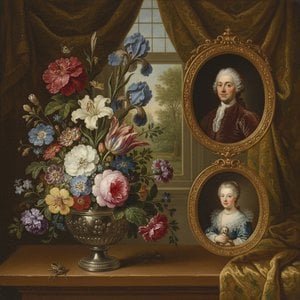
Discover the exquisite detail of Jan van Kessel the Elder's Baroque floral still lifes & captivating miniatures. Explore his artistic legacy, scientific precision, and lasting influence on 17th-century Flemish painting.
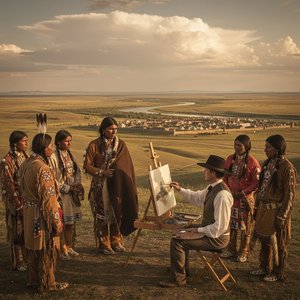
Explore the captivating art of George Catlin, renowned for his vivid portraits & landscapes documenting Native American life on the frontier. Discover a vanishing world through stunning paintings and historical context.

Explore the life & work of Edward S. Curtis, the 'Shadow Catcher,' and his groundbreaking photographic documentation of Native American cultures. Discover iconic images from *The North American Indian* and a critical look at his lasting legacy.

Explore the life & art of Raja Ravi Varma, a pioneer who fused European techniques with Indian iconography. Discover his iconic paintings, lasting legacy, and influence on modern Indian art at WahooArt.
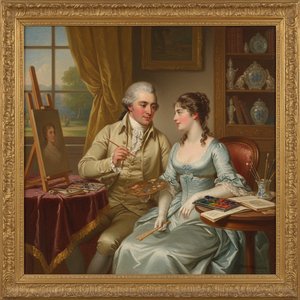
Explore the captivating world of Richard Cosway, Regency society's celebrated portrait miniaturist. Discover his exquisite art, aristocratic patrons & lasting legacy with WahooArt.


 미리보기
미리보기
 공유하기
공유하기 공유하기
공유하기
 상세 정보
상세 정보 가이드 보기

 다운로드
다운로드
 유사 작품
유사 작품 X-레이
X-레이 슬라이드 쇼
 통계 정보
통계 정보 더 보기
더 보기






































 유리 옵션은 110cm 미만 크기에서만 선택 가능합니다.