
 Contemporary Realism
 1494
1494 82.0 x 160.0 cm
빠른 제작과 다양한 마감 옵션을 제공하는 박물관 품질의 지클레이 또는 캔버스 프린트. ( 손으로 그린 그림 구매 디지털 이미지로 전환)
작품의 원본 비율을 유지하는 미리 설정된 크기 중에서 선택하세요.

특정 프레임이나 공간에 맞춰 직접 치수를 입력하실 수 있습니다. 선택하신 사이즈가 원본 이미지의 비율과 일치하지 않을 경우, 작품을 크롭(자르기)하거나 이미지를 대칭 또는 단색 채우기로 확장하여 제작합니다. 제작 시작 전, 최종 확인을 위해 디지털 목업이 전송됩니다.
화면상의 미리보기는 실제 크롭이나 확장 상태를 반영하지 않으므로, 최종 구도는 오직 목업을 통해서만 정확하게 확인하실 수 있습니다.
맞춤 사이즈 제작도 가능하지만, 원본 비율을 유지하기 위해서는 사전 정의된 목록에서 치수를 선택하시는 것을 권장합니다.

Jousting Armour (Stechzeug)
복제본 크기

In the twilight of the fifteenth century, amidst the burgeoning splendor of the Renaissance, a unique form of artistry emerged from the heat of the forge and the rhythmic strike of the hammer. Kaspar Rieder (1452-1499), born in the quiet Austrian town of Mühlau, stands as a monumental figure in this specialized tradition. While many artists of his era sought expression through pigment and canvas, Rieder mastered the language of metal, transforming cold, utilitarian steel into breathtaking works of sculptural elegance. He is most renowned for his creation of stechzeug—the elaborate, highly decorative armor specifically engineered for the high-stakes spectacle of jousting tournaments.
The life of Rieder remains partially shrouded in the mists of history, as the archival records of medieval craftsmen are often as fragmented as the eras they inhabited. However, the brilliance of his surviving work allows us to reconstruct a narrative of profound skill and cultural connection. It is widely believed by scholars that Rieder underwent his formative training within the vibrant artistic hub of Innsbruck, Austria. This apprenticeship likely exposed him to the cutting-scale metallurgical techniques of the period and the sophisticated sculptural aesthetics that defined the late Gothic and early Renaissance transition. His style suggests a deep dialogue with Flemish armorers, reflecting a broader European movement where craftsmanship transcended borders to create a unified language of prestige and power.
To understand Rieder’s contribution to art history, one must look beyond the functional necessity of protection. The stechzeug he produced was not merely a suit of defense; it was a canvas for heraldry and high fashion. Unlike standard field armor designed for the chaos of battle, jousting armor required a level of ornamentation that could withstand the scrutiny of the royal court. Rieder’s mastery lay in his ability to manipulate steel through intricate processes such as:
These techniques allowed Rieder to weave complex narratives of lineage and status directly into the armor itself. A single piece, such as the exquisitely preserved sallet housed in the Kunsthistorisches Museum in Vienna, reveals a meticulous attention to detail where subtle textures and light-reflecting surfaces converge. Through his hands, the heavy weight of steel was visually lightened by the grace of floral patterns and the prestige of noble iconography.
The historical significance of Kaspar Rieder extends far beyond the tournament grounds of the 1400s. He represents a pivotal moment in European history when the artisan rose to the level of the fine artist, blurring the lines between functional weaponry and high sculpture. His work served as a vital instrument of political communication, where a knight's very silhouette announced his wealth, his alliances, and his bravery.
Today, Rieder’s legacy is preserved not in galleries of oil paintings, but in the silent, gleaming halls of museums, where his steel masterpieces continue to command awe. He remains a testament to the ingenuity of the Renaissance spirit—a period defined by the belief that even the most rugged materials could be refined into something transcendent. His ability to marry the strength required for combat with the delicacy required for art ensures his place as one of the most significant master armorers in the annals of European history.

1452 - 1499 , Austria

Embark on a scholarly journey through the sacred beauty of High Medieval art. Discover the profound symbolism, luminous iconography, and spiritual depth of Gothic masterpieces in this expert guide for classical art enthusiasts.
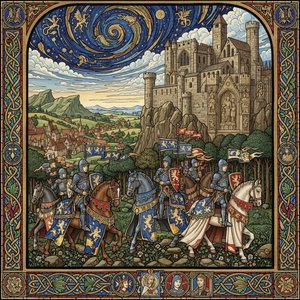
Explore the profound beauty of medieval art through the lens of history. Discover the symbolism of knights, the divine frescoes of Giotto, and how legendary masterpieces continue to inspire modern collectors and lovers of chivalric heritage.

Embark on a visual journey through Early Medieval art. Explore the profound beauty of illuminated manuscripts, sacred symbols, and golden light through an expert historical lens, celebrating the enduring legacy of medieval craftsmanship and divine artistry.

Embark on a scholarly journey through the spiritual grandeur of Late Medieval art. Discover the intricate symbolism, technical mastery, and profound religious narratives that define the Gothic era in this expert-led guide for art enthusiasts and collectors.


 미리보기
미리보기
 공유하기
공유하기 공유하기
공유하기
 상세 정보
상세 정보 가이드 보기

 다운로드
다운로드
 유사 작품
유사 작품 X-레이
X-레이 슬라이드 쇼
 통계 정보
통계 정보 더 보기
더 보기






































 유리 옵션은 110cm 미만 크기에서만 선택 가능합니다.


