
x


빠른 제작과 다양한 마감 옵션을 제공하는 박물관 품질의 지클레이 또는 캔버스 프린트. ( 손으로 그린 그림 구매 이미지 구매)
작품의 원본 비율을 유지하는 미리 설정된 크기 중에서 선택하세요.

특정 프레임이나 공간에 맞춰 직접 치수를 입력하실 수 있습니다. 선택하신 사이즈가 원본 이미지의 비율과 일치하지 않을 경우, 작품을 크롭(자르기)하거나 이미지를 대칭 또는 단색 채우기로 확장하여 제작합니다. 제작 시작 전, 최종 확인을 위해 디지털 목업이 전송됩니다.
화면상의 미리보기는 실제 크롭이나 확장 상태를 반영하지 않으므로, 최종 구도는 오직 목업을 통해서만 정확하게 확인하실 수 있습니다.
맞춤 사이즈 제작도 가능하지만, 원본 비율을 유지하기 위해서는 사전 정의된 목록에서 치수를 선택하시는 것을 권장합니다.

The Amber Seeker
복제본 크기

In the quiet, salt-misted landscapes of the German coast, the name Karl Lorenz Rettich evokes a profound sense of serenity and atmospheric depth. Born in 1841 in Rosenhagen, near the Bay of Lübeck, Rettich was a child of the Mecklenburg countryside, raised amidst the sprawling manor estates of his family. This early immersion in the unspoiled beauty of the Baltic region did more than merely provide scenery; it planted the seeds of an artistic obsession with light, water, and the ephemeral moods of nature that would define his entire career. While his father initially steered him toward a more pragmatic path—enrolling him to study law at Munich University in 1859—the call of the canvas proved irresistible, leading him to abandon the courtroom for the studio.
Rettich’s artistic evolution was shaped by a series of prestigious encounters with the masters of his era. His transition from law student to dedicated painter began under the tutelage of Adolf Heinrich Lier in Munich, a mentor who helped him navigate the delicate balance between realism and romanticism. Seeking further refinement, Rettich journeyed to the legendary Düsseldorf School of Painting, where he studied alongside luminaries such as Albert Flamm and Theodor Hagen. This period was transformative, as he absorbed the nuances of tonal painting—a technique that emphasized the subtle interplay of light and shadow to create a sense of atmosphere. His thirst for knowledge later led him to Weimar, where he refined his landscape techniques under the guidance of the visionary Arnold Böcklin, an experience that undoubtedly deepened the emotional resonance and symbolic weight of his compositions.
The breadth of Rettich’s oeuvre is a testament to his restless, wandering spirit. He was not merely a painter of local vistas but a chronicler of diverse European terrains. His extensive expeditions through the rugged fjords of Norway and the sweeping landscapes of Sweden allowed him to experiment with grander scales and more dramatic geological forms. Similarly, his travels to Italy introduced a warmth and sun-drenched clarity to his palette, providing a striking contrast to the cool, misty tones of his beloved Baltic scenes. These journeys were not merely for sightseeing; they were essential laboratory sessions where he tested the limits of color and light to capture the very essence of the environments he encountered.
As his career matured, Rettich found a profound sense of homecoming in the coastal communities of Graal-Müritz and Ahrenshoop. It was here that his relationship with the Baltic Sea reached its zenith. His works from this period are characterized by an intimate understanding of the sea's temperament—the rhythmic pulse of waves, the shifting textures of sand, and the way the low northern sun pierces through heavy maritime clouds. He possessed a rare ability to render the "atmospheric" not just as weather, but as a palpable presence that envelops the viewer, inviting them into a state of quiet contemplation.
Rettich’s achievements extended far beyond the borders of Germany, earning him international acclaim during his lifetime. His talent was recognized on prestigious global stages, receiving awards in London (1874), Melbourne (1876), and Munich (1876). These accolades solidified his status as a significant figure within the German Art Cooperative and earned him the esteemed title of professor, appointed by Frederick Francis IV, Grand Duke of Mecklenburg-Schwerin. Even in his later years, he remained a prolific creator, sustaining himself through the sale of postcards that captured the quintessential beauty of the landscape, ensuring his vision reached a wide audience.
The historical significance of Karl Lorenz Rettich lies in his ability to bridge the gap between the structured traditions of the Düsseldorf School and the emotive, atmospheric sensibilities of late nineteenth-century landscape painting. He remains a master of the "painterly" moment—that fleeting second when light hits the water just so, or when a mist begins to lift from a coastal forest. To look upon a Rettich painting is to experience more than a mere depiction of nature; it is to participate in a timeless dialogue with the elements, preserved forever through his masterful use of tone, texture, and light.

1841 - 1904 , Germany

Explore the ethereal beauty of Impressionist landscapes. Discover how masters like Monet captured fleeting light through color and texture, and learn to curate these timeless, luminous masterpieces for your home collection.

Discover the profound emotional depth of Post-Impressionist landscapes. Explore how masters like Van Gogh revolutionized art through vibrant color, textured impasto, and symbolic expression in this expert guide to the movement that redefined modern art history.
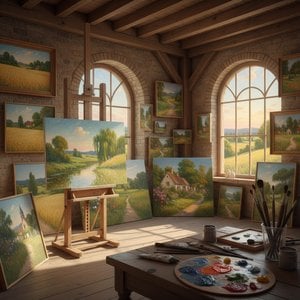
Discover the profound tranquility of rural art through an expert exploration of Impressionist landscapes. From pastoral scenes to textured oil masterpieces, learn how timeless nature-inspired artworks bring enduring elegance and serenity to sophisticated collectors.

Embark on a visual journey through history's most iconic landscapes. Discover the mastery of Impressionism and the sublime power of nature through our expert guide to classical landscape art, curated for the discerning collector and fine art enthusiast.

Explore the ethereal beauty of Impressionist landscapes. Discover how masters like Monet and Renoir captured light and atmosphere through revolutionary plein air techniques and vibrant brushstrokes in this expert guide to art history's most luminous movement.


최신 미술 뉴스, 특별 혜택 및 인테리어 아이디어를 가장 먼저 만나보세요.
프로젝트에 대해 알려주시면 저희 미술 전문가들이 맞춤형 아트 제안 3가지를 전달해 드립니다.
당신만을 위한 맞춤형 옵션 3가지를 무료로 추천해 드립니다!


 미리보기
미리보기
 공유하기
공유하기 공유하기
공유하기
 상세 정보
상세 정보

 다운로드
다운로드
 유사 작품
유사 작품 X-레이
X-레이 슬라이드 쇼


 더 보기
더 보기






































 유리 옵션은 110cm 미만 크기에서만 선택 가능합니다.


