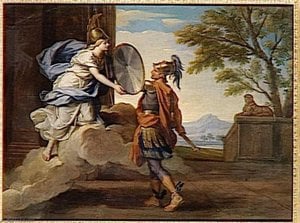
원하는 크기와 액자로 주문 제작되는, 작가들이 직접 캔버스에 손으로 그린 유화 작품입니다. ( 프린트 판매로 전환 디지털 이미지로 전환)





























작품의 원본 비율을 유지하는 미리 설정된 크기 중에서 선택하세요.

특정 프레임이나 공간에 맞도록 직접 크기를 입력할 수 있습니다. 선택하신 크기가 원본 이미지의 비율과 일치하지 않는 경우, 작품을 자르거나 추가적인 손으로 그린 요소를 사용하여 그림을 확장합니다. 제작 시작 전 승인을 위해 디지털 목업을 보내드립니다.
화면 미리 보기는 실제 자르기 또는 확장을 반영하지 않습니다. 최종 구성은 목업을 통해서만 정확하게 확인하실 수 있습니다.
맞춤 크기 제작도 가능하지만, 원본 비율을 유지하기 위해 사전 정의된 목록에서 크기를 선택하시는 것을 권장합니다.

UNE GUERILLA
복제본 크기

In the vibrant, often turbulent landscape of nineteenth-century French art, few names evoke the dramatic tension between classical precision and Romantic passion quite like Jules Jollivet. Born in Paris in 1794, Jollivet emerged from a lineage deeply rooted in the tactile beauty of sculpture, being the son of the renowned Jean-Baptiste Jollivet. This early exposure to the physical weight and structural integrity of form would later become a cornerstone of his painterly style. While his path initially meandered through the disciplined study of architecture under masters like Jacques-Marie Huvé, it was his eventual pivot to the canvas that allowed him to capture the fleeting, emotive essence of history and human drama. His work serves as a bridge between the rigid moralism of Neoclassicism and the sweeping, atmospheric storytelling of the Romantic era.
Jollivet’s artistic evolution was shaped by the prestigious halls of the École des Beaux-Arts de Paris, where he refined his technique under the guidance of influential instructors such as François-Louis Dejuinne and Antoine-Jean Gros. These mentors, masters of historical and genre scenes, instilled in him a profound respect for anatomical accuracy and the power of narrative composition. However, Jollivet was not merely a student of tradition; he was an explorer of light and culture. His journey took him to Spain in 1826, a transformative period where he worked on documenting the royal collections of King Ferdinand VII. This encounter with the Spanish masters, particularly the legendary Diego Velázquez, breathed new life into his palette, infusing his work with a richer, more somber depth and an interest in the gritty realism of genre scenes.
The true brilliance of Jollivet lies in his ability to breathe life into the past, transforming historical chronicles into visceral, lived experiences. He became particularly celebrated for his depictions of military subjects and aristocratic portraits, where he balanced the grandeur of nobility with a keen psychological insight. His oeuvre is marked by an extraordinary versatility, ranging from the intense, localized drama of "Une Guerilla"—a work that captures the raw spirit of resistance—to large-scale historical panels commissioned for the Musée de l’Histoire de France. In these monumental works, such as his depictions of the Battle of Hooglede, Jollivet utilized a meticulous approach to detail to convey the chaos and heroism of conflict, ensuring that every uniform, weapon, and facial expression contributed to the overarching historical narrative.
Beyond the battlefield, Jollivet’s fascination with lithography allowed him to expand his reach, bringing fine art to a broader audience through detailed illustrations. His talent for capturing the essence of a moment was equally evident in his more intimate genre paintings and religious works, such as the haunting "Massacre of the Innocents." In these pieces, the artist moved away from the purely epic to explore themes of tragedy, innocence, and the human condition. Through a masterful use of light and shadow, he could guide the viewer's eye through complex compositions, creating a sense of movement and emotional resonance that remains captivating over a century later.
Though history occasionally places him in the shadow of more radical contemporaries like Gustave Courbet, Jules Jollivet’s significance remains undeniable. He was a painter who refused to abandon the foundational principles of disegno and anatomical truth, even as he embraced the emotive freedom of the Romantic movement. His legacy is found in the meticulous way he documented the spirit of his age—the nobility, the military triumphs, and the cultural textures of both France and Spain. To look upon a Jollivet painting is to witness a master at work, balancing the weight of history with the lightness of artistic inspiration, leaving behind a visual record that continues to resonate with anyone moved by the beauty of classical realism.

1794 - 1871

Discover the enduring legacy of oil on board painting. Explore how historical techniques, rich impasto textures, and structural durability create timeless masterpieces that bridge Renaissance grandeur with modern art collecting excellence.

Explore the profound symbolism of military uniforms in art history. From Victorian portraits to realistic lithographs, discover how artists capture power, identity, and historical legacy through the intricate details of martial regalia and command.

Discover the profound allure of oil on canvas. Explore the mastery of impasto textures, the science of pigment longevity, and expert guides to selecting museum-quality reproductions that elevate your collection with timeless elegance and tactile depth.

Discover the enduring allure of oil on canvas. Explore how master techniques like impasto and glazing create the depth, texture, and emotional resonance found in the world's greatest masterpieces. An essential guide for fine art enthusiasts and discerning collectors.


 미리보기
미리보기
 공유하기
공유하기 공유하기
공유하기
 상세 정보
상세 정보

 다운로드
다운로드
 유사 작품
유사 작품 X-레이
X-레이 슬라이드 쇼
 통계 정보
통계 정보

 더 보기
더 보기









 유리 옵션은 110cm 미만 크기에서만 선택 가능합니다.