
원하는 크기와 액자로 주문 제작되는, 작가들이 직접 캔버스에 손으로 그린 유화 작품입니다. ( 프린트 판매로 전환 디지털 이미지로 전환)
작품의 원본 비율을 유지하는 미리 설정된 크기 중에서 선택하세요.

특정 프레임이나 공간에 맞도록 직접 크기를 입력할 수 있습니다. 선택하신 크기가 원본 이미지의 비율과 일치하지 않는 경우, 작품을 자르거나 추가적인 손으로 그린 요소를 사용하여 그림을 확장합니다. 제작 시작 전 승인을 위해 디지털 목업을 보내드립니다.
화면 미리 보기는 실제 자르기 또는 확장을 반영하지 않습니다. 최종 구성은 목업을 통해서만 정확하게 확인하실 수 있습니다.
맞춤 크기 제작도 가능하지만, 원본 비율을 유지하기 위해 사전 정의된 목록에서 크기를 선택하시는 것을 권장합니다.

Límite Sud
복제본 크기

Born in Ontario, Canada in 1948, Peter Sculthorpe’s artistic journey began with a quiet intensity that blossomed fully during his final year of high school. This early spark ignited a lifelong exploration into the realms of process and material, ultimately leading him to develop a uniquely innovative approach that defied easy categorization. While initially rooted in painting, Sculthorpe’s practice dramatically shifted in 1985, moving towards a sculptural vocabulary centered on drawing and three-dimensional objects – a transformation driven by his desire to expand the very possibilities of seeing and experiencing space.
Sculptthorpe wasn't simply constructing physical forms; he was crafting “tools for vision,” as he himself described them. These weren’t traditional sculptures intended to be admired from a distance, but rather intricate devices designed to engage the viewer in a dynamic, almost tactile relationship with the artwork. His materials were often humble – wire, cardboard, wood scraps, and even discarded household items like pet stain removers – elevated through careful manipulation and imbued with unexpected significance. This deliberate use of the commonplace spoke to a broader interest in revealing hidden structures and inviting viewers to participate actively in deciphering the work’s meaning.
Sculptthorpe's artistic philosophy was deeply informed by his understanding of perspective, a concept he carried over from his earlier painting practice. However, rather than replicating traditional visual cues, he sought to create a sense of “looking around,” as he put it – an immersive experience where the viewer’s eye could traverse multiple angles simultaneously. This ambition led him to develop complex systems of interlocking lines and planes within his drawings and sculptures, creating what resembled intricate pools or layered landscapes.
His work was influenced by a diverse range of sources, including the geometric precision of Piet Mondrian and the playful experimentation of Sol LeWitt. Yet, Sculthorpe’s approach transcended mere imitation; he synthesized these influences into something entirely his own – a distinctly contemplative and often humorous exploration of spatial relationships.
Sculptthorpe's work gained increasing recognition throughout the 1990s, culminating in solo exhibitions at prestigious venues like the Kunsthalle Bern in Switzerland (1992) and the Kunstmuseum Luzern (1999). A posthumous retrospective organized by the Staatliche Graphische Sammlung at the Pinakothek der Moderne in Munich in 2006 provided a comprehensive overview of his career, showcasing the breadth and depth of his artistic vision. Subsequent exhibitions have continued to illuminate his unique approach, including focused surveys at the High Museum of Art in Atlanta (2017-2018) and The Morgan Library & Museum in New York (2020).
His work is now represented in significant public collections worldwide, including the British Museum, Musée National d’Art Moderne, Centre Georges Pompidou, Glenstone Museum, and numerous museums across North America. These institutions attest to the enduring value and critical acclaim of his innovative practice.
Sculptthorpe's legacy lies in his radical reimagining of drawing and sculpture. He demonstrated a remarkable ability to transform ordinary materials into objects of profound visual and conceptual complexity. His “tools for vision” invite viewers to engage with art not as passive observers, but as active participants in the process of interpretation.
His work continues to be studied and admired for its intellectual rigor, playful experimentation, and deeply considered exploration of space and perception. Peter Sculthorpe’s contribution to contemporary art lies not just in his individual creations, but in his willingness to challenge conventional boundaries and redefine what is possible within the realms of drawing and sculpture.

1948 - , Argentina

몬드리안, 말레비치 등 거장들의 기하학적 추상 미술 명작 10선을 만나보세요. 각 작품의 예술사적 의미와 색채, 구성을 탐구하고 WahooArt.com에서 고품질 아트 프린트를 소장하세요. 지금 바로 온라인 컬렉션을 확인하세요!

고야의 걸작 25선을 만나보세요. 스페인 화가 Francisco Goya의 낭만주의 회화, 어두운 색조와 강렬한 감성이 담긴 명화를 WahooArt에서 감상하세요. 고품질 유화 복제본으로 예술 작품을 소장하고 홈 데코를 완성해보세요! 지금 바로 컬렉션을 탐험하세요.

Explore the profound history and emotional depth of Color Field painting. From Mark Rothko to Barnett Newman, discover how pure color redefined modern art through our expert-led guide for students and collectors alike.

추상표현주의의 심장을 뛰게 한 10대 걸작을 만나보세요. 폴록, 로스코 등 거장의 작품 비하인드 스토리와 예술적 영감을 WahooArt에서! 지금 바로 미술품 컬렉션을 탐험하고, 당신의 공간에 특별한 예술적 감성을 더하세요. WahooArt.com
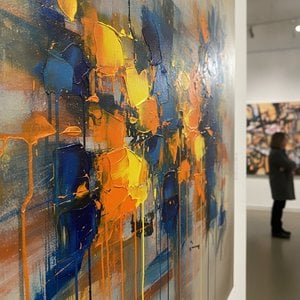
Master the high-impact world of contemporary abstraction. Discover how bold colors, textures, and modern movements like Abstract Expressionism can transform your space with premium, high-energy art curated for the design-conscious professional.


 미리보기
미리보기
 공유하기
공유하기 공유하기
공유하기
 상세 정보
상세 정보 가이드 보기

 다운로드
다운로드
 유사 작품
유사 작품 X-레이
X-레이 슬라이드 쇼
 통계 정보
통계 정보


 더 보기
더 보기






































 유리 옵션은 110cm 미만 크기에서만 선택 가능합니다.


