

빠른 제작과 다양한 마감 옵션을 제공하는 박물관 수준의 지클레이 및 캔버스 프린트. ( 수작업 채색 복제본 주문하기 디지털 이미지로 전환)





























작품의 원본 비율을 그대로 유지하는 프리셋 사이즈 중에서 선택해 보세요.

액자나 벽면 크기에 맞춰 필요한 가로와 세로 길이를 입력해 주세요. 프린트는 원본 이미지보다 크게 제작할 수 없으며 오직 자르는 것만 가능하므로, 비율이 다른 사이즈를 선택할 경우 이미지의 일부가 잘려 나갈 수 있습니다. 인쇄 작업에 들어가기 전, 최종 확인을 위해 디지털 목업을 보내드립니다. 이 페이지에 표시된 이미지는 실제 잘리는 영역을 나타내지 않으며, 오직 목업을 통해서만 정확한 확인이 가능합니다.
The Dice
복제본 크기
In the quiet, intellectual atmosphere of 1922, Juan Gris orchestrated a visual revolution that would forever alter our perception of the mundane. His masterpiece, The Dice, is far more than a mere arrangement of tabletop objects; it is a profound meditation on the architecture of sight. At first glance, the viewer encounters a familiar collection of elements—a book, dice, a glass, and an apple—yet these items are stripped of their traditional, naturalistic weight. Instead, they are reborn through the lens of Synthetic Cubism, where the boundaries between object and space begin to dissolve. Gris invites us into a world where reality is not something to be merely observed, but something to be reconstructed from the very essence of form and geometry.
The brilliance of this composition lies in its masterful deconstruction. Eschewing the soft, fleeting light of the Impressionists, Gris employs a rigorous, analytical approach inspired by the structural legacies of Cézanne. The artwork is a complex tapestry of overlapping planes, where sharp, angular lines and intersecting rectangles create a rhythmic, almost musical, tension. Each shape—be it a circle, triangle, or cube—is presented from multiple viewpoints simultaneously, challenging the eye to navigate a flattened yet deeply layered perspective. This technique does not merely depict objects; it captures their structural soul, presenting a multidimensional experience on a two-dimensional canvas.
Beyond its technical prowess, The Dice breathes with a hidden symbolic life that resonates deeply with the contemplative viewer. The inclusion of dice introduces an element of chance and fate, suggesting the unpredictable nature of existence, while the apple serves as a timeless emblem of knowledge or temptation. These elements are woven into a muted, sophisticated color palette that emphasizes intellectual clarity over emotional excess. The interplay of light and shadow is used not to create realistic volume, but to define the edges of these geometric fragments, casting strong, directional shadows that anchor the composition within its own constructed reality.
For the discerning collector or interior designer, this piece offers an unparalleled sense of structural elegance and modern sophistication. The artwork’s restrained palette and disciplined form allow it to serve as a powerful focal point in any contemporary setting, providing a sense of historical depth and avant-garde prestige. To possess a high-quality reproduction of The Dice is to bring a piece of the Parisian avant-garde into one's personal sanctuary—a constant reminder of the beauty found in fragmentation and the enduring power of the analytical mind. It is an invitation to look closer, to find order within chaos, and to appreciate the profound artistry hidden within the simplest of arrangements.
"The Dice" 작품은 리넨 캔버스에 손으로 직접 그린 유화 복제화로 만나보실 수 있습니다. 주문은 수작업 유화 복제화 페이지에서 가능하며, 다양한 사이즈를 선택하실 수 있습니다.
후안 그리스의 "The Dice"의 색채 정체성: Espresso (#615b54)이(가) 주를 이루는 Earthy 팔레트.
후안 그리스의 "The Dice"의 이미지는 작품의 디지털 이미지 다운로드 페이지에서 다운로드하실 수 있습니다: 고해상도 디지털 이미지 다운로드.


1887 - 1927 , 스페인

Explore the profound evolution of Cubist still life, from Cézanne's structural foundations to the fragmented brilliance of Braque and Léger. Discover how geometric abstraction redefined reality through a sophisticated lens of form, color, and modern artistic mastery.
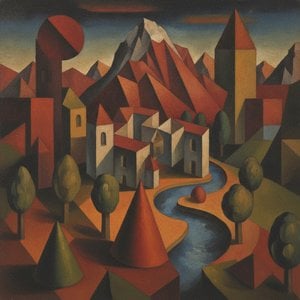
Explore the profound evolution of Cubist landscapes. Discover how masters like Braque and Picasso redefined perspective through geometric mastery, transforming nature into an intellectual mosaic of form and light for the discerning modern art collector.

Explore the profound depth of Cubist Expression. From the deconstructed forms of Picasso to Braque’s geometric mastery, discover how shattering reality through abstraction redefined modern art and continues to inspire sophisticated collectors worldwide.
 미리보기
미리보기
 공유하기
공유하기 공유하기
공유하기
 상세 정보
상세 정보 가이드 보기

 다운로드
다운로드
 유사 작품 더 보기
 X-레이
X-레이 슬라이드 쇼 보기
 질의응답
질의응답
 통계 정보
통계 정보


 더 보기
더 보기









 유리 옵션은 110cm 미만 크기에서만 선택 가능합니다.


