
 Oil On CanvasWallArtSynthetic Cubism
 1914
1914 81.0 x 60.0 cm
 Staatliche Kunsthalle Karlsruhe
원하는 크기와 액자로 주문 제작되는, 작가들이 직접 캔버스에 손으로 그린 유화 작품입니다. ( 프린트 판매로 전환 디지털 이미지로 전환)





























작품의 원본 비율을 유지하는 미리 설정된 크기 중에서 선택하세요.

특정 프레임이나 공간에 맞도록 직접 크기를 입력할 수 있습니다. 선택하신 크기가 원본 이미지의 비율과 일치하지 않는 경우, 작품을 자르거나 추가적인 손으로 그린 요소를 사용하여 그림을 확장합니다. 제작 시작 전 승인을 위해 디지털 목업을 보내드립니다.
화면 미리 보기는 실제 자르기 또는 확장을 반영하지 않습니다. 최종 구성은 목업을 통해서만 정확하게 확인하실 수 있습니다.
맞춤 크기 제작도 가능하지만, 원본 비율을 유지하기 위해 사전 정의된 목록에서 크기를 선택하시는 것을 권장합니다.

Still Life with Grapes
복제본 크기
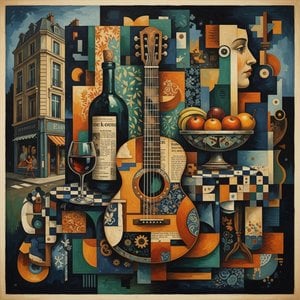
Juan Gris's "Still Life with Grapes," painted in 1914, isn’t merely a depiction of fruit and bottles; it’s a meticulously constructed exploration of form, space, and the burgeoning possibilities of early 20th-century art. Born José Victoriano González-Pérez in Madrid, Gris embarked on an artistic journey that would ultimately position him as a pivotal figure within Cubism, alongside Picasso and Braque. This particular work exemplifies his unique approach – a synthesis of analytical and synthetic elements, resulting in a dynamic composition brimming with intellectual rigor and visual delight.
The painting immediately captivates with its fractured geometry. The bottles, rendered in sharp angles and overlapping planes, aren’t presented as solid objects but rather as fragmented volumes, simultaneously present and absent. This is characteristic of Gris's embrace of Cubism, a movement he helped define alongside his colleagues. Unlike the purely analytical approach of Picasso and Braque, which sought to deconstruct objects into their basic geometric components, Gris introduced elements of “synthetic” Cubism – incorporating collage-like elements like newspaper fragments and textured surfaces directly onto the canvas. The subtle hints of these materials, barely perceptible beneath the paint, add a layer of tactile complexity to the scene.
Gris’s color palette is remarkably restrained yet profoundly effective. He primarily employs muted blues, greens, ochres, and browns – colors that evoke the atmosphere of a late afternoon indoors. However, these somber tones are punctuated by flashes of vibrant red and yellow within the grapes themselves, drawing the eye and injecting a vital energy into the composition. This careful orchestration of color isn’t simply decorative; it serves to heighten the sense of spatial depth and create a subtle tension between solidity and transparency.
The artist's meticulous attention to detail is evident in every brushstroke. The grapes, rendered with an almost photographic precision, appear plump and luscious, while the bottles are depicted with a cool detachment that belies their importance within the overall arrangement. This combination of realism and abstraction reflects Gris’s desire to capture not just the appearance of objects but also their underlying structure and essence.
"Still Life with Grapes" was created during a period of immense artistic ferment – the early years of the 20th century, a time when traditional artistic conventions were being challenged and redefined. Cubism, born out of the collaboration between Picasso, Braque, and Gris, represented a radical departure from the representational art that had dominated Western painting for centuries. It sought to depict objects from multiple viewpoints simultaneously, challenging the viewer’s perception of reality and paving the way for abstract art.
Painted in 1914, just as Europe was teetering on the brink of World War I, the work carries a subtle undercurrent of anxiety. The fragmented forms and muted colors evoke a sense of instability and uncertainty – mirroring the turbulent times in which it was created. However, amidst this tension, there’s also a remarkable sense of order and control, reflecting Gris's belief that art could provide a means of understanding and navigating the complexities of modern life.
While seemingly straightforward, “Still Life with Grapes” is rich in symbolic potential. The grapes themselves have long been associated with abundance, fertility, and even mortality – their fleeting beauty serving as a reminder of the transience of life. The bottles, often symbols of luxury and indulgence, could represent the excesses of bourgeois society or the ephemeral pleasures of modern life. The arrangement itself—a carefully constructed tableau—suggests a meditation on form, space, and the relationship between the artist and his subject.
Gris’s “Still Life with Grapes” is more than just a pretty picture; it's a profound statement about the nature of perception, the challenges of modernism, and the enduring power of art to both reflect and shape our understanding of the world. It remains a captivating work that continues to inspire and intrigue viewers today.

1887 - 1927 , 스페인

Explore the profound evolution of Cubism through an expert analysis of Pablo Picasso's revolutionary works. From Analytical to Synthetic Cubism, discover the techniques that redefined modern art and learn how to curate these iconic masterpieces for your private collection.
Master the vibrant world of Synthetic Cubism with our expert guide. Explore the revolutionary techniques of Picasso and Braque, from collage to color, and discover how this movement redefined modern art for collectors and connoisseurs alike.

Unveil the radical revolution of Cubism. Explore how masters like Picasso and Braque redefined modern art through fragmented forms and geometric abstraction, offering profound insights for discerning collectors of fine art history and masterpieces.

Embark on a journey through the revolutionary world of Cubism. Discover how masters like Picasso redefined perspective through Analytical and Synthetic techniques in this expert-led guide for art enthusiasts and collectors.


 미리보기
미리보기
 공유하기
공유하기 공유하기
공유하기
 상세 정보
상세 정보

 다운로드
다운로드
 유사 작품
유사 작품 X-레이
X-레이 슬라이드 쇼
 통계 정보
통계 정보 더 보기
더 보기









 유리 옵션은 110cm 미만 크기에서만 선택 가능합니다.


