
빠른 제작과 다양한 마감 옵션을 제공하는 박물관 품질의 지클레이 또는 캔버스 프린트. ( 손으로 그린 그림 구매 디지털 이미지로 전환)





























작품의 원본 비율을 유지하는 미리 설정된 크기 중에서 선택하세요.

특정 프레임이나 공간에 맞춰 직접 치수를 입력하실 수 있습니다. 선택하신 사이즈가 원본 이미지의 비율과 일치하지 않을 경우, 작품을 크롭(자르기)하거나 이미지를 대칭 또는 단색 채우기로 확장하여 제작합니다. 제작 시작 전, 최종 확인을 위해 디지털 목업이 전송됩니다.
화면상의 미리보기는 실제 크롭이나 확장 상태를 반영하지 않으므로, 최종 구도는 오직 목업을 통해서만 정확하게 확인하실 수 있습니다.
맞춤 사이즈 제작도 가능하지만, 원본 비율을 유지하기 위해서는 사전 정의된 목록에서 치수를 선택하시는 것을 권장합니다.

Landscape at Beaulieu
복제본 크기
José Victoriano González-Pérez, known universally as Juan Gris (1887–1927), stands as a cornerstone figure in the genesis of Cubist art. Born in Madrid and nurtured by an analytical mind honed at the School of Arts and Sciences—a formative experience that foreshadowed his distinctive artistic approach—Gris embarked on a journey that would propel him to prominence within the vanguard of early 20th-century visual culture.
Unlike Analytical Cubism, which meticulously dissected objects into geometric fragments and explored their simultaneous perspectives, Gris championed Synthetic Cubism. Spearheaded by Pablo Picasso and Georges Braque, this revolutionary style prioritized simplification and abstraction, utilizing techniques like papier collé—the incorporation of textured materials—to imbue canvases with a palpable sense of materiality. “Landscape at Beaulieu,” created in 1918, exemplifies this approach perfectly.
The painting’s dominant palette—a striking juxtaposition of blues and reds—immediately draws the eye. Gris skillfully employs these hues to depict a rural scene centered around a house rendered in stone, accented by a vibrant red roof. Two chimneys punctuate the upper façade, while an open window invites glimpses of interior light and air circulation. Beyond the central structure lie supplementary buildings—a smaller dwelling and a towering clock tower—adding depth and complexity to the composition.
Gris’s artistic trajectory was inextricably linked to the burgeoning Cubist movement, fostered by Parisian intellectual circles. Influenced profoundly by Henri Matisse's expressive use of color, he achieved a remarkable balance between geometric precision and emotional resonance. Landscape at Beaulieu wasn’t merely an aesthetic achievement; it served as a catalyst for subsequent generations of artists, shaping their understanding of representation and paving the way for innovations in abstraction.
Currently housed within the Kröller-Müller Museum in Otterlo, Netherlands—a bastion of modern art—Landscape at Beaulieu continues to captivate viewers with its understated elegance and intellectual depth. Its enduring appeal lies not only in its visual beauty but also in its embodiment of a pivotal moment in artistic history: the audacious embrace of Synthetic Cubism as a vehicle for conveying profound ideas about perception and reality.

1887 - 1927 , 스페인

페르낭 레제의 최고 걸작 25선을 만나보세요. 큐비즘, 추상 미술의 거장이 그린 명작들의 탄생 비화와 예술적 의미를 탐구합니다. WahooArt에서 고품질 아트 프린트와 인테리어 액자로 공간에 예술을 더하세요. 지금 바로 컬렉션을 확인하세요!

몬드리안, 말레비치 등 거장들의 기하학적 추상 미술 명작 10선을 만나보세요. 각 작품의 예술사적 의미와 색채, 구성을 탐구하고 WahooArt.com에서 고품질 아트 프린트를 소장하세요. 지금 바로 온라인 컬렉션을 확인하세요!

Discover the power of Neo-Abstract art. Explore how bold geometric forms and high-impact visual energy are redefining modern design. Learn to curate sophisticated, high-energy spaces with the latest trends in contemporary abstraction and structural color.
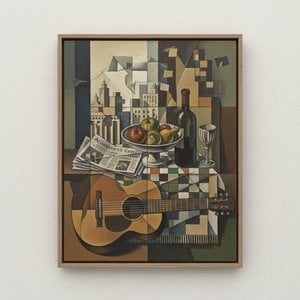
Explore the revolutionary art of Juan Gris – a master of Cubism. Discover his unique approach to deconstruction, vibrant Synthetic Cubist works, and lasting influence on modern art. Expert analysis for collectors.

Explore the evolution of geometric abstraction from Cubism to contemporary art. Discover key artists like Malevich & Mondrian, investment insights, and expert collecting advice at WahooArt.


 미리보기
미리보기
 공유하기
공유하기 공유하기
공유하기
 상세 정보
상세 정보

 다운로드
다운로드
 유사 작품
유사 작품 X-레이
X-레이 슬라이드 쇼
 통계 정보
통계 정보


 더 보기
더 보기









 유리 옵션은 110cm 미만 크기에서만 선택 가능합니다.


